
November 5, 2026
Brilliant Stars: The Era-Defining Figures of New Brunswick
From Sir Samuel Leonard Tilley, who named Canada, to the only British prime minister born in North America, the first drafter of the Universal Declaration of Human Rights, the Irving and McCain families, Hollywood's Louis B. Mayer, and Olympic champion Courtney Sarault — the people who put small New Brunswick on the world map.
Condensed Version
Short on time? Read this condensed version instead of the full article.
The broad Atlantic and the harsh winters gave the people of New Brunswick a generous spirit and a tenacious character. This land has raised a remarkable number of top-tier talents, far out of proportion to its small population. They shine like stars, contributing their intelligence to Canada, the Commonwealth and the whole world, making the world better because of them. Even today, many New Brunswickers continue to achieve great things in their fields and to set the tone of the times.
Among them are a "Father of Confederation" and the creator of the national motto, Sir Samuel Leonard Tilley; the only British prime minister born in North America, Andrew Bonar Law; the founder of Canada's welfare system; the "Father of Modern New Brunswick"; and the driving force behind the province's modernization — as well as our current premier, Susan Holt, the first woman to hold the office.
Beyond outstanding statesmen, this province was home to towering figures of the law who fought for human fairness and justice and won resounding victories: John Peters Humphrey, the author of the first draft of the Universal Declaration of Human Rights; Ivan Rand, born in Moncton and recognized as one of Canada's greatest jurists; and Gérard La Forest, a leading authority on the Canadian Constitution.
In business, the Irving family, the McCain family and others produced talent in abundance. Lord Beaverbrook, a master of capital and the behind-the-scenes hero of the Battle of Britain, and Sir James Hamet Dunn, a world-class financier and industrialist, were the very top of their field.
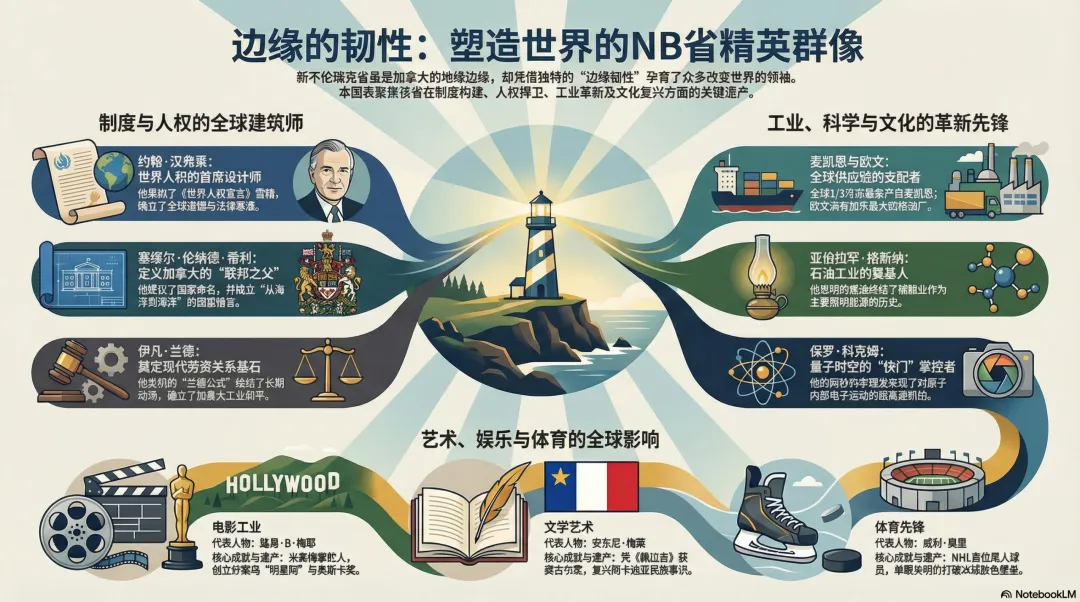
In science and technology, whether in history or today, leading scholars have lit the way forward for humanity like lamps in the dark. Among them are Abraham Pineo Gesner, the modern energy pioneer and inventor of the kerosene lamp (many older people may have used a kerosene lamp as children, and so owe him a debt; this cheap device lit the long nights of countless ordinary families around the world), Paul Corkum, a leading scientist of the quantum age born in Saint John, and Wallace Rupert Turnbull, builder of Canada's first wind tunnel and a founder of the aviation industry.
In culture, the arts and sport, New Brunswick's stars shine even more brightly. Here are the awakener of Acadian national consciousness, great realist writers and far-reaching poets, the builder of Hollywood and a founder of the Academy Awards, a film giant (Donald Sutherland, who appeared in Feng Xiaogang's Big Shot's Funeral), musical geniuses, hockey stars, a powerful boxer, and a young Olympian born in 2000 — news yesterday said she became the first Canadian at these Winter Olympics to win three medals.
Full Article
1. Introduction: A Cultural Melting Pot on the Geopolitical Margins and the Mechanism of Elite Production
New Brunswick, one of the founding provinces of the Canadian federation, is often reduced in geopolitical terms to a "geographic corridor" along the Atlantic coast. Yet close historical observation and sociological analysis show that this land played a key role — far out of proportion to its population — in shaping Canadian national identity and even the order of the Commonwealth and the world. The province is crossed by the Saint John River, sheltered by the foothills of the Appalachian Mountains and surrounded by the fierce tides of the Bay of Fundy. This harsh and changeable geography shaped not only the province's industrial base, but also a distinctive "marginal resilience" in its people.
This resilience is rooted in the province's complex history: on one side, the descendants of the Loyalists who poured in after the American War of Independence in 1783, holding fast to the order of the British Empire; on the other, the Acadian people who stubbornly returned and revived after the trauma of the Grand Dérangement of 1755. This bilingual, bicultural tension made New Brunswick Canada's only officially bilingual province and produced a social ecology in which competition and integration coexist. This report focuses on those "outstanding achievers" who built a lasting legacy in politics, law, business, science, human rights and the arts.
This study explores how these figures used the perspective of a marginal province to challenge and reshape the centres of power. Drawing on newly discovered archival material, recent developments and assessments of social influence, this report offers a panoramic record of how New Brunswick's elites profoundly shaped the course of modern civilization.
2. Nation-Builders and Shapers of the Global Order: Politics and Public Affairs
New Brunswick's political figures show a distinctive "cross-domain" character. They not only conducted social experiments at the provincial level, but frequently moved to the centres of power in Ottawa, London and even the United Nations, turning Maritime pragmatism into an institutional global legacy.
2.1 The Makers of Confederation and the Helmsmen of Empire
From the mid-nineteenth century to the early twentieth, a group of New Brunswick political elites played a central role in defining Canadian national sovereignty and the policy of the British Empire. Their political philosophy carried a strong Loyalist colouring — an extreme respect for institutional order combined with a pragmatic pursuit of economic fairness.
Sir Samuel Leonard Tilley (1818–1896)
As a "Father of Confederation", Tilley's contribution to Canada was a matter of naming. Born in Gagetown, his background as a pharmacist gave him an almost laboratory-like precision in handling political questions. In the 1860s he overcame enormous controversy within the province over tariffs and self-government and pushed New Brunswick into Confederation. It is said that Tilley drew inspiration from the Psalms and proposed naming the new country the "Dominion of Canada", and established the national motto "A Mari Usque Ad Mare" — "from sea to sea". This idea defined Canada's transcontinental character from a philosophical height.
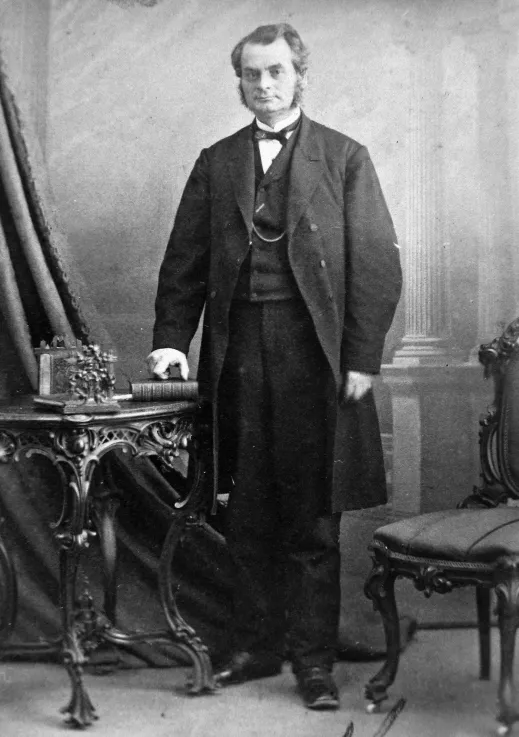
Sir Samuel Leonard Tilley, "Father of Confederation", creator of Canada's national motto
Andrew Bonar Law (1858–1923)
Andrew Bonar Law was the only British prime minister in history born in North America (in Rexton, New Brunswick). His childhood in the province coincided with the golden age of Maritime shipbuilding, and a simple rural life gave him a blunt, unadorned "colonial temperament". During the First World War, as a pillar of Lloyd George's government, his pragmatic decisions were credited with saving the British Empire's wartime finances. His political career proved that a tough character from the colonial margins could conquer the traditional British aristocratic political world.
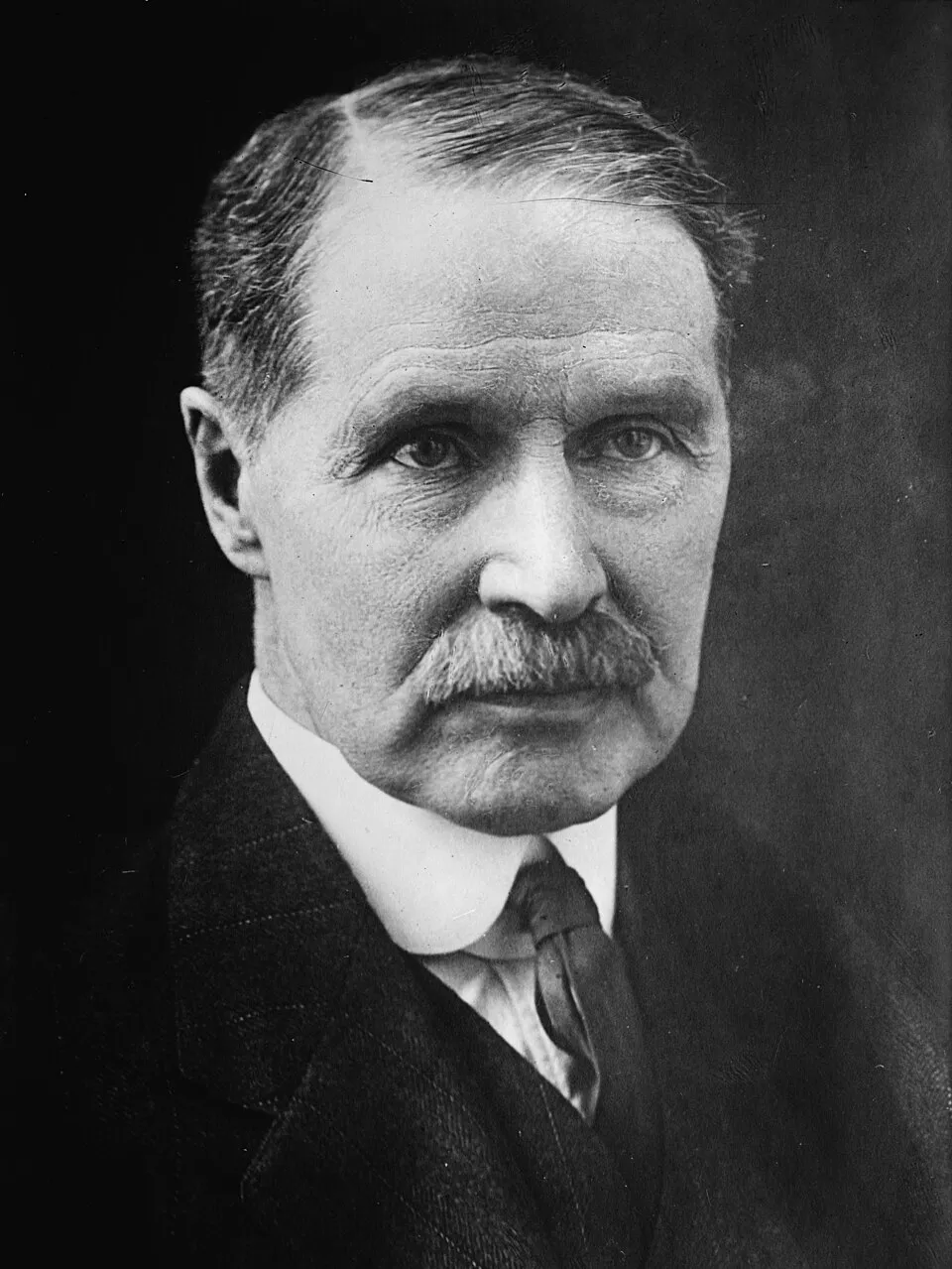
Andrew Bonar Law, the only British prime minister born in North America (New Brunswick)
Richard Bedford Bennett (1870–1947)
Bennett, Canada's 11th prime minister, had a career spanning the journey from the Maritime provinces to western development and on to national governance. Born in Hopewell Hill, Albert County, he experienced his family's decline as shipbuilding faded, which gave his political career a strong sense of crisis and a drive to build institutions. In the darkest years of the Great Depression, from 1930 to 1935, Bennett passed a series of bills that laid the foundations of modern Canada:
The Bank of Canada: establishing national financial sovereignty.
The forerunner of the Canadian Broadcasting Corporation (CBC): using the power of the state to defend Canada's cultural sovereignty against powerful American cultural influence.
The Bennett New Deal: although controversial at the time, his proposals for unemployment insurance and minimum wage standards foreshadowed the arrival of Canada's welfare society.
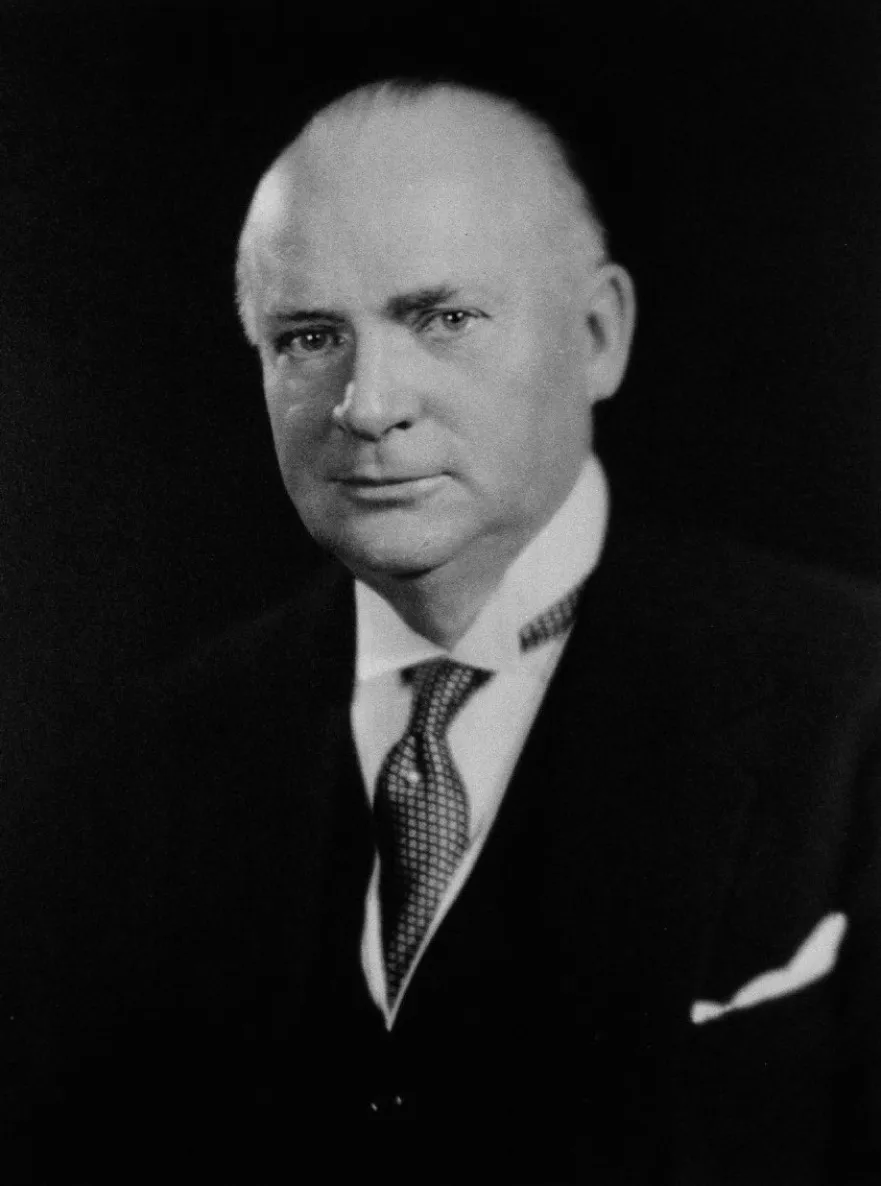
Richard Bedford Bennett, 11th prime minister, founder of Canada's welfare system
2.2 The Reformers of Modern Governance and the Defenders of Bilingualism
In the mid-twentieth century, New Brunswick underwent an internally driven social transformation whose effects profoundly changed Canada's language policy and the logic of social resource distribution.
Louis J. Robichaud (1925–2005)
Robichaud was known as the "Father of Modern New Brunswick". As the province's first elected Acadian premier, his "Quiet Revolution" of the 1960s did much to correct the historic inequalities within the province based on language and geography. His core achievements included:
The Equal Opportunity Program: taking powers over education, health care and justice that had been held by municipal governments and bringing them under the provincial government, unifying tax rates and service standards across the province and ending, institutionally, the long-standing poverty and resource scarcity of the French-speaking north.
The Official Languages Act (1969): establishing New Brunswick's legal status as the country's only bilingual province and providing the foundation for the modernization and institutionalization of Acadian culture.
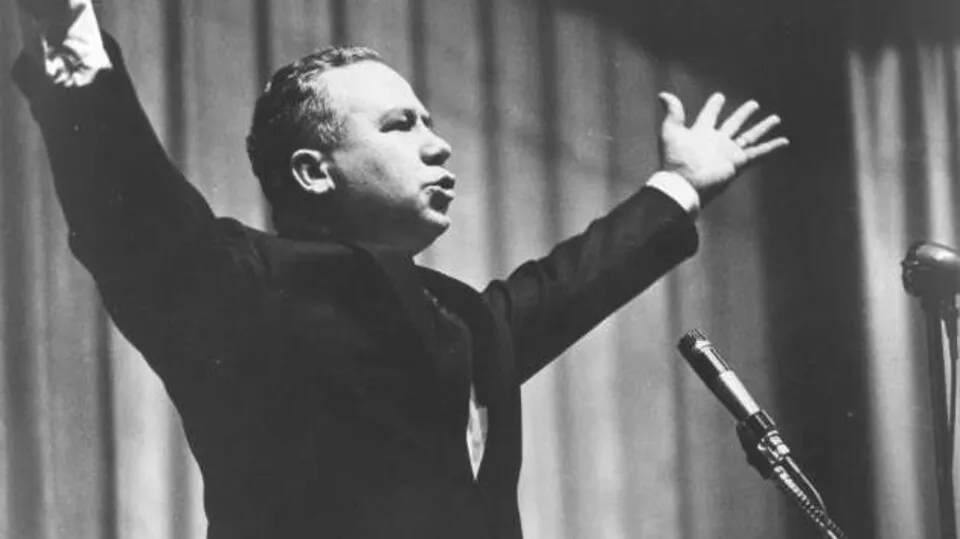
Louis J. Robichaud, "Father of Modern New Brunswick"
Frank McKenna (1948– )
McKenna achieved a political miracle in the 1987 election, sweeping the legislature 58 to 0. His time in office (1987–1997) marked New Brunswick's transformation from a traditional resource economy to a digital service economy. Through large-scale investment in fibre-optic infrastructure, he used the province's bilingual advantage to build it into a North American call-centre hub. After leaving office, as vice-chair of TD Bank and former Canadian ambassador to the United States, he continued to exert influence in international business diplomacy.
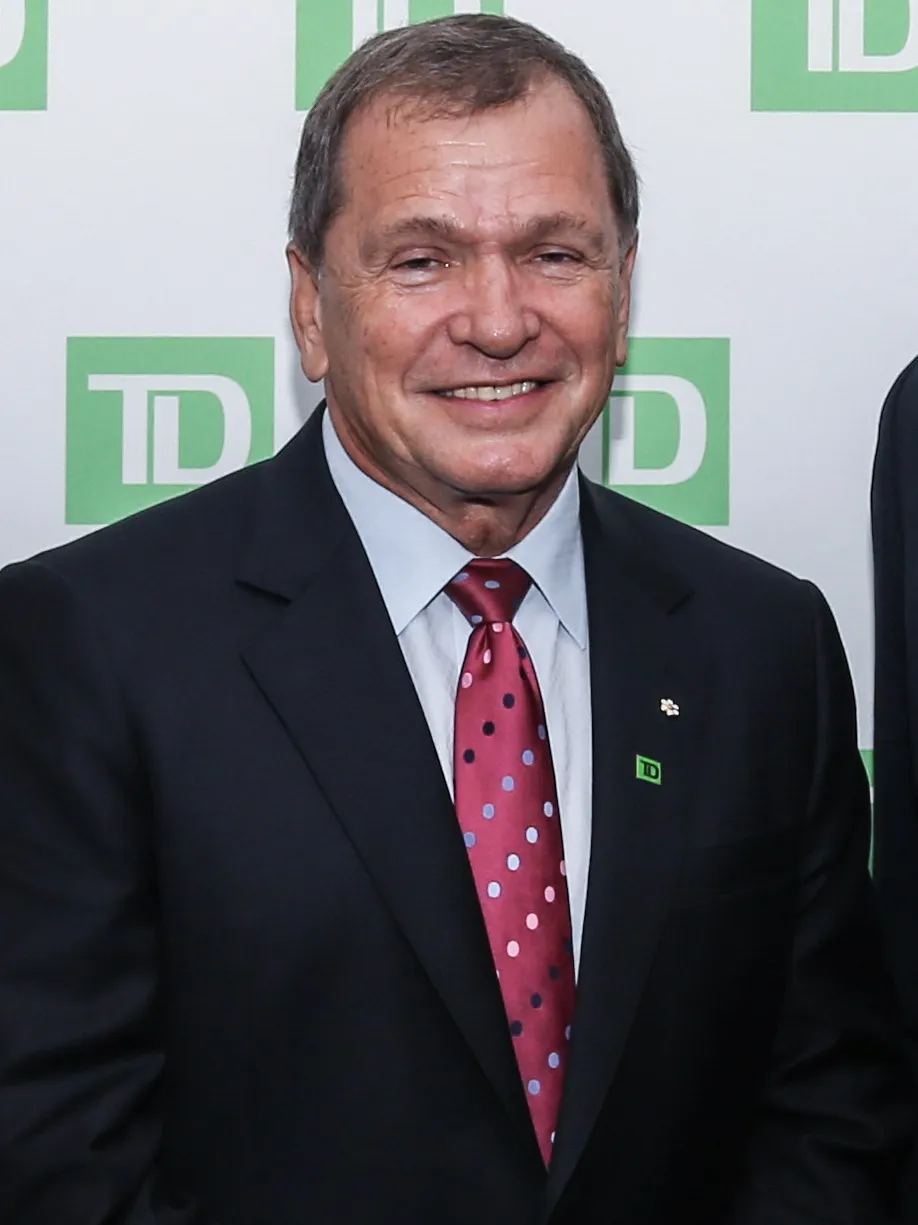
Frank McKenna, who led New Brunswick's shift from a traditional resource economy to a digital service economy
2.3 The Contemporary Leadership and the Response to Social Crisis (2025–2026)
In the mid-2020s, New Brunswick's political environment faced unprecedented pressure on the health care system and inflation, producing a new generation of leaders seeking change in a time of crisis.
Susan Holt
As the first woman premier in New Brunswick's history, Holt has led the Liberal government in deep fiscal and service reform since her election in 2024. According to the latest government developments in February 2026:

Susan Holt, politician, current and first woman premier of New Brunswick
Deficit reduction and spending review: the Holt government is consolidating resources through controversial measures such as closing "ultra-small schools" with fewer than 100 students.
Health care restructuring: she has supported a province-wide virtual care agreement and is working to open collaborative care clinics to address the urgent problem of tens of thousands of residents without a family doctor.
3. The Backbone of Justice: Human Rights, International Law and Giants of the Judiciary
New Brunswick's contributions to international law and the Canadian judicial system reveal this land's deep commitment to freedom, equality and the rule of law. It produced the key figures who defined the global moral benchmark.
3.1 The Global Architect of Human Rights
John Peters Humphrey (1905–1995)
Humphrey was born in Hampton, New Brunswick, and his early life was the ultimate expression of marginal resilience. He lost both parents as a child and lost his left arm in an accident at the age of six, but through these hardships he developed a steadfast pursuit of human dignity. As the first director of the United Nations Division of Human Rights, his historic achievements were:
Drafting the Universal Declaration of Human Rights: he was the author of the Declaration's first original draft. Eleanor Roosevelt called the Declaration "the international Magna Carta of all men everywhere". The document established that human rights were no longer solely the internal affairs of sovereign states, but a concern of international law.
Institutional legacy: Humphrey served at the United Nations for 20 years, overseeing the constitution-making processes of dozens of countries. Decades after his death, his draft manuscript was rediscovered in Hampton, consolidating his status as the "chief architect of modern international human rights law".
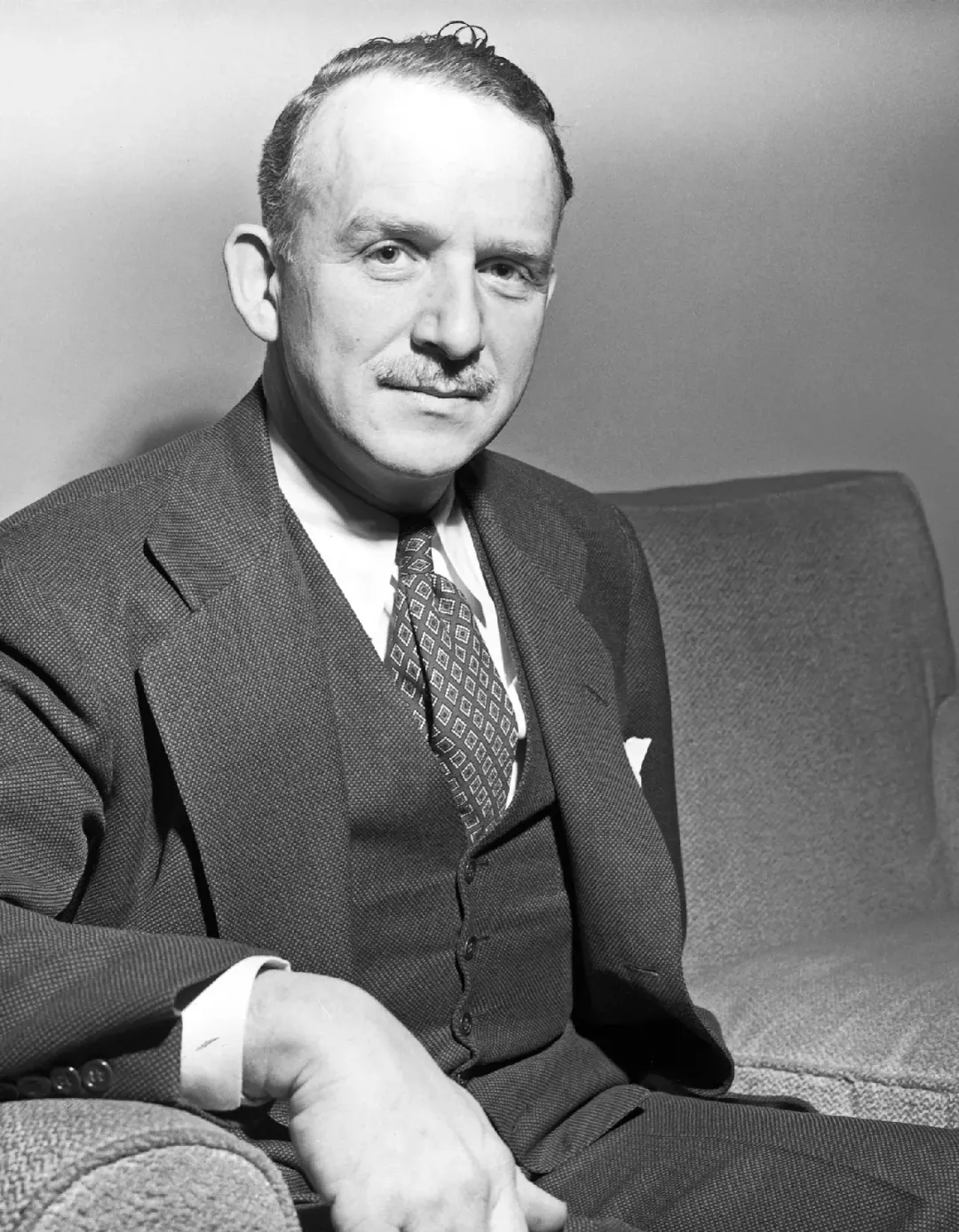
John Peters Humphrey, author of the first draft of the Universal Declaration of Human Rights
3.2 The "Giants" of the Judiciary and the Cornerstone of Labour Relations
Ivan Rand (1884–1969)
Justice Rand is recognized as one of the greatest jurists in Canadian history. Born in Moncton and educated at Harvard, his legal thinking carried a deep positivist colouring.
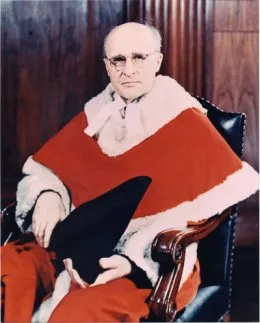
The Honourable Ivan Cleveland Rand
The Rand Formula: in 1946, after a major strike at the Ford plant in Windsor, he proposed as arbitrator the formula requiring non-union members to pay union dues, thus ending long-standing labour unrest and laying the foundation for industrial peace in Canada.
Defender of civil rights: during his time on the Supreme Court, he defended the rule of law in landmark cases such as Roncarelli v Duplessis and led the abolition of discriminatory property covenants against Jews and non-whites.
International influence: he was a member of the United Nations Special Committee on Palestine (UNSCOP) and cast a key vote in favour of the partition plan, directly contributing to the founding of Israel.
Gérard La Forest (1926–2025)
Justice La Forest was an authority in Canadian constitutional law. Born in Grand Falls, he served on the New Brunswick Court of Appeal before moving to the Supreme Court of Canada.
Driving constitutional reform: in the 1970s, he led the Canadian Bar Association's report on constitutional reform, recommending a new constitution and a confirmed bill of rights. His judgments on the Supreme Court greatly enriched the meaning of the Canadian Charter of Rights and Freedoms.
Recent development: La Forest died on June 12, 2025, at the age of 99. His passing was seen as the end of an era in the legal world; his life's work was devoted to combining the common-law system with the bilingual reality of New Brunswick.
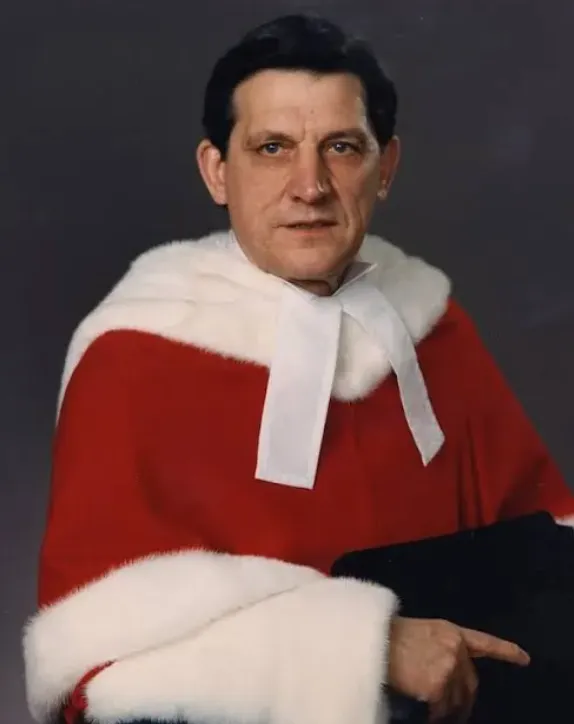
The Honourable Gérard La Forest
| Field | Representative Figure | Core Achievement / Legacy | Subsequent Impact on the World / Nation |
|---|---|---|---|
| International human rights | John Humphrey | Drafted the Universal Declaration of Human Rights | Established the human rights benchmark of modern international law |
| Labour law | Ivan Rand | Invented the "Rand Formula" | Laid the foundation for the order of labour relations in Canada |
| Constitutional law | La Forest | Academic driver of a constitutional bill of rights | Guided the judicial practice of Canada's Charter of Rights and Freedoms |
4. Business Empires and Family Capitalism: From the Margins to Global Control
New Brunswick's economic ecology is highly concentrated. Here, a very small number of family businesses built a distinctive business model through vertical integration, with influence so great it could even sway the decisions of the provincial government.
4.1 The Industrial and Energy Giant: The Irving Family
K.C. Irving (1899–1992) started in a Ford dealership in Bouctouche and eventually built a vast empire covering more than 300 companies.
Irving Oil: it built the Saint John refinery, still Canada's largest refinery. The company not only controls the fuel supply of eastern Canada, but has also built a closed-loop energy supply chain through its deep-water port and gas-station network.
Forestry and paper: J.D. Irving owns most of the province's private forest land and, through highly automated forestry management, remains extremely competitive in the international pulp and paper market.
Latest succession developments: with the death of Arthur Irving in 2024, the family's third- and fourth-generation leaders face the enormous challenges of the energy transition and global low-carbon policy. How the Irving family reshapes its traditional heavy-industry layout has become a focus of economic observation in the Atlantic region.
4.2 The Innovators of the Global Potato Industry: The McCain Family
The McCain brothers (Harrison & Wallace McCain) proved in Florenceville that even raw materials from a remote rural area could be turned into global industrial products through technological innovation.
McCain Foods: in 1957, they built their first frozen french fry plant. Today, one in every three frozen french fries consumed worldwide comes from McCain. Its freezing technology not only changed the way food is preserved, but also reshaped the supply chain of the global fast-food industry.
Family expansion: after a family split, Wallace McCain acquired and reshaped Maple Leaf Foods, making it Canada's largest packaged-meat producer and further expanding the family's voice in the North American food industry.
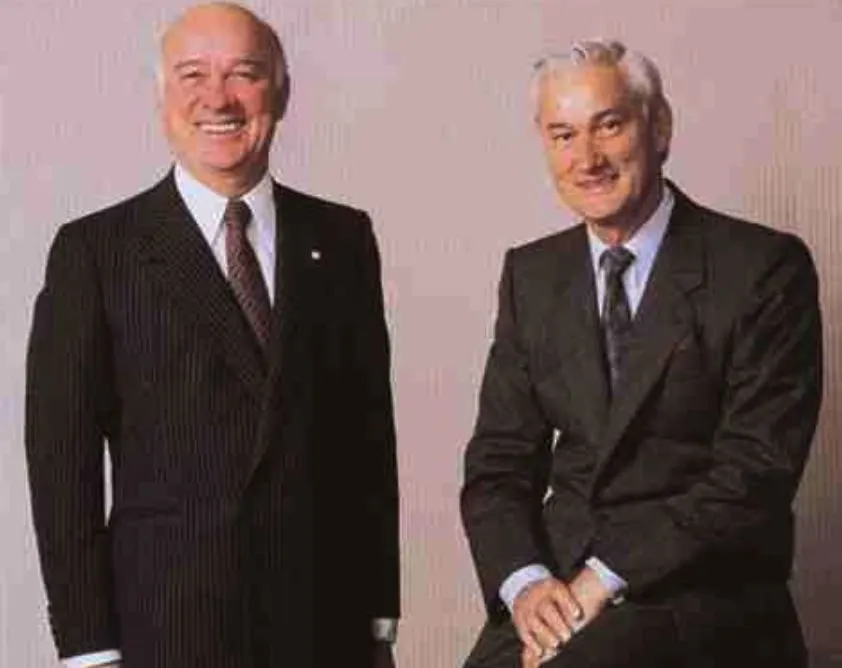
Harrison & Wallace McCain
4.3 Capital Markets and Industrial Patrons: Beaverbrook and Dunn
William Maxwell Aitken, Lord Beaverbrook (1879–1964)
Beaverbrook was a capital giant moving between London and Ottawa. Born in Ontario but raised in Miramichi (Newcastle), he was steeped in the region's rugged commercial environment.
Industrial consolidator: before moving to Britain, he created Stelco and Canada Cement in Canada through a series of mergers, displaying astonishing talent for capital operations.
At the heart of British politics: as Churchill's wartime minister, he was responsible for aircraft production and is recognized as the behind-the-scenes hero of the Battle of Britain. He was also a British press baron, using the Daily Express and other newspapers to sway public opinion on both sides of the Atlantic.
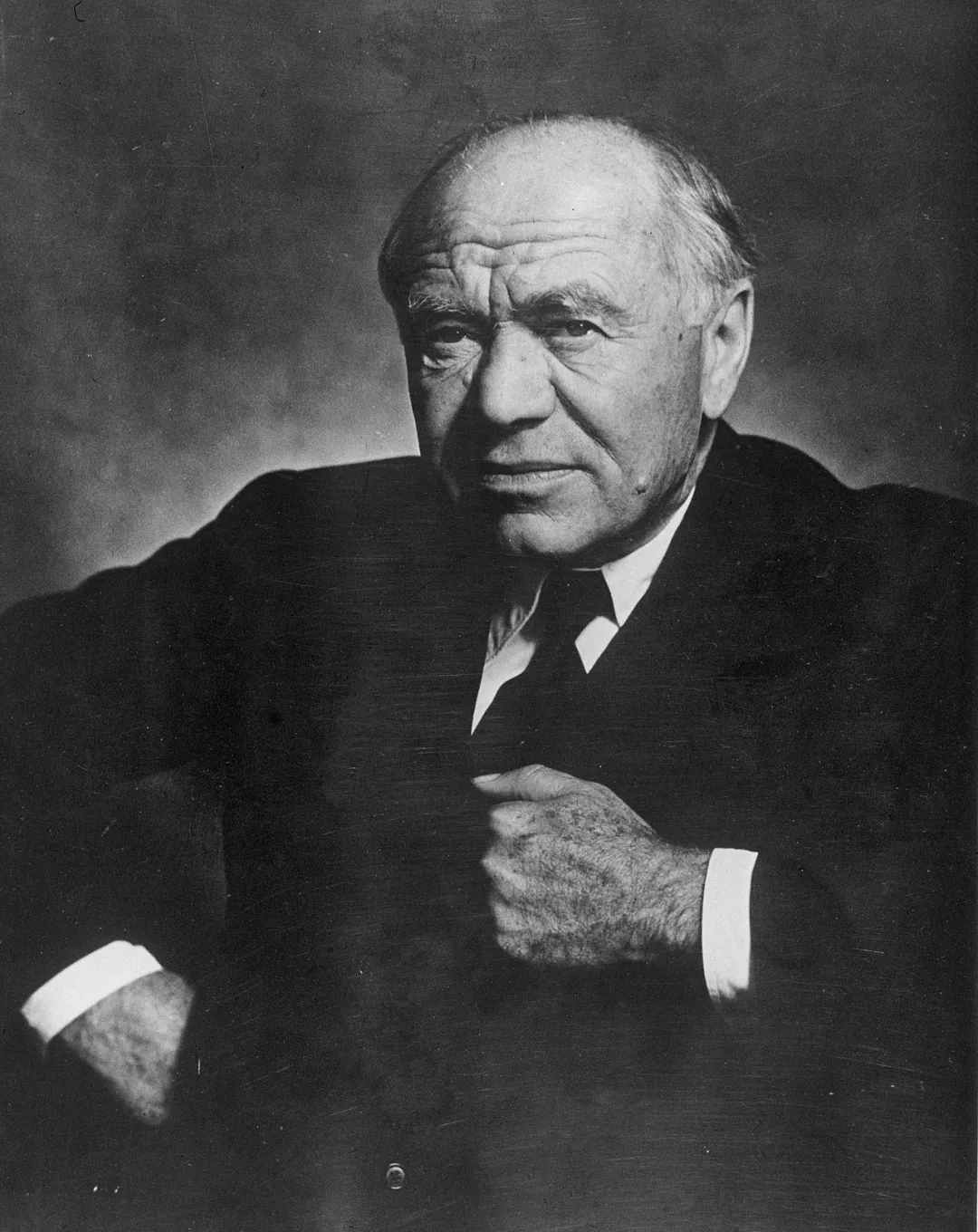
William Maxwell Aitken, Lord Beaverbrook
Sir James Hamet Dunn (1874–1956)
Sir James Hamet Dunn was born in Bathurst and was a world-class financier and industrialist. As the head of Algoma Steel, he provided core support for Canada's industrial mobilization during the Second World War. His long-standing financial support and friendship for Beaverbrook and R.B. Bennett formed a "shadow power network" of New Brunswick elites in Ottawa and London at the time.
5. The Scientific Frontier and Technological Innovation: From Traditional Geology to Attosecond Physics
New Brunswick's scientific contributions show an evolution from natural-resource development to breakthroughs in fundamental physics.
5.1 The Pioneer of the Modern Energy Industry
Abraham Pineo Gesner (1797–1864)
Gesner was one of the founders of the modern petroleum industry. While living in Saint John, he achieved a key breakthrough by experimenting with the province's distinctive asphaltic ore (albertite).
Inventing kerosene: in 1846, he demonstrated the distillation of kerosene, providing the world with a cheap, safe and efficient lighting fuel and directly ending the history of whaling as the main source of lighting energy.
First government geologist: his five-year geological survey in New Brunswick set the precedent for geological surveying in Canada and discovered large quantities of mineral resources.
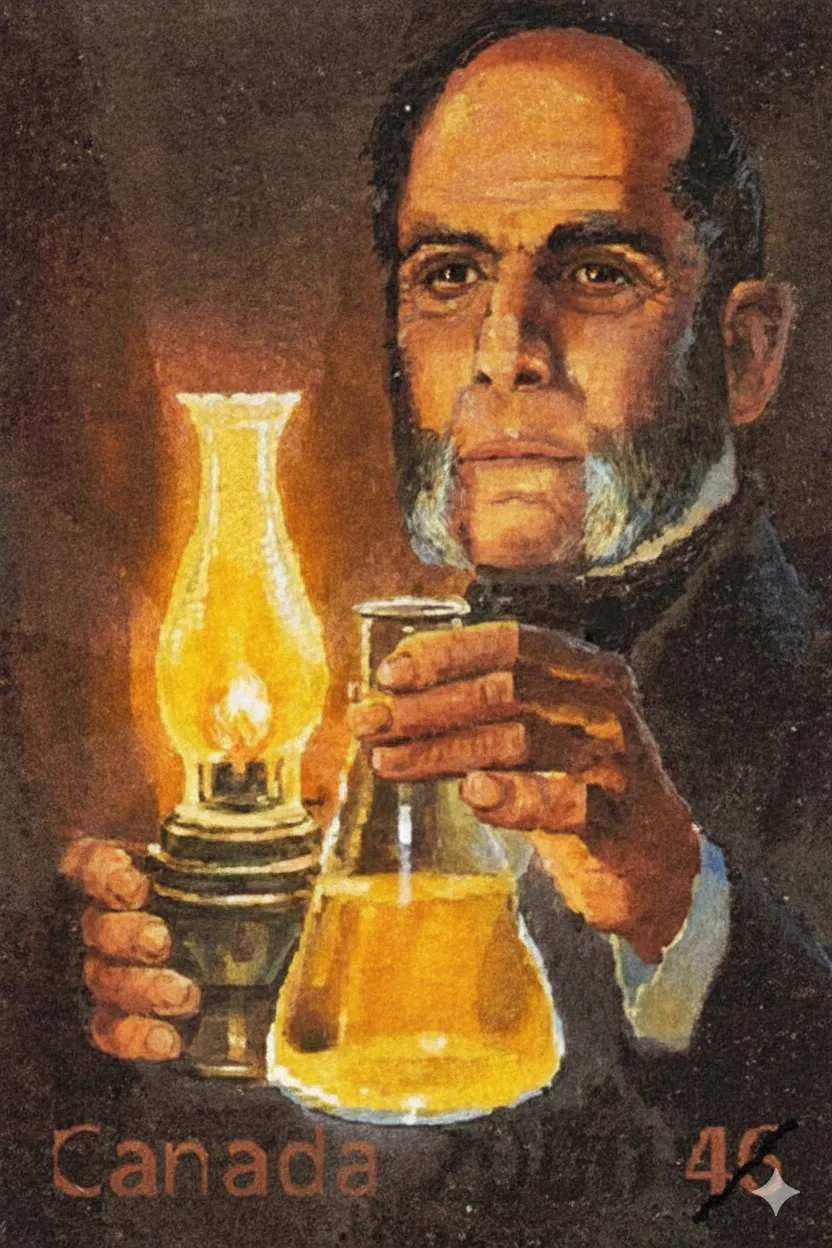
Abraham Pineo Gesner, inventor of the kerosene lamp — before the electric light, the first man to light the world. Many older people were directly blessed by him in their youth.
5.2 The "Shutter" Master of Quantum Spacetime
Paul Corkum (1943– )
Corkum was born in Saint John and is one of the Canadians most likely to win a Nobel Prize in contemporary physics.
Attosecond science: in the 1990s he proposed the "Recollision Electron Model", recognized as the cornerstone of modern attosecond pulse theory. Through this theory, scientists can produce extremely short laser pulses on a time scale of 10-18 seconds — the equivalent of a super-high-speed camera "capturing" the movement of electrons inside atoms.
Recent honours (2025–2026):
2025: awarded the American Physical Society (APS) Medal for Exceptional Achievement in Research.
2026: awarded the IEEE/RSE James Clerk Maxwell Medal in recognition of his lifetime contributions to photonics.
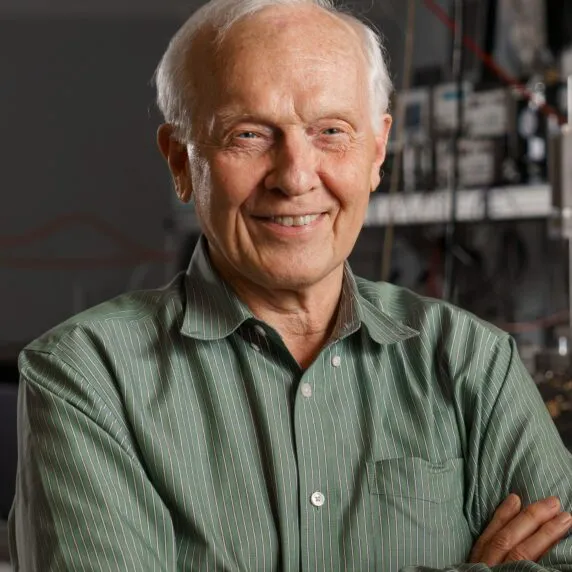
Paul Corkum
5.3 Transport and Mechanical Invention
Wallace Rupert Turnbull (1870–1954)
Turnbull was born in Saint John and was one of the founders of aviation engineering. He built Canada's first wind tunnel in Rothesay.
Variable-pitch propeller: his invention allowed pilots to adjust the angle of the propeller blades during flight, greatly improving aircraft take-off efficiency and cruising speed. This technology remains a core component of aircraft engines to this day.
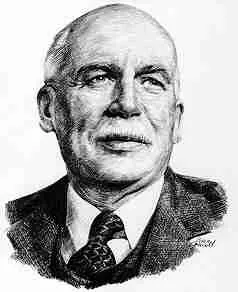
Wallace Rupert Turnbull
6. Cultural Revival and Literary Narrative: The Defence of Language and the Pioneering of the Soul
New Brunswick's literature and art are not isolated aesthetic creations, but the direct expression of bilingual cultural survival and revival.
6.1 The Cultural Torch of Acadia
Antonine Maillet (1929–2025)
Maillet's significance lies not only in her being a writer, but in her being the awakener of Acadian national consciousness.
The Prix Goncourt (1979): she won this prize for Pélagie-la-Charrette, marking the recognition of dialect literature from the margins by the highest authority in French letters. The work mythologized the history of the Acadians' return home on foot after exile, giving their history of suffering an epic quality.
La Sagouine: through the monologue of a washerwoman, she preserved and revived Renaissance-era old French expressions, turning them into a cultural weapon for resisting assimilation and insisting on a distinct identity.
Her passing: Maillet died on February 17, 2025, at the age of 95. The province held a state-funeral-level commemoration for her, and her departure was seen as the close of an era for the Acadian people.
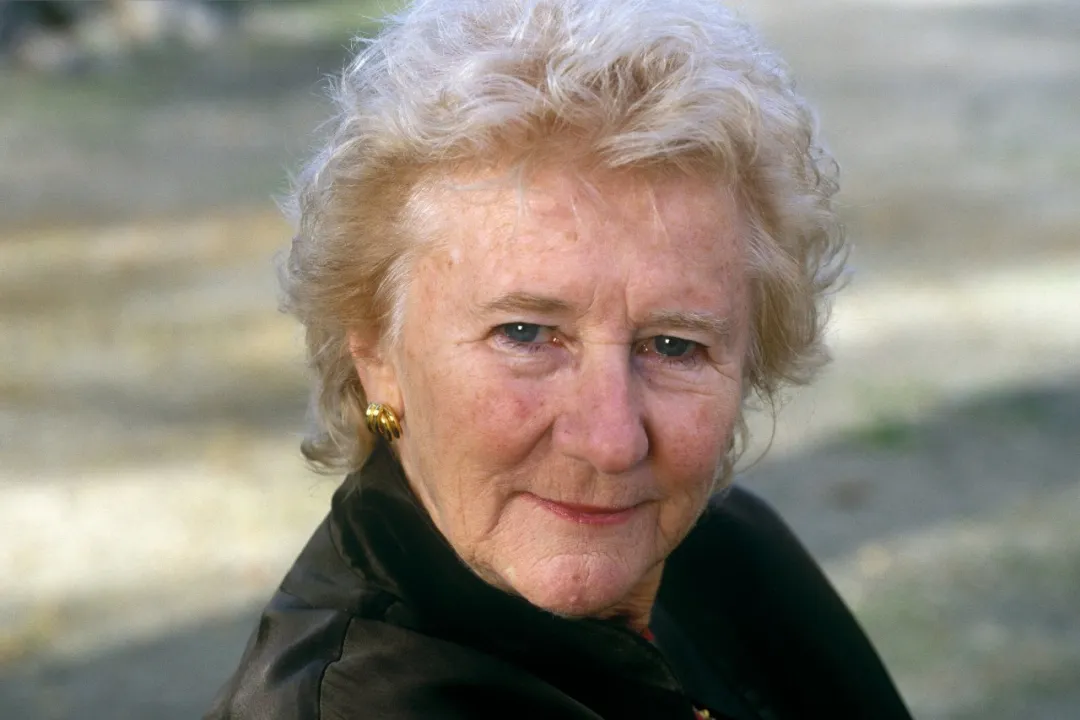
Antonine Maillet, one person representing an era
6.2 The Deep Excavation of Realism
David Adams Richards (1950– )
Richards is one of the very few Canadian writers to have won both the Governor General's Award for fiction and for non-fiction, and his work has been praised as "the Faulkner of the Miramichi".
The suffering and dignity of the land: in works such as Mercy Among the Children, he describes poverty and conscience against the backdrop of the northern New Brunswick timber industry in a calm, heavy style. He rejected the "tourism-promotion pastoral" narrative common in the Maritime provinces, choosing instead to dig into the sense of fate deep in the land.
Lyse Doucet (1958– )
Although based in London, Doucet, the BBC's Chief International Correspondent, has always emphasized her Acadian and Irish heritage from Bathurst, New Brunswick.
A voice of reason in conflict zones: from the war in Afghanistan to the conflict in Ukraine, she has won a Peabody Award and the Sony Radio Journalist of the Year award for her professional reporting. She brought New Brunswick's tolerant perspective on multiculturalism to the front lines of the world's fiercest conflicts.
6.3 The Confederation Poets and the Artistic Tradition
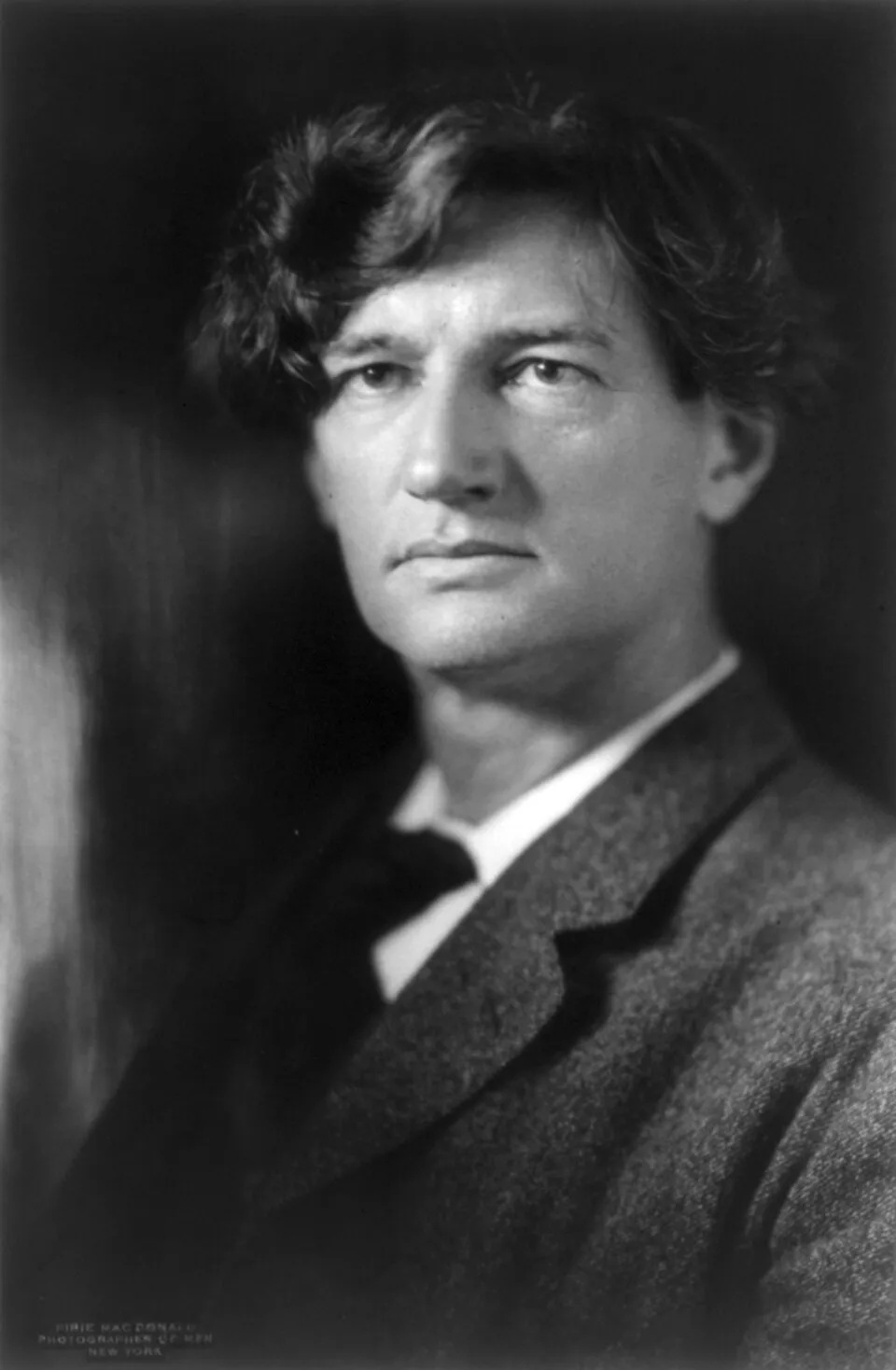
Bliss Carman
Bliss Carman and Charles G.D. Roberts founded the "Confederation Poets" school in the late nineteenth century, making Fredericton the literary heart of Canada. Roberts pioneered the genre of realist animal fiction, profoundly influencing the nature-writing tradition of North America.
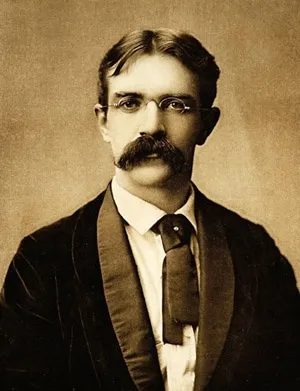
Charles G.D. Roberts
7. The Influence of Stage and Screen: From the Junk Cart to the Red Carpet
New Brunswickers' influence on global popular culture often carries the mark of a hard-won rise from the bottom.
7.1 The Builder of the Hollywood Empire
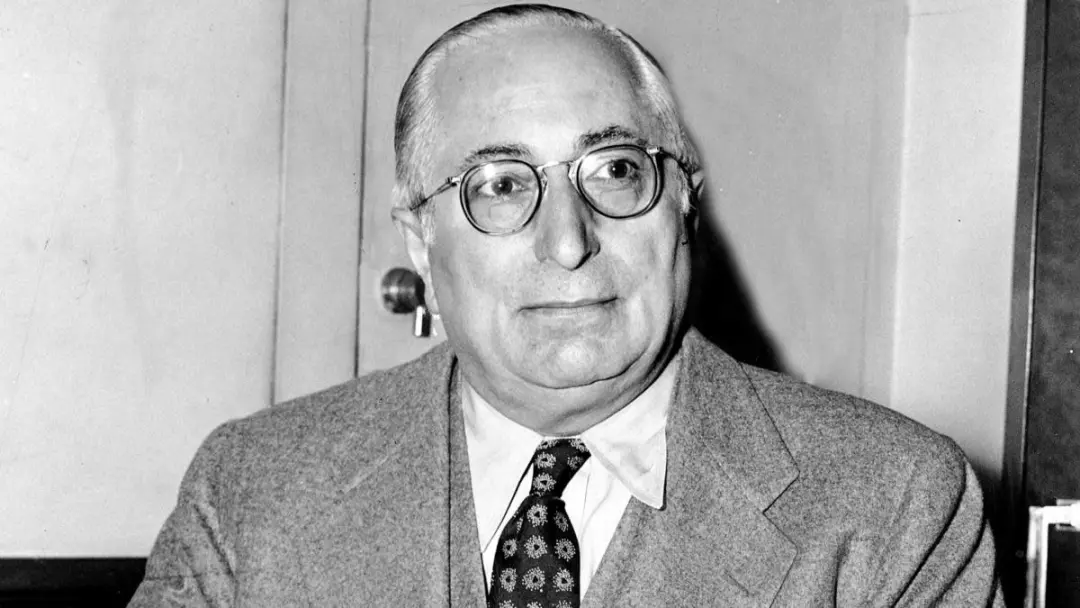
Louis B. Mayer (1884–1957)
Mayer, the helmsman of MGM and the most powerful man in Hollywood, honed his business instincts in a Saint John scrapyard.
The Saint John tempering: Mayer moved with his family from Eastern Europe to Saint John, left school at 12 and hauled a junk cart through the streets of Saint John. He said it was the touring shows at the Saint John theatre that first sparked his longing for the entertainment business.
Founder of the star system: he created the "star system" and, as a principal founder of the Academy Awards, established the standardized evaluation system of the film industry. His early life in Saint John is seen as the driving force behind Hollywood's "rags to riches" American Dream narrative.
Louis B. Mayer, the most powerful man in Hollywood who came out of the Saint John theatre — the builder of the Hollywood empire
7.2 The Peak of the Character Actor
Donald Sutherland (1935–2024)
Sutherland was born in Saint John. As a great film actor of his generation, he was known for his deep, inscrutable style of performance.
Career: from M*A*S*H to Ordinary People and on to The Hunger Games, his career spanned six decades and earned him an Academy Honorary Award.
Legacy: Sutherland died in June 2024. His death prompted widespread tributes in the acting world to the "Maritime introspective spirit" he displayed on the big screen.
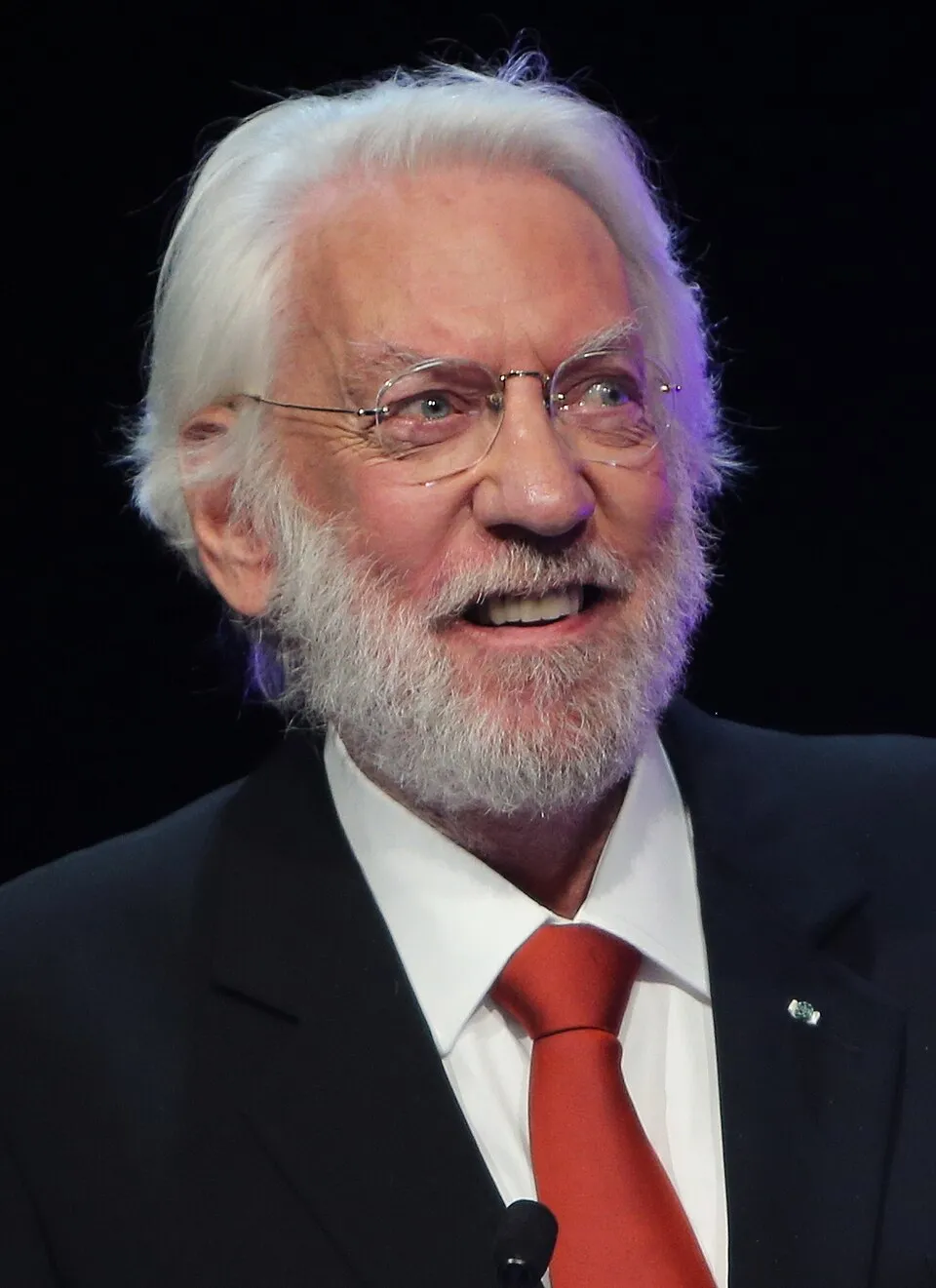
Donald Sutherland, who played "Mr. Tyler" in Feng Xiaogang's Big Shot's Funeral and also played Norman Bethune
7.3 The Roots and Rebellion of Music
Stompin' Tom Connors (1936–2013)
Stompin' Tom was born in Saint John and was the representative of Canadian grassroots culture. He insisted on placing a board on the stage and stomping his foot to keep time, which became a symbol of his rebellion against the institutionalized music world.
2026 development: the Saint John harbour district is currently discussing a permanent statue of him, in honour of the singer who turned the lives of ordinary working people (such as in The Hockey Song) into national narrative.
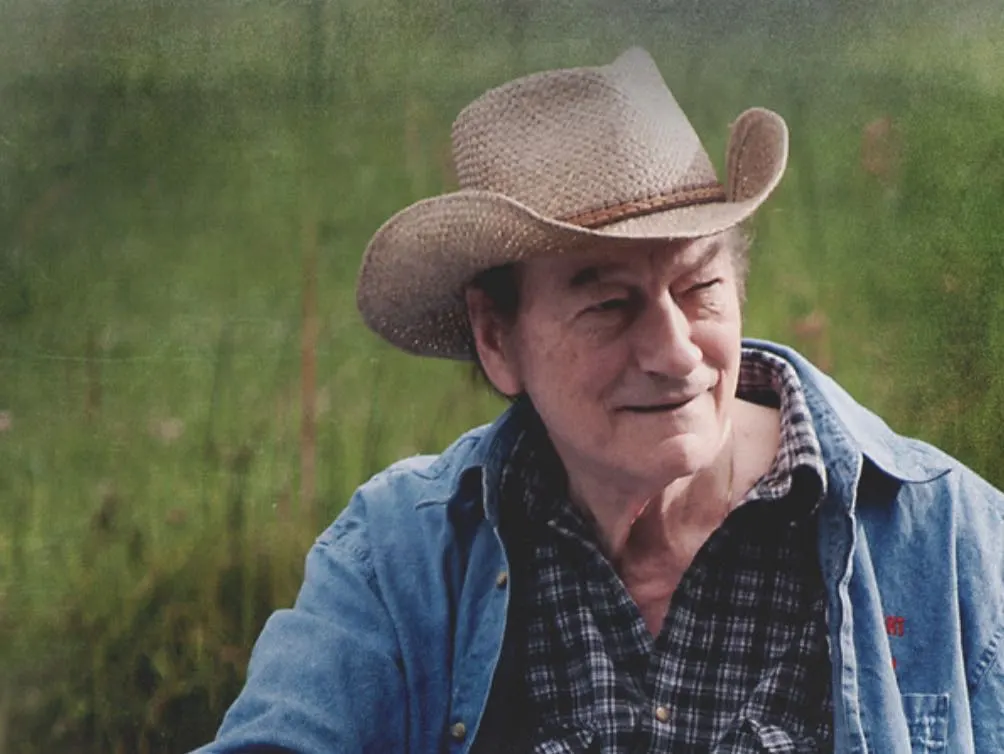
Stompin' Tom Connors, representative of Canadian grassroots culture
René Lévesque (1922–1987)
Although Lévesque is regarded as the leader of the Quebec independence movement, he was born in Campbellton, New Brunswick. This marginal identity gave him a more personal early view of the coexistence of English and French. His dual achievements in media and politics profoundly changed the power structure of the Canadian federation.
8. Sporting Heroes: Pioneers Who Broke Through Barriers
In New Brunswick, sport is not just competition — it is a touchstone of social inclusion.
Willie O'Ree (1935– )
Willie O'Ree is hockey's "Jackie Robinson". Born in Fredericton, he broke the NHL's colour barrier in 1958, becoming the first Black player in the league's history.
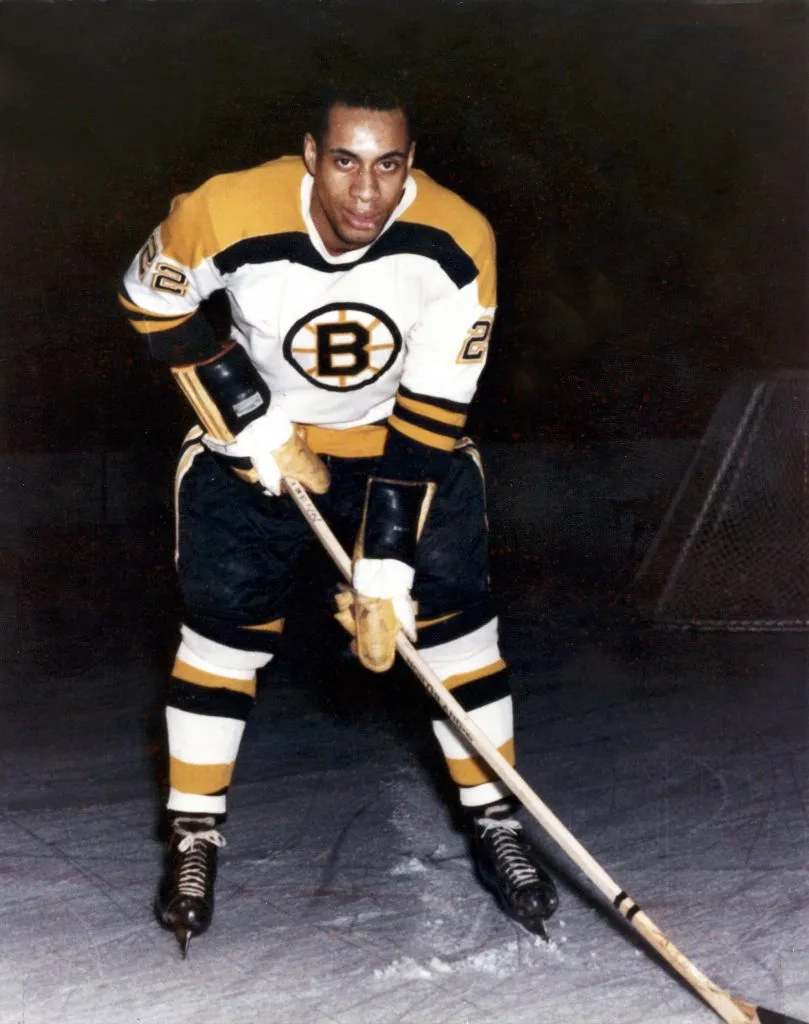
Willie O'Ree
Disability and perseverance: even more astonishingly, throughout his career he concealed from his team and the league the fact that one of his eyes had been blinded by injury, completing top-level competition entirely on single-eye vision.
As of 2026: he remains active in public life as the NHL's diversity ambassador, has received the Congressional Gold Medal, and his legacy in 2026 remains a core inspiration for minority participation in winter sports.
Yvon Durelle (1929–2007)
The boxer nicknamed the "Fighting Fisherman" was the embodiment of the Acadian spirit of tenacity. His astonishing performance against champion Archie Moore in 1958 is regarded as the finest portrait of ordinary New Brunswickers refusing to bow to fate.
Courtney Sarault (2000– )
As a contemporary outstanding athlete, Sarault grew up in Moncton.
2026 Winter Olympics achievements: at the Milan-Cortina d'Ampezzo Winter Olympics in February 2026, she entered as the world's top seed in the women's 500m short track speed skating and won an individual bronze medal and a relay silver medal. Her success marks New Brunswick's continued high output in modern competitive sport.
On February 16, news came that Sarault had won another medal, becoming Canada's first "three-medal winner" at these Winter Olympics.
9. Conclusion: The Global Projection of Marginal Resilience and Future Prospects
The study of New Brunswick's notable figures is, in essence, a long-term observation of "how the margins reshape the centre". From the global human rights consensus drafted by John Humphrey, to the kerosene that lit the world thanks to Gesner, to Paul Corkum's cutting-edge exploration in attosecond physics, the outstanding sons and daughters of New Brunswick have shown a grand vision that transcends geographic limits.
The province's complex historical sediment — the Loyalists' spirit of contract and the Acadians' drive for revival — has formed a highly efficient mechanism for producing elites. This mechanism does not produce fleeting "traffic", but "long-lasting elites" capable of building institutions, defining the boundaries of science and leading cultural trends.
Entering 2026, in the face of global climate, medical and technological change, the portrait gallery of New Brunswick's notable figures is showing new adaptability. Whether it is Susan Holt's administrative experiments in provincial governance or Corkum's continued leadership in quantum communications, they foreshadow that this Atlantic marginal province will continue, through its indomitable output, to provide indispensable leadership and intellectual resources for Canada and the world. This deep resilience, born of bitter cold and forests, tides and bilingual conflict, is the most central and enduring quality of New Brunswick's notable figures.
Cited Works
Research Report on Notable Figures of New Brunswick
New Brunswick Education and Culture Notables Report, drive.google.com/open?id=1pDrKBmzcGK86Rodhc-Mt8aKWZpKuuAN318Gf6aEV8hg
New Brunswick Newcomer Social Guide: Hot Topics
New Brunswick | The Canadian Encyclopedia, accessed February 16, 2026, thecanadianencyclopedia.ca/en/article/new-brunswick
Ivan Rand — Wikipedia, accessed February 16, 2026, en.wikipedia.org/wiki/Ivan_Rand
Arthur Irving obituary, cbc.ca/news/canada/new-brunswick/arthur-irving-obituary-1.7201387
Max Aitken, Lord Beaverbrook | The Canadian Encyclopedia, accessed February 16, 2026, thecanadianencyclopedia.ca/en/article/max-aitken-lord-beaverbrook
Paul Corkum — Wikipedia, accessed February 16, 2026, en.wikipedia.org/wiki/Paul_Corkum
Susan Holt premier update 2026, cbc.ca/news/canada/new-brunswick/susan-holt-premier-update-2026-1.7456789
Abraham Gesner | The Canadian Encyclopedia, accessed February 16, 2026, thecanadianencyclopedia.ca/en/article/abraham-gesner
Lyse Doucet awards, bbc.co.uk/search?q=Lyse+Doucet+awards
Gérard V. La Forest biography, scc-csc.ca/judges-juges/bio-eng.aspx?id=gerard-v-la-forest
New Brunswick — CBC News, accessed February 16, 2026, cbc.ca/news/canada/new-brunswick
John Peters Humphrey and the Universal Declaration of Human Rights, humanrights.ca/story/john-peters-humphrey-and-the-universal-declaration-of-human-rights
John Humphrey | The Canadian Encyclopedia, accessed February 16, 2026, thecanadianencyclopedia.ca/en/article/john-peters-humphrey
John Peters Humphrey — Wikipedia, accessed February 16, 2026, en.wikipedia.org/wiki/John_Peters_Humphrey
Gérard La Forest — Wikipedia, accessed February 16, 2026, en.wikipedia.org/wiki/G%C3%A9rard_La_Forest
Abraham Pineo Gesner — Wikipedia, accessed February 16, 2026, en.wikipedia.org/wiki/Abraham_Pineo_Gesner
Arthur Irving death legacy, cbc.ca/news/canada/new-brunswick/arthur-irving-death-legacy-1.7201387
Louis B. Mayer feature | The Canadian Encyclopedia, thecanadianencyclopedia.ca/en/article/louis-b-mayer-feature
Arthur Irving New Brunswick, theglobeandmail.com/search/?q=Arthur+Irving+New+Brunswick
List of people from New Brunswick — Wikipedia, accessed February 16, 2026, en.wikipedia.org/wiki/List_of_people_from_New_Brunswick
Acadian author Antonine Maillet dead at 95, theglobeandmail.com/canada/article-acadian-author-antonine-maillet-dead-at-95
Lyse Doucet — Wikipedia, accessed February 16, 2026, en.wikipedia.org/wiki/Lyse_Doucet
Louis B. Mayer — Wikipedia, accessed February 16, 2026, en.wikipedia.org/wiki/Louis_B._Mayer
René Lévesque — Wikipedia, accessed February 16, 2026, en.wikipedia.org/wiki/Ren%C3%A9_L%C3%A9vesque
Beaverbrook Art Gallery history, beaverbrookartgallery.org/about/history
This article was originally published on the WeChat public account 「新不伦瑞克」 (New Brunswick Today); original link: mp.weixin.qq.com/s?__biz=MzI4Mjc3NDcyMg==&mid=2247484979&idx=1&sn=2d1e6bdb0ac6bff1ee2292bc4b471dd0&chksm=eb959b9edce21288fb0e7ef52ed8f22f51899ab488e493674a14362faf2aba93e508becfecb2&scene=178&cur_album_id=4378684396283723780&search_click_id=