
November 5, 2026
A Comprehensive Study of New Brunswick: Geopolitics, Cultural Duality and Economic Transformation in Depth
Canada's only officially bilingual province and its gateway to the Atlantic, New Brunswick is quietly reinventing itself — from Appalachian geology and Acadian revival to Irving's corporate empire, Indigenous title claims and a high-stakes bet on small modular reactors. This report examines the province's geography, history, demography, bilingual institutions, political economy and future strategy.
Part One: Introduction — The Atlantic Gateway and the "Return of Hope"
As one of the four founding provinces of the Canadian Confederation, New Brunswick occupies a unique niche on Canada's national map. It is not only the geographic hub connecting the Atlantic provinces with the North American mainland, but also the only officially bilingual province under Canada's constitutional system. The province's motto, Spem Reduxit ("Hope Restored"), comes from the refugee experience of the Loyalists who fled the American Revolution in 1784 — a historical metaphor that resonates deeply again in the twenty-first century. For a long time, outsiders stereotyped the province as a mere "marginal region" surviving on forestry, fisheries and mining; yet today's New Brunswick is undergoing a quiet but profoundly disruptive socio-economic revolution.
This report aims to provide academics, policymakers and regional-studies specialists with a detailed macro- and micro-level analysis. Moving beyond the traditional tourist-brochure description, we examine the province's identity reconstruction in the post-industrial era. From the ancient geology of the Appalachian Mountains to the agricultural industrialization of the Saint John River valley, from the Acadian cultural revival to the corporate hegemony of the Irving family, and on to Indigenous peoples' renewed claims to their land rights, this report combines historical depth with cross-cutting data to dissect in panoramic fashion this complex entity known as the "Picture Province".
The report is divided into ten main chapters, covering the natural geographic environment, historical evolution, demographic characteristics, the bilingual system and education, the political-economic structure, industry analysis, the urban–rural dual structure, the cultural and artistic ecology, and a future strategic outlook. Each section strives to be thorough, supported by rigorous data and in-depth commentary.
Part Two: Physical Geography and Environmental Determinism
The natural geography of New Brunswick not only determined its early settlement patterns, but fundamentally shaped the form of its modern economy. As a land entity of about 73,000 square kilometres, its geography is marked by striking diversity and transition.
2.1 Geological Structure and Landforms
New Brunswick lies in the northern extension of the Appalachian Mountains, with a complex geological structure. The province is roughly rectangular in shape, about 340 kilometres long from north to south and about 300 kilometres wide from east to west.
The Northern Highlands: This region is made up of ancient rock, a product of the Appalachian orogeny. The terrain is rugged, forest cover is extremely high, and it holds most of the province's mineral resources. The province's highest peak — Mount Carleton — stands here, at 817 metres (2,680 feet). This highland is not only a natural barrier but also an important watershed, giving rise to the headwaters of many rivers.
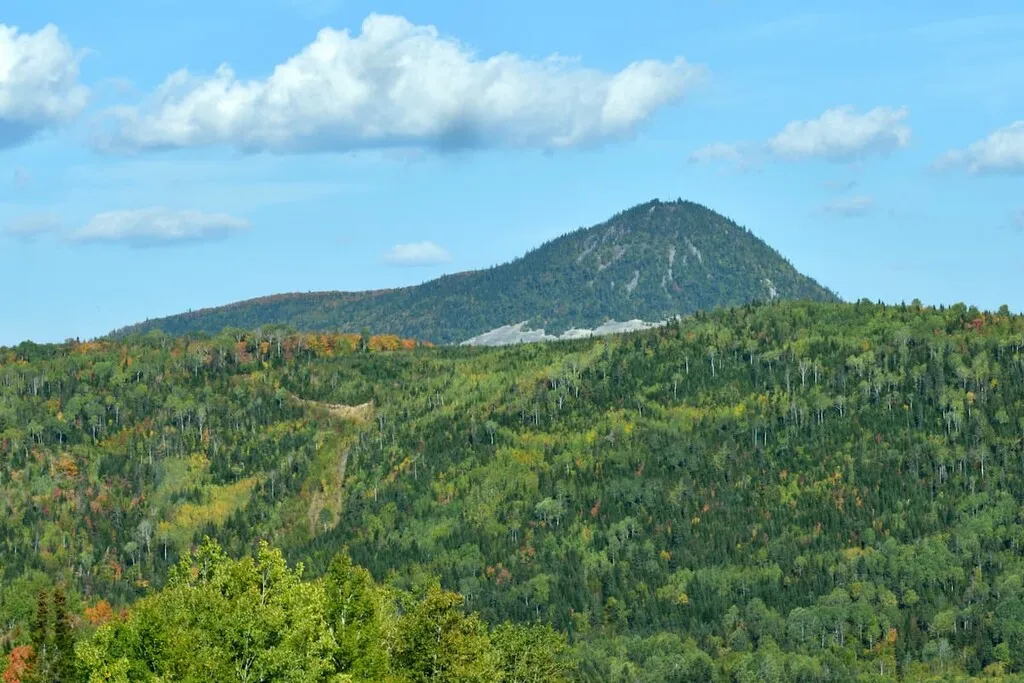
Mount Carleton
The Central and Eastern Lowlands: Extending east toward the Gulf of St. Lawrence and the Northumberland Strait, the terrain gradually flattens. There are broad peat bogs and sandy shores here, the core territory of the Acadian Peninsula. Although the soils are quite acidic, with specific agricultural improvements they support blueberry and cranberry cultivation.
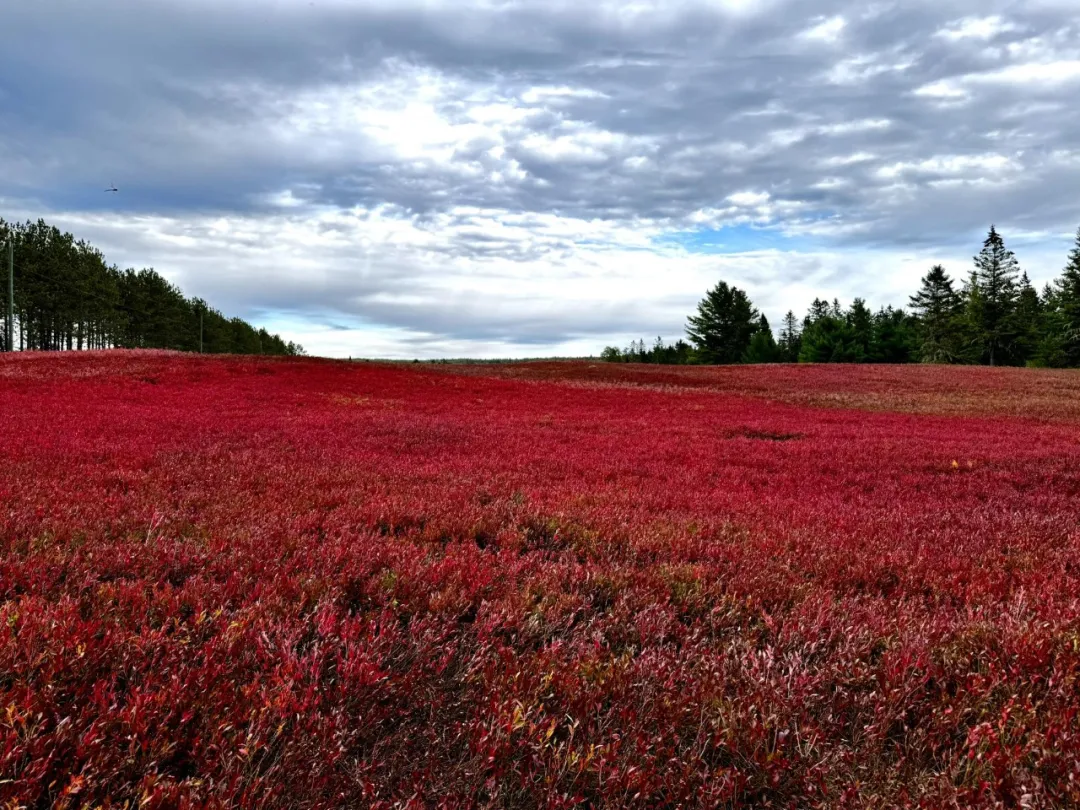
Blueberry fields in New Brunswick in autumn
The Southern Coast and the Bay of Fundy: In the south the terrain rises sharply, forming spectacular cliffs and fjord-like landforms. The Bay of Fundy is famous for the world's highest tidal range; each day's two tides move more than 100 billion tonnes of seawater, with a tidal range reaching 16 metres (53 feet). This enormous hydrodynamic force not only shaped such remarkable landforms as the Hopewell Rocks, but also offers potential for future tidal-energy development.
2.2 The River System: Arteries of Civilization
New Brunswick is, in essence, a "hydraulic civilization": its river systems played the role of highways in its historical development.
Major rivers: the Saint John River (Wolastoq), 673 kilometres long — hailed as the "Rhine of North America". It rises in Maine and runs through the west and south of the province. It is the core irrigation source for agriculture (the potato belt) and was historically the main transport artery for Indigenous peoples and colonists alike.
Major rivers: the Miramichi River, 250+ kilometres long — in the centre of the province, a world-famous spawning ground for Atlantic salmon. Historically a centre of the timber trade, it carried huge log drives.
Major rivers: the Restigouche River, 200+ kilometres long — the border river in the north of the province, known for its pristine natural beauty and forestry resources.
Major rivers: the Petitcodiac River, 79 kilometres long — called the "Chocolate River" for its high sediment load. It is famous for the tidal bore produced by the powerful Fundy tides.
2.3 Climate Characteristics and Seasonal Effects
Despite its seaboard location, New Brunswick's climate is closer to a temperate continental climate than to a typical maritime one, because the prevailing winds come mainly from the continental air mass to the west.
Harsh winters: Winters are long and snowy. In inland cities such as Fredericton, the January mean temperature is −10°C, with extreme lows reaching −37°C. This climate has shaped a resilient local character and fostered a distinctive winter social culture (ice hockey, snowmobiling).
Warm summers: Inland summers are surprisingly warm, with a July mean of about 19°C, though heat waves can approach 35°C or more. By contrast, the Fundy coast, affected by cold ocean currents, is cool and foggy in summer; this "Fundy Fog" is a famous meteorological feature of the region.
The Acadian Forest: The vegetation belongs to the Acadian Forest Region, a transitional mixed forest of northern hardwoods (sugar maple, yellow birch) and boreal conifers (balsam fir, red spruce). Forest cover reaches 83% of the province — a natural endowment that directly determines forestry's dominant position in the economy.
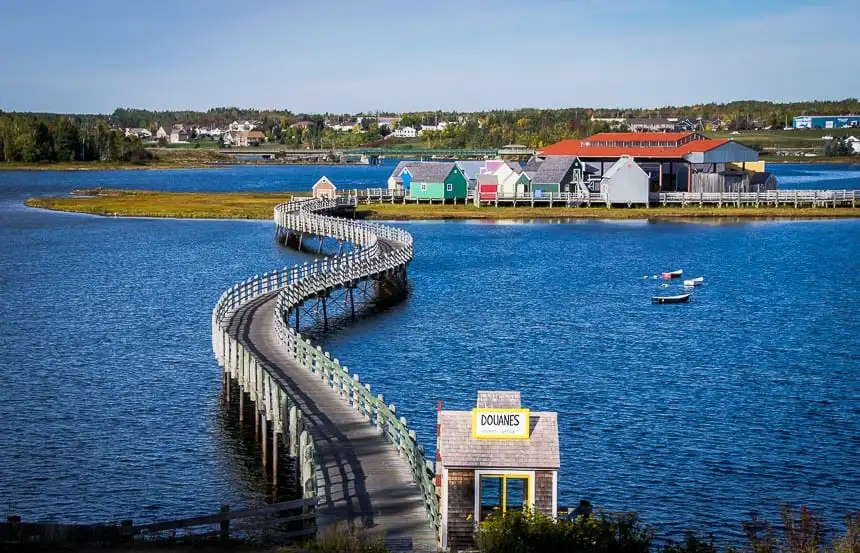
Summer in New Brunswick — the boardwalk to Le Pays de la Sagouine in Bouctouche
Part Three: Historical Evolution — From Indigenous Territory to Confederation Cornerstone
The history of New Brunswick is an epic of displacement, resettlement and imperial rivalry.
3.1 The Indigenous Era: The Wabanaki Confederacy
For thousands of years before European colonists arrived, this land was the territory of the Wabanaki Confederacy.
The Mi'kmaq: They lived on the eastern and northern coasts (Mi'kma'ki), relying on marine resources, above all fishing. Their concept of territory differed from that of the modern nation-state: it was a vast network spanning the sea.
The Wolastoqiyik / Maliseet: Meaning "people of the beautiful river", they lived in the Saint John River valley, were expert river navigators, and followed a seasonally migratory way of life — fishing and growing corn at the river mouth in summer, hunting deep inland in winter.
The Passamaquoddy: They lived in the St. Croix River basin in the southwest.
The Peace and Friendship Treaties signed in the eighteenth century are the legal cornerstone of today's Indigenous rights struggle. Unlike the land-surrender treaties of western Canada, these treaties never ceded ownership of the land; they merely established rules for trade and peaceful coexistence — which gives the modern claim to "unceded territory" very strong legal force.
3.2 The Tragedy and Revival of Acadia
In the early seventeenth century, French colonists established Acadia (Acadie). They developed a distinctive dyke-agriculture technique (aboiteaux), reclaiming farmland from the Fundy salt marshes and creating a prosperous farming society.
Yet the Grand Dérangement of 1755 utterly destroyed this social structure. Because the Acadians refused unconditional allegiance, British forces forcibly deported them to British North American colonies, Britain and France. This traumatic event became the core of Acadian national memory. After the Treaty of Paris in 1763, Acadians began to return, but their formerly fertile lands had been taken by British settlers, forcing them to move to the barren northern coastline. This geographic marginalization objectively protected their language and culture from English assimilation, laying the foundation of today's French-speaking region in the north of the province.
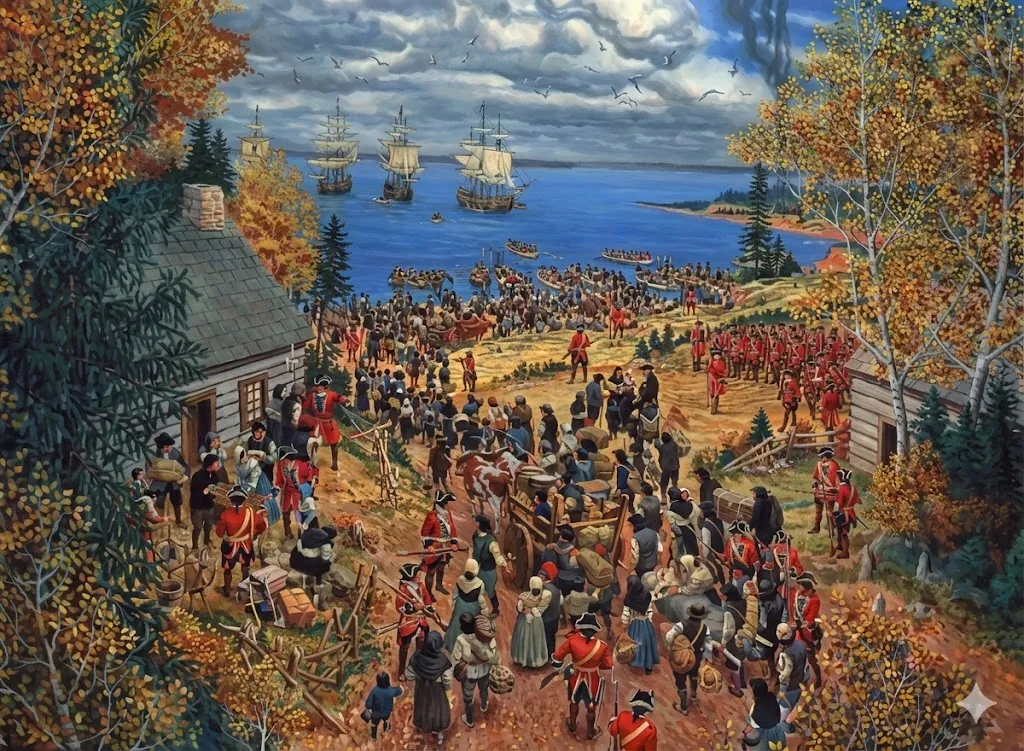
The Grand Dérangement of 1755
3.3 The Loyalists and the Birth of the Province
The American Revolution (1775–1783) directly gave birth to New Brunswick. After the war, about 14,000 United Empire Loyalists who had remained loyal to the British Crown fled the United States and arrived at the mouth of the Saint John River. These refugees included well-educated elites, soldiers, and about 3,000 Black Loyalists.
Dissatisfied with the jurisdiction of the colonial government in Halifax, these new settlers lobbied London to separate New Brunswick from Nova Scotia in 1784 and make it a province of its own. This gave the province a deep conservative and pro-British tradition, and earned it the nickname the "Loyalist Province". The City of Saint John became Canada's first incorporated city in 1785.
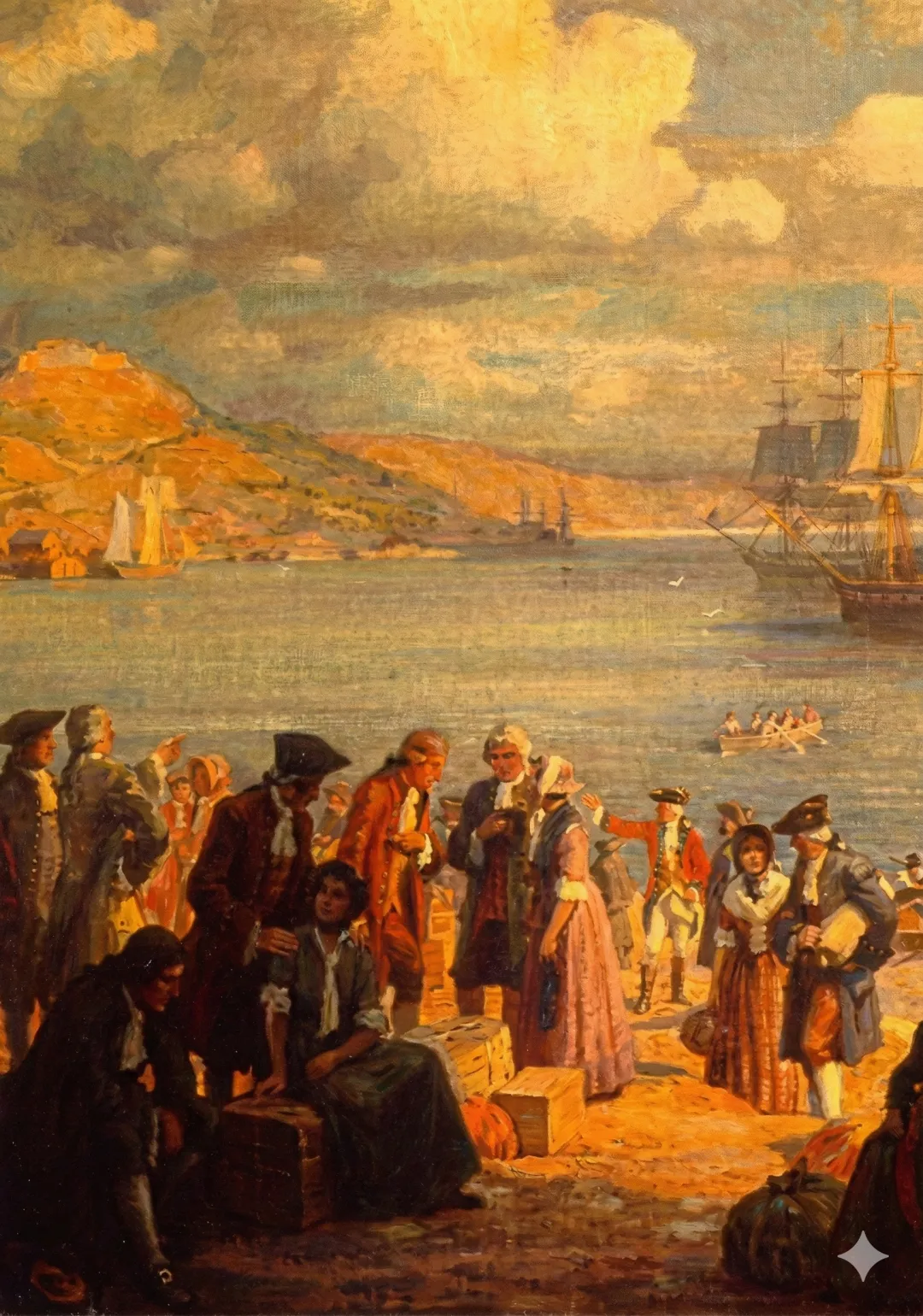
The Loyalist landing at Parrtown
The Harriet Irving Library at the University of New Brunswick in Fredericton, N.B., is a Loyalist resource collection unique in Canada.
This "Loyalist Collection" is a special collection in microfilm form, holding first-hand sources from about 1760 to 1840 on the North American colonies and early Canada. Its core focus is the American War of Independence and the early years of Loyalist settlement in British North America.
3.4 A Maker of Confederation
In the mid-nineteenth century, on the strength of an economy built on "timber, wind and sail", New Brunswick enjoyed a golden age. Shipbuilding flourished in Saint John and Miramichi. But with the rise of steamships and the turn of American trade policy toward protectionism (the Reciprocity Treaty ended in 1866), the province's economy fell into panic. Seeking a larger market and railway connections, New Brunswick became one of the four founding provinces of the Canadian Confederation in 1867.
Part Four: Population Structure and Social Transformation
For a long time, New Brunswick faced the severe challenges of stagnant population and the outflow of young talent. Since the 2020s, however, the province has experienced a historic demographic turning point.
4.1 A Historic Population Surge
According to a report released by the Government of New Brunswick in 2025, as of July 1, 2024 the province's population was estimated at 854,355, up 2.7% year over year (an increase of 22,165 people). This is the second-highest growth rate on record since 1971, and the third consecutive year with growth above 2.0%.
This growth is driven entirely by immigration.
International immigration: In 2023–2024, the province gained a net 22,724 international immigrants, becoming the absolute engine of population growth.
Interprovincial migration: Historically New Brunswick was a net exporter of population, but in recent years the balance has turned positive. With housing costs soaring in places such as Ontario, large numbers of Canadians (mainly young people and young families) have moved east to New Brunswick; in 2023–2024 the net inflow from Ontario was 3,725 people.
4.2 The Duality of Aging and Population Composition
Despite the inflow of immigrants, aging remains the central challenge. The province's median age is 44.8 years — down from 46.3 in 2021, but still high. Deaths have exceeded births for ten consecutive years (6,215 births and 9,577 deaths in 2023–2024), meaning that without immigration the province's population would shrink naturally.
4.3 Urbanization Trends
Population growth is highly uneven, concentrated mainly in the three major urban clusters:
Moncton: The fastest growing, with a population growth rate of 7.0% (to 98,208 people).
Fredericton: Growth of 4.3% (to 77,736 people).
Saint John: Growth of 3.9% (to 78,165 people). By contrast, remote rural areas have halted their sharp decline, but are recovering far more slowly than the urban centres.
Part Five: The Language System and the Acadian Cultural Revival
New Brunswick is the laboratory of Canada's bilingual policy; its distinctive language pattern is the key to understanding the province's politics and society.
5.1 The Constitutionally Guaranteed Bilingual Status
Sections 16–20 of the Canadian Charter of Rights and Freedoms expressly provide that English and French enjoy equal official status in New Brunswick. This is not merely a policy, but a constitutional right. The province's Official Languages Act further entrenches this, ensuring that all government services, legislation and judicial proceedings must be conducted bilingually.
5.2 The Dual Structure of Education and Health Care
To safeguard the cultural autonomy of minority communities (chiefly the French-speaking population), New Brunswick has implemented a distinctive "dual administrative structure":
Education: The province has two fully parallel school systems — English-language districts and French-language districts. This is not merely a difference in the language of instruction: each community independently manages its own curriculum, hiring and administration, ensuring Acadian culture's central place in education.
Health care: The health system is likewise divided into two health authorities: Horizon Health Network, serving mainly the English-speaking community, and Vitalité Health Network, serving mainly the French-speaking community. Although this structure protects language rights, it also regularly sparks political debate about efficiency, because of the duplication of administrative resources.
5.3 Acadia's "Quiet Revolution"
In the 1960s, under Louis Robichaud (the first elected Acadian premier), New Brunswick implemented the famous Program of Equal Opportunity. The program transferred jurisdiction over education, health care and social services from municipal governments of vastly unequal means to the provincial government, thereby taxing the wealthier south (mainly English-speaking) to subsidize the poorer north (mainly French-speaking). This policy fundamentally changed the socio-economic position of Acadians and created the confident modern Acadian society of today.
Acadian culture today is no longer a closed rural folk tradition, but a vibrant modern culture. Artists such as Lisa LeBlanc (who blends banjo with disco) and P'tit Belliveau (electronic country music) create in "Chiac" — a dialect fusing English syntax with old French vocabulary — giving Acadian culture unprecedented attention on the international stage.
Part Six: Political Economy I — The Foundations of a Resource Economy
Despite the transition toward a knowledge economy, natural-resource extraction remains the bedrock of New Brunswick's economy.
6.1 Forestry: The Green Treasury
Forests cover 85% of the province's land, and forestry is its oldest and most complete industrial chain — from pulp and paper to wood processing. The industry is heavily export-dependent.
Challenges and controversy: Management of Crown land (public land) is the central point of contention. Industry (above all J.D. Irving) advocates intensive management and herbicide (glyphosate) spraying to raise yields, while environmental groups and Indigenous peoples strongly object, arguing that this destroys biodiversity and traditional hunting territories.
6.2 Agriculture: The Rise of the Potato Empire
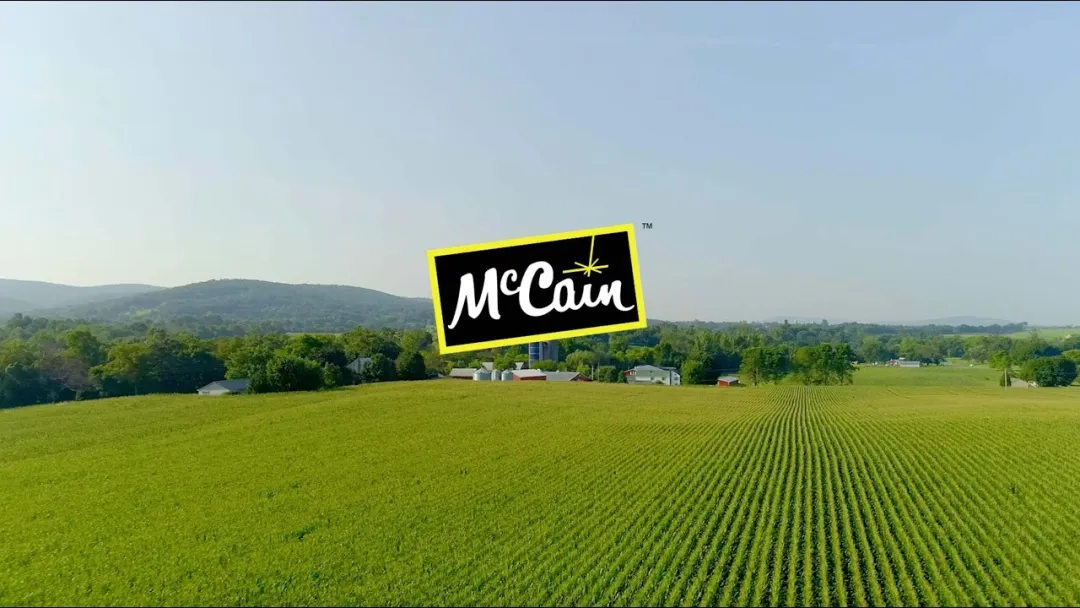
A McCain Foods farm in New Brunswick
The upper Saint John River valley (Carleton and Victoria counties) has calcium-rich soils and is a world-class production area for seed and processing potatoes.
McCain Foods: In 1957, the McCain brothers founded the company in Florenceville. Today it is the world's largest producer of frozen French fries, with factories around the globe. Yet its global headquarters remains in this village of only a few thousand people — a model of a "multinational giant rooted in the countryside" that is extremely rare worldwide.
6.3 Fisheries and the Blue Economy
New Brunswick is one of the world's major Atlantic salmon farming regions, second only to Norway and Chile, concentrated mainly in the Bay of Fundy. At the same time, the lobster and snow crab fisheries of the Acadian Peninsula are the economic lifeblood of local communities, with products exported in large volumes to the United States and Asian markets.
Part Seven: Political Economy II — The "Company Province" and the Irving Family
Without a deep analysis of the Irving family, it is impossible to understand how power operates in New Brunswick. This is not merely a business story, but a political-science case study in how capital concentration affects democratic institutions.
7.1 The Vertically Integrated Empire
The Irving Group was founded by K.C. Irving in the 1920s and is today divided mainly into two vast branches:
J.D. Irving Ltd. (JDI): Controlled by the family of James K. Irving, it dominates forestry (controlling Crown land leases covering millions of acres), shipbuilding (the Halifax shipyard), transportation (Midland Transport, NB Southern Railway) and retail (the Kent building-supplies chain). This vertical integration means the trees are planted and cut by JDI, transported by JDI trucks and trains, processed in JDI factories, and finally sold in JDI stores.
Irving Oil: Controlled by the family of Arthur Irving, it operates Canada's largest oil refinery — the Saint John refinery (producing more than 320,000 barrels per day) — supplying most of the gasoline used in the northeastern United States.
7.2 "State Capture" and Media Monopoly
Critics (such as journalist Jacques Poitras) often describe New Brunswick as a "Company Province", arguing that the Irving family's influence amounts to a form of "state capture".
Tax concessions: A famous case is the Canaport LNG terminal in Saint John, where the Irving Group negotiated an extremely low municipal tax rate, triggering long-standing public dissatisfaction.
Media control: Until recently, the Irving family owned almost all of the province's English-language daily newspapers (the Telegraph-Journal, Daily Gleaner and others). Although these assets were recently sold to Postmedia, decades of media monopoly profoundly shaped public discourse and limited critical voices on industrial activity.
Part Eight: Political Economy III — Energy Transition and Innovation
Faced with the limits of traditional industry and the pressure of climate change, New Brunswick is making a radical energy gamble.
8.1 Nuclear Revival: Small Modular Reactors (SMRs)
New Brunswick is trying to position itself as a global centre for SMR technology research, development and export.
Strategic positioning: Rather than building expensive large CANDU reactors, the provincial government is supporting two start-ups — ARC Clean Technology and Moltex Energy — to develop fourth-generation nuclear technology at the existing Point Lepreau nuclear plant site.
Technology path: Moltex is working on a stable-salt reactor capable of recycling existing nuclear waste as fuel, aiming to solve the nuclear-waste problem and provide clean baseload power. The goal is commercial operation in 2030–2035.
Risks: This is a high-risk, high-reward strategy. If the technology succeeds, New Brunswick will hold the core technology of future energy; if it fails, the province will face a huge fiscal black hole and an energy gap.
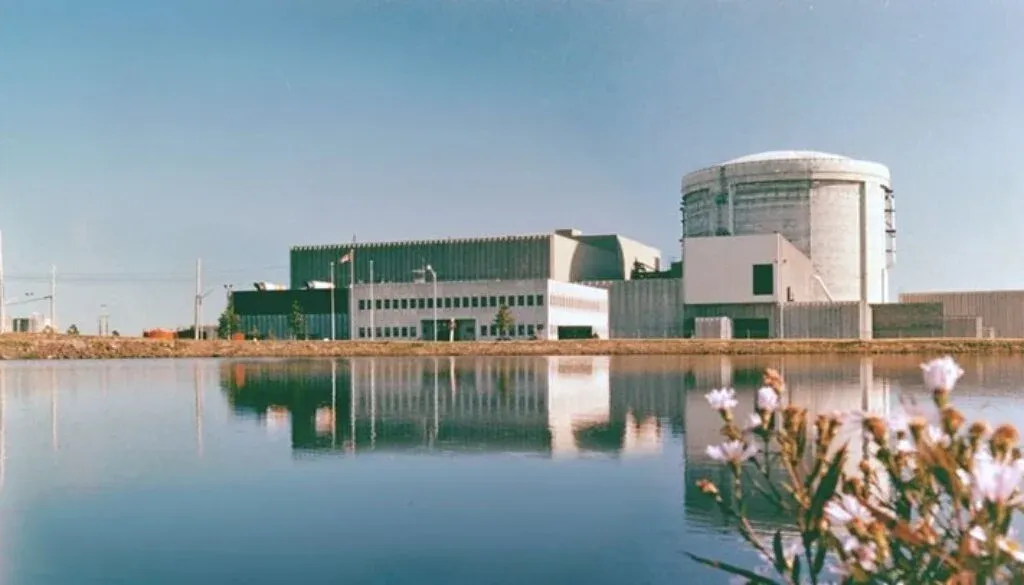
The Point Lepreau nuclear power station in New Brunswick
8.2 Indigenous-Participated Wind Projects
In renewable energy, New Brunswick is exploring a new model of economic reconciliation.
The Neweg Energy Project: A 25-megawatt wind project near Sussex, jointly owned by the Mi'gmaq United Investment Network (representing the Mi'kmaq Indigenous communities of New Brunswick) and developer Natural Forces. It is a model of Indigenous peoples shifting from mere "stakeholders" to "asset owners".
8.3 A Cybersecurity Haven
In Fredericton, anchored by the University of New Brunswick (UNB), the province has built a thriving cybersecurity ecosystem. The Canadian Institute for Cybersecurity (CIC) has attracted giants such as Siemens and IBM to set up R&D centres there, focused on protecting critical infrastructure. This has given a small province a place on the global cybersecurity map.
Part Nine: The Political Landscape and Governance Challenges
9.1 The 2024 Election and Political Realignment
The 2024 provincial election marked a major shift in New Brunswick's political winds. Liberal leader Susan Holt defeated long-serving Progressive Conservative Premier Blaine Higgs, becoming the province's first woman premier.
The rise of the Greens: The Green Party in New Brunswick is no longer a fringe force; it has consolidated seats in Kent County and university ridings, reflecting voters' disappointment with environmental issues and the traditional two-party system. This has given the provincial legislature a rare multi-party dynamic.
9.2 Fiscal Distress
New Brunswick has long been classified as a "have-not province", heavily dependent on federal equalization payments to maintain public-service standards.
Debt and deficits: The 2025–26 budget projects a deficit of about C$600 million, with net debt as a share of GDP expected to rise to 28.5% in 2028–29. The surge in health care spending (a large share of the budget) and debt-servicing costs are the greatest threats to fiscal health.
Part Ten: Indigenous Sovereignty Claims and Economic Rise
New Brunswick has 15 First Nations communities, belonging to the Mi'kmaq and Wolastoqey peoples.
10.1 The Land Title Claim
The Wolastoqey Nation has launched an unprecedented lawsuit, claiming Aboriginal title to more than 50% of the province's land (including major cities such as Fredericton and Saint John).
Legal logic: Based on the eighteenth-century Peace and Friendship Treaties, Indigenous peoples never ceded the land.
Latest developments: The court recently ruled that Indigenous title claims cannot extend to privately owned land — but this does not end claims to Crown land (public land) and industrial land. This creates enormous legal uncertainty for resource development in the province.
10.2 Economic Embodiment
Indigenous peoples are no longer content with passive government funding; they are actively engaging in the economy.
Anqotum Resource Management: This is the scientific body under the North Shore Mi'kmaq Tribal Council (NSMTC), focused on salmon conservation in the Miramichi River basin, climate-change adaptation and fisheries management, demonstrating the combination of Indigenous knowledge and modern science.
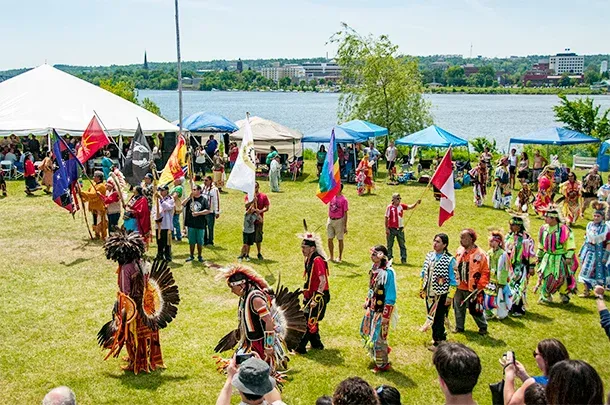
An Indigenous powwow at Saint Mary, New Brunswick
Part Eleven: City Profiles and Regional Economies
11.1 Moncton: The Crossroads of the Atlantic
Positioning: It is the province's most dynamic commercial engine and its only bilingual urban centre.
Economy: Leveraging its geographic centrality and railway-hub advantage, it developed logistics and call-centre industries. Today it has transformed into a retail and fintech centre.
Culture: The Université de Moncton is the cradle of Acadian intellectuals. Here, "bilingualism" is natural and lived.
11.2 Saint John: The Transformation of an Industrial Giant
Positioning: Canada's oldest incorporated city; the industrial heart.
Port revival: The Port of Saint John has just completed a C$247 million West Side modernization project, raising container capacity to 800,000 TEU (twenty-foot equivalent units). This expansion allows it to berth post-Panamax mega-vessels and reach North American inland markets directly by rail, aiming to challenge the port positions of Halifax and Montreal.
11.3 Fredericton: The Smart City
Positioning: The seat of government and an education centre.
Character: It has the province's highest per-capita income and education levels. Beyond government departments, its economy is increasingly driven by UNB-spawned tech start-ups. The annual Harvest Music Festival in September is its cultural calling card, drawing tens of thousands of visitors.
Part Twelve: Rural Life and Distinctive Communities
The soul of New Brunswick still lies in the countryside.
12.1 Quispamsis and the Kennebecasis Valley (KV)
As a satellite town of Saint John, the KV region represents the affluent middle-class suburban lifestyle of New Brunswick.
Lifestyle: This is a family-centred community with high-income residents (average household income about C$133,000). Although it is mainly a "bedroom community", it is implementing an aggressive housing strategy to address house-price pressures brought by population growth.
12.2 Plaster Rock's Hockey Diplomacy
Every February, this village of only about a thousand people hosts the World Pond Hockey Championship. More than 100 teams from around the world (including China and Europe) compete simultaneously on 20 rinks on a natural lake. This is not only a sporting event, but the ultimate expression of the New Brunswick rural community spirit — cold, warm-hearted and deeply grassroots.
12.3 St. Stephen: The Chocolate Town
This is the headquarters of Ganong Bros. Founded in 1873, the company invented North America's first heart-shaped chocolate box. The town takes pride in chocolate, with a chocolate museum and an annual chocolate festival, showing how traditional manufacturing can be transformed into a tourism resource.
Part Thirteen: Infrastructure and Strategic Projects
13.1 The Battle to Defend the Chignecto Isthmus
The Chignecto Isthmus connecting New Brunswick and Nova Scotia is a narrow land bridge only 21 kilometres wide, carrying C$35 billion in trade every year.
Crisis: With sea-level rise and geological subsidence, a strong storm surge could inundate the isthmus, effectively turning Nova Scotia into an island and cutting off the national transport line.
The project: The federal and provincial governments have launched a C$650 million, ten-year project to raise the dykes and build new sluice gates — a race against time and a classic case of climate-adaptation infrastructure.
Part Fourteen: Conclusions and Future Outlook
New Brunswick is undergoing its own "quiet revolution". It is trying to shed the labels of "fiscal burden" and "drive-through province", using its unique bilingual advantage, energy infrastructure and newly gained demographic dividend to redefine its position within the Canadian federation.
Key trends summarized:
Reversal of the demographic structure: Immigration has successfully filled the gap left by natural population decline, but this has brought enormous pressure on housing and health care.
The energy-transition gamble: An all-in bet on SMR nuclear technology, attempting to turn from an energy-importing province into a clean-technology exporter.
The rise of Indigenous power: From lawsuits to equity participation, Indigenous peoples are becoming a core force that cannot be bypassed in economic development.
The test of the social contract: The bilingual system and the urban–rural gap remain potential political fault lines.
Final assessment:
New Brunswick is no longer a static scenic postcard, but a laboratory full of dynamic tension. It seeks a delicate balance between tradition and modernity, monopoly and diversity, English and French. For observers, understanding New Brunswick means understanding how, in an era of globalization and climate change, a small resource-based economy searches, with difficulty but determination, for a path to rebirth.
Appendix: Key Data at a Glance
Total population (2024): 854,355 (+2.7% growth)
Median age: 44.8 years (trending younger)
Official language composition: English (~65%), French (~32%)
Projected real GDP growth (2025): ~1.0%–1.1%
Unemployment rate: about 7.3%–7.7%
Main export products: refined petroleum, lobster, timber, potato products
Provincial net debt forecast: 28.5% of GDP (2028–29)
Core enterprises: Irving Group, McCain
Cited Works
New Brunswick | History, Cities, Facts, and Map | Britannica, accessed February 8, 2026, https://www.britannica.com/place/New-Brunswick-province
The top 10 attractions in New Brunswick | Destination Canada, accessed February 8, 2026, https://travel.destinationcanada.com/en-au/things-to-do/top-10-attractions-new-brunswick
Exploring Indigenous-led distributed energy systems in New Brunswick, accessed February 8, 2026, https://climateinstitute.ca/publications/exploring-indigenous-led-distributed-energy-systems-in-new-brunswick/
New Brunswick | Geography and Cartography | Research Starters, accessed February 8, 2026, https://www.ebsco.com/research-starters/geography-and-cartography/new-brunswick
How the changing face of the New Brunswick winter is forcing some people to face winter, accessed February 8, 2026, https://www.cbc.ca/news/canada/new-brunswick/winter-events-activities-nb-1.6753488
About New Brunswick: Atlantic Canada | Canadavisa.com, accessed February 8, 2026, https://www.canadavisa.com/about-new-brunswick.html
History of New Brunswick - Wikipedia, accessed February 8, 2026, https://en.wikipedia.org/wiki/History_of_New_Brunswick
New Brunswick: Unpacking Its Rich Meaning And Identity - Rockfeller, accessed February 8, 2026, https://experience.rockfeller.com.br/key-speak/new-brunswick-unpacking-its-rich-meaning-and-identity-1764807341
History and Culture - Government of New Brunswick, accessed February 8, 2026, https://www2.gnb.ca/content/gnb/en/corporate/promo/immigration/why-choose-nb/history-and-culture.html
Growing Miramichi: Population Growth Action Plan, accessed February 8, 2026, https://greatermiramichisc.ca/wp-content/uploads/2025/05/Growing-Miramichi-Population-Growth-Action-Plan-2025-28_FIN_October.pdf
New Brunswick - Wikipedia, accessed February 8, 2026, https://en.wikipedia.org/wiki/New_Brunswick
History of the Acadians - Wikipedia, accessed February 8, 2026, https://en.wikipedia.org/wiki/History_of_the_Acadians
New Brunswick | The Canadian Encyclopedia, accessed February 8, 2026, https://thecanadianencyclopedia.ca/en/timeline/new-brunswick
Population Report - NBjobs.ca, accessed February 8, 2026, https://www.nbjobs.ca/sites/default/files/2025-03/2025-02-19-LMI-Population-Report-EN.pdf
Report of the 2021 Review of the Official languages Act of New Brunswick, accessed February 8, 2026, https://www2.gnb.ca/content/dam/gnb/Departments/iga-aig/pdf/2021-review-official-languages.pdf
School Systems - The Canadian Encyclopedia, accessed February 8, 2026, https://www.thecanadianencyclopedia.ca/en/article/school-systems
THE GOVERNMENT OF NEW BRUNSWICK, accessed February 8, 2026, https://journals.lib.unb.ca/index.php/unblj/article/download/29785/1882524966/1882525426
The Acadian music explosion - CBC, accessed February 8, 2026, https://www.cbc.ca/music/the-acadian-music-explosion-1.6553620
New Brunswick, Irving company province - The Maine Monitor, accessed February 8, 2026, https://themainemonitor.org/new-brunswick-irving-company-province/
Our History - McCain Foods, accessed February 8, 2026, https://www.mccain.com/about-us/our-history/
About Us - McCain USA, accessed February 8, 2026, https://mccainfoodsusa.com/about-us/
Journal of Rural and Community Development, accessed February 8, 2026, http://susanodo.ca/wp-content/uploads/2020/03/2019-JRCD.pdf
Investigating Irving's New Brunswick Impact | PDF | Taxes - Scribd, accessed February 8, 2026, https://www.scribd.com/document/962984188/Investigating-Irving-s-New-Brunswick-Impact
Exploring The Irving Empire: A Deep Dive Into New Brunswick's Powerhouse, accessed February 8, 2026, https://testelecom.jis.az/blog/exploring-the-irving-empire-a-deep-dive-into-new-brunswicks-powerhouse-1767647457
Clean Energy - Government of New Brunswick, accessed February 8, 2026, https://www2.gnb.ca/content/gnb/en/corporate/promo/clean-energy.html
Small Modular Reactor - OPG, accessed February 8, 2026, https://www.opg.com/wp-content/uploads/2021/04/Provincial-FS-AODA_APRIL_2021_FINALv2.pdf
Neweg Energy Project - Natural Forces, accessed February 8, 2026, https://www.naturalforces.ca/projects/neweg-energy-project/
Ottawa announces funding for Indigenous-led wind projects, accessed February 8, 2026, https://www.ctvnews.ca/atlantic/article/ottawa-announces-funding-for-indigenous-led-wind-projects/
An In-Depth Look at the Canadian Institute for Cybersecurity - Opportunities NB, accessed February 8, 2026, https://onbcanada.ca/canadian-institute-for-cybersecurity-unb/
University of New Brunswick - Securing critical infrastructure through cyber innovation, accessed February 8, 2026, https://educationnewscanada.com/article/education/level/university/1/773116/securing-critical-infrastructure-through-cyber-innovation.html
N.B. votes 2024: Liberals win majority government, Holt province's first woman premier, accessed February 8, 2026, https://globalnews.ca/news/10815837/new-brunswick-election-2024-voting-day-oct-21/
New Brunswick Election 2024: History Made in the Maritimes, accessed February 8, 2026, https://strategycorp.com/2024/10/new-brunswick-election-2024-history-made-in-the-maritimes/
Economics and Statistics - Government of Nova Scotia, accessed February 8, 2026, https://novascotia.ca/finance/statistics/archive_news.asp?id=20845
First Nations in New Brunswick | The Canadian Encyclopedia, accessed February 8, 2026, https://www.thecanadianencyclopedia.ca/en/article/first-nations-in-new-brunswick
New Brunswick judges side with Irvings, other timber firms on Aboriginal title claim, accessed February 8, 2026, https://nbmediacoop.org/2025/12/13/new-brunswick-judges-side-with-irvings-other-timber-firms-on-aboriginal-title-claim/
News Room - North Shore Mi'kmaq Tribal Council, accessed February 8, 2026, https://nsmtc.ca/news/
Pre-budget consultation 2025-2026 - Government of New Brunswick, accessed February 8, 2026, https://www2.gnb.ca/content/dam/gnb/Corporate/pdf/consultations/2025-2026-pre-budget-consultation.pdf
Port of Saint John completes major container terminal expansion, accessed February 8, 2026, https://shippingmatters.ca/port-of-saint-john-completes-major-container-terminal-expansion/
Port Saint John completes West Side Modernization Project, accessed February 8, 2026, https://www.porttechnology.org/news/port-saint-john-completes-west-side-modernization-project-2/
Harvest (music festival) - Grokipedia, accessed February 8, 2026, https://grokipedia.com/page/harvest_music_festival
HOUSING ACTION STRATEGY - Town of Quispamsis, accessed February 8, 2026, https://www.quispamsis.ca/media/m5povnjs/quispamsis_housing-action-strategy-adopted-ver-date-2025-04-14.pdf
Contributions - World Pond Hockey Championship, accessed February 8, 2026, https://worldpondhockey.ca/contributions
Early cold snap a boost for World Pond Hockey Championship, accessed February 8, 2026, https://rivervalleysun.ca/early-cold-snap-a-boost-for-world-pond-hockey-championship/
Ganong Bros. - Wikipedia, accessed February 8, 2026, https://en.wikipedia.org/wiki/Ganong_Bros.
Canada's Chocolate Town | St. Stephen, New Brunswick, accessed February 8, 2026, https://town.ststephen.nb.ca/about/visiting-st-stephen/canadas-chocolate-town
Protecting the Chignecto Isthmus against climate change - Canada.ca, accessed February 8, 2026, https://www.canada.ca/en/housing-infrastructure-communities/news/2025/03/protecting-the-chignecto-isthmus-against-climate-change.html
Fundy tides to peak in 2034, adding urgency to Chignecto flood project, accessed February 8, 2026, https://www.cbc.ca/news/canada/new-brunswick/fundy-tides-higher-isthmus-fix-9.6938117
New Brunswick Office Marketbeat Q3 2025 - Cushman and Wakefield, accessed February 8, 2026, https://assets.cushmanwakefield.com/-/media/cw/marketbeat-pdfs/2025/q3/canada/nb_americas_marketbeat_office_q3-2025.pdf
New Brunswick Economic and Commercial Profile, accessed February 8, 2026, https://www.ice.it/it/sites/default/files/inline-files/NEW%20BRUNSWICK%202025.pdf
New Brunswick Economic Trends, Stats and Rankings - IBISWorld, accessed February 8, 2026, https://www.ibisworld.com/canada/economic-profiles/new-brunswick/
About New Brunswick - gnb.ca, accessed February 8, 2026, https://www.gnb.ca/en/admin/about-nb.html
Federal election 2025 report, WNNB, accessed February 8, 2026, https://wnnb.wolastoqey.ca/wp-content/uploads/federal_election_2025_report_wnnb.pdf
This article was originally published on the WeChat public account 「新不伦瑞克」 (New Brunswick Today); original link: mp.weixin.qq.com/s?__biz=MzI4Mjc3NDcyMg==&mid=2247484219&idx=2&sn=2585ac15248f6b8c68eb1978122450fc&chksm=eb959e96dce217806f020629034bf83fec430910185d615af69eb9b8de3c2b7eb99c68629a23&scene=178&cur_album_id=4378684396283723780&search_click_id=