
November 5, 2026
An Aria from the Tidal Depths: A Brief History of Moncton
From Mi'kmaq legend and Acadian dykelands to wooden ships, railway shops, bilingual city hall and the reopened tidal gates — how Moncton, the city that once could not afford its own town government, became New Brunswick's bilingual hub.
In 1927, fifteen-year-old Northrop Frye volunteered at the Moncton Public Library. Between the shelves on Archibald Street, he read George Bernard Shaw's plays and entered the world of the poet and artist William Blake. He would go on to become one of the twentieth century's great literary critics; the railway city stayed in his boyhood memory. [21]
By then, the railway shops had already provided a living for two generations of Moncton families. Earlier still, wooden ships on the riverbank had made the place prosperous — until the trade declined and left residents too poor to keep a town government. After Frye left, French-speaking young people walked into the university and into city hall, demanding a say in civic life in their own language.
Today Moncton is often called a transportation hub, a commercial centre and a bilingual city. Each of those identities has a concrete history. To find them, walk from the library toward the river, back to the bend that is older than the city's name.
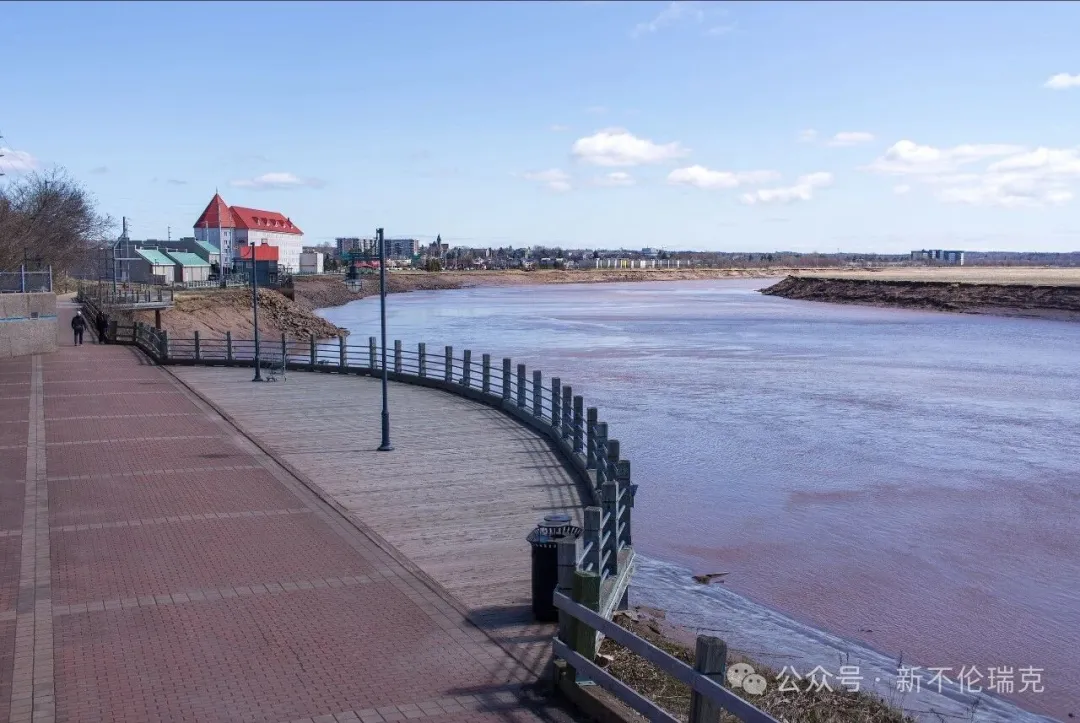
Figure 01 | The Petitcodiac River on the Moncton waterfront, April 2022. The riverside trail shows the relationship between the city and its river; this is a modern view, not a photograph taken during a tidal bore. Source: Judith Bourque; original image and licence record, CC BY-SA 2.0. The original was not cropped, colour-adjusted or retouched.
1. The River Has Its Own Story
The Petitcodiac River makes a sharp bend at Moncton. At low tide, wide mudflats are exposed; at high tide, water from the Bay of Fundy runs up the river, the tidal bore pushing across its brown surface.
In one Mi'kmaq telling of the story, the river water was once clear, until a giant eel drove the fish and the fresh water toward the salty bay. Glooscap, learning of the people's plight, gave the lobster strength to fight the eel. The struggle churned up mud and waves, leaving the river muddy and tidal. [20]
In 1963, Mi'kmaq artist Michael Francis turned the story into a silkscreen print card. The Legend of the Tidal Bore is now held by the Beaverbrook Art Gallery in Fredericton. It preserves an oral tradition of understanding the river, and shows Indigenous stories continuing to enter new art forms. [20]
The Mi'kmaq who lived along the river also knew the practical value of the tides. Paddling a canoe with a favourable tide reduced the effort of travel; where the waterway ended, canoe and cargo could be carried overland along a portage to another river.
Where Hall's Creek joins the great river was a node of early camps and travel routes. Tributaries and portages led toward Shediac, while other routes upstream connected with the Saint John River system. The seasons, the fish, the game and visits among kin together decided when people set out and where they stopped. [2]
The name Petitcodiac comes from the Mi'kmaq language. Its exact meaning is recorded differently in different sources, but long before Europeans arrived, this river already had a name, residents and roads to distant places.
The city's roads and rails would later spread across land where people were already living.
2. A Homeland in the Dykelands, a River Valley at War
From the late seventeenth century into the first half of the eighteenth, Acadian families gradually settled along the river. The bend was called Le Coude, meaning "the elbow" or "the bend"; the English name The Bend later pointed to the same feature. [3]
The Acadians were skilled at dyking tidal salt marshes. They built dykes to hold back the sea, then installed one-way drainage gates called aboiteaux: at low tide they let water out, at high tide they kept salt water from flowing back in. After drainage, leaching and cultivation, some salt marshes gradually became pasture and farmland.
The fields had to be protected by works maintained in common. Once a dyke broke, the tide could flow back in, damaging crops and the hay for livestock. The heritage records of the bend still hold traces of the early dykes and Acadian burial grounds. [3]
In 1755, war entered these families' lives.
In June, Robert Monckton led British forces to capture Fort Beauséjour. The Great Upheaval that followed detained residents, put them aboard transport ships, and made their houses, food and settlements targets for destruction. Some were forced to leave, some fled into other river valleys or forests, and some stayed to resist. [4]
On September 3 of that year, a British detachment ordered to destroy the settlements of the Petitcodiac River valley and force the residents to surrender for deportation was repulsed near present-day Hillsborough. The counterattack was led by the French officer Charles Deschamps de Boishébert. This Battle of Petitcodiac took place outside Moncton, and must not be placed in today's city centre. [4]
Joseph Broussard, nicknamed Beausoleil, was another important figure in the resistance of the years that followed. With Indigenous allies he attacked British targets, was later imprisoned, and eventually led a group of Acadians through Saint-Domingue to Louisiana. Parks Canada dates his period of resistance to 1755–1762. [27]
One battle won did not end the deportation; one group's exile did not make the Acadians and the Mi'kmaq disappear from the region. When new colonial land grants arrived, they took over a river valley interrupted by war, yet still carrying its residents and its memory.
3. The Ship from Pennsylvania
On June 3, 1766, a group of German-speaking settlers who had come by way of Pennsylvania arrived at the bend by ship. The later landing monument lists eight families, some of whose surnames evolved into the Steeves, Trites, Lutes and Somers familiar to local people today. [5]
When they arrived, the American Revolutionary War had not yet begun. Their migration was a different experience from that of the Loyalists who came in large numbers to the mouth of the Saint John River in 1783.
Land grants had to become real life: building houses, fencing land, planting crops, finding income, and preparing for winter. The riverbank the new settlers used already had Mi'kmaq portages and land the Acadians had worked. What is called "resettlement" was bound up with the earlier war and the redistribution of land.
The Treitz Haus lets this history be approached as a tangible object. Today it stands near Bore Park. Tree-ring dating and building analysis place its eastern core at about 1769; later additions, alterations and a move layered traces of different eras onto the house. [6]
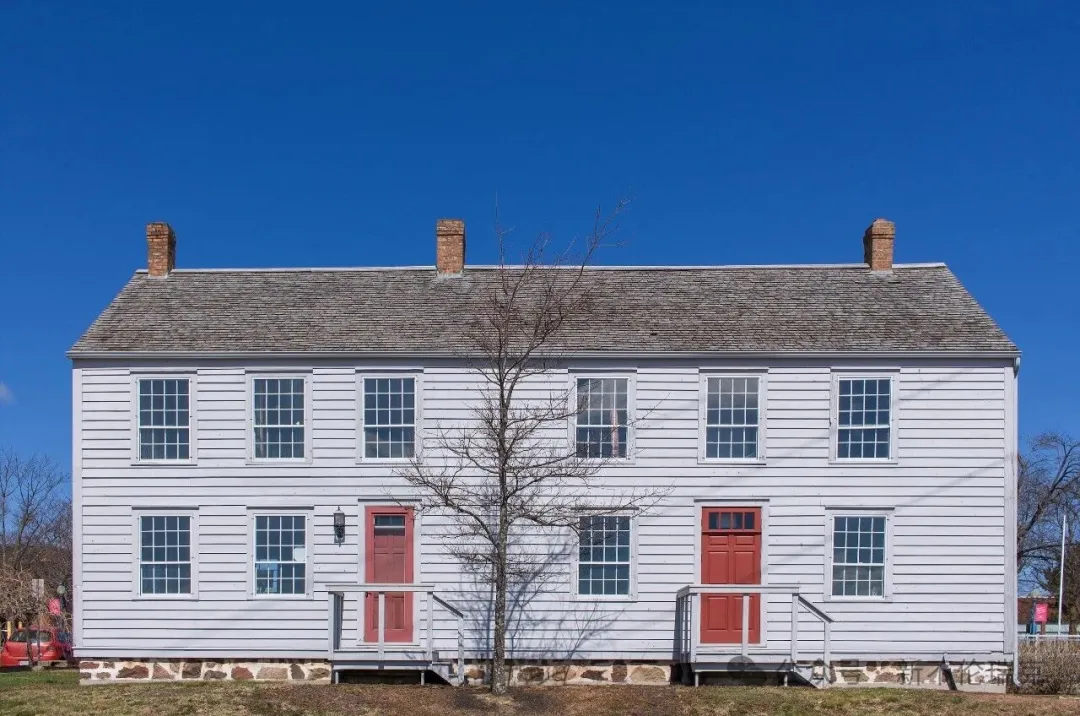
Figure 02 | The Treitz Haus, April 2022. The surviving building contains additions from different periods; the dating of about 1769 applies to its eastern structure, not the whole house. Source: Judith Bourque; original image and licence record, CC BY-SA 2.0. The original was not cropped, colour-adjusted or retouched.
The house served both as a home and for business. The river brought people, and it also let goods and trade arrive; the growing settlement began to build its livelihood on the position of this bend in the river.
The colonial township took the name Monckton, in honour of Robert Monckton. The city's later name is thus linked to a key officer of the British conquest and deportation of 1755.
Today's Moncton is missing a k. The story of a clerk dropping a letter is still told, but the existing evidence is not enough to attribute the change in spelling to any single slip of the pen. What can be confirmed directly is that the 1855 act of incorporation already spelled it Moncton. [7]
The name in use today carries the belonging of later residents, and also preserves its earlier colonial origin.
4. Wooden Ships Turn the Bend into a Town
When the young lawyer Bliss Botsford arrived at the bend in 1836, there were only a few shops, an inn and fewer than twenty houses, surrounded by salt marsh and forest. Over the next twenty years, shipbuilding and trade changed its scale. [1]
Timber entered the shipyards, craftsmen worked the hulls, and ironworkers, stevedores and merchants each took their part. Before a ship was launched from the riverbank, it had already connected the forest, the workshops, the wharves and distant buyers.
Joseph Salter was an important local shipbuilder. In the 1850s, shipping demand from the Crimean War and the Australian gold rush helped the yards expand. On April 12, 1855, the provincial legislature passed the Act to Incorporate the Town of Moncton, providing for a mayor and six councillors; Salter became the first mayor. [1][7]
The prosperity looked sufficient for the place to carry its own administration and public affairs. But the ships that were built still had to be sold in overseas markets.
In the late 1850s, an oversupply of ships in Liverpool, England, soured the market, and Salter's business fell into bankruptcy. The crisis spread from the shipyards to property and taxation: land values fell, residents struggled to pay taxes, and the town government still had debts to repay. [1]
In 1862, the newly elected mayor, Botsford, asked the legislature to revoke the town's incorporation. Cancelling some administrative salaries and redistributing the tax burden to Westmorland County was his way of cutting costs. The request was granted, and Moncton lost a town government only seven years old. [1]
The streets, houses and residents did not vanish with the act. What was lost was a municipal arrangement that could no longer be afforded. Some carried on in business, others waited for new work; the railway that had already reached the region would gradually change the bend's livelihood.
5. A Great Fire, and the Shops That Had to Stay
By 1860, the railway connecting Saint John and Shediac was already running, but at first it could not immediately offset the decline of shipbuilding. It was the Intercolonial Railway (ICR), built after Confederation, that further enlarged Moncton's place in the railway system. [1][8]
A federal administrative decision of 1872 required railway head-office staff to be concentrated in Moncton; in 1876, the main line linking the Maritimes with Quebec was completed. The concentration of headquarters, shops and lines brought steady wages and more families. [8]
In 1875, Moncton regained town status; on April 23, 1890, it became a city. The city's historical narrative links the Latin motto Resurgo — "I rise again" — with the reincorporation of 1875. The place that had once been too poor to keep a town government now had the income to expand municipal life. [9]
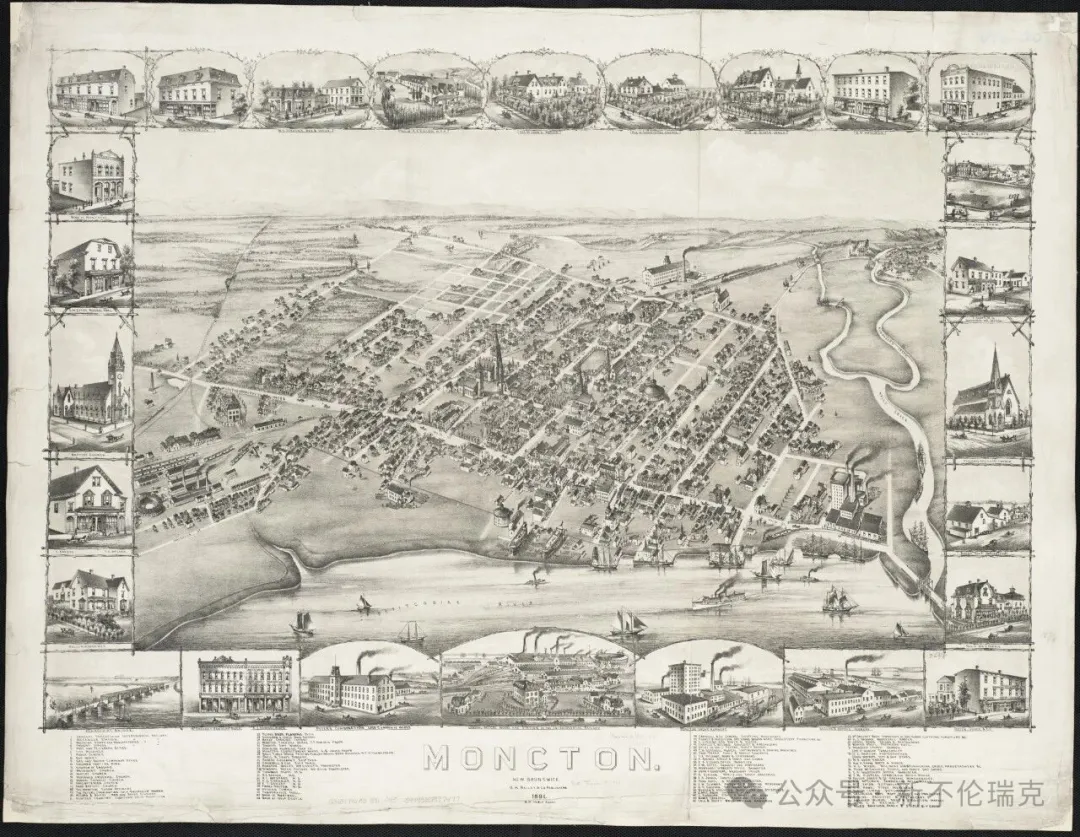
Figure 03 | Bird's-eye view of Moncton, 1881, drawn and published by O. H. Bailey & Co. The bend, the railway and the expanding streets are visible; this is the city after the rise of the railway, not a map from the time of incorporation in 1855. Source: Boston Public Library / Norman B. Leventhal Map & Education Center, call number G3434.M6A3 1881.O43; digital image under the publisher's CC BY 2.0. The original was not cropped, colour-adjusted or retouched.
On February 24, 1906, a devastating fire destroyed the old railway shops. After the loss, a larger question immediately arose: where would the new shops be built? If they moved to Quebec or Nova Scotia, the next paycheque of many Moncton families might leave with them. [10]
The local Member of Parliament, Henry Robert Emmerson — who was also the federal Minister of Railways and Canals — began campaigning to keep the shops in Moncton. He succeeded. When the new shops were founded, many merchants closed for the afternoon to join the celebrations; in 1908, the new facilities officially opened. [10]
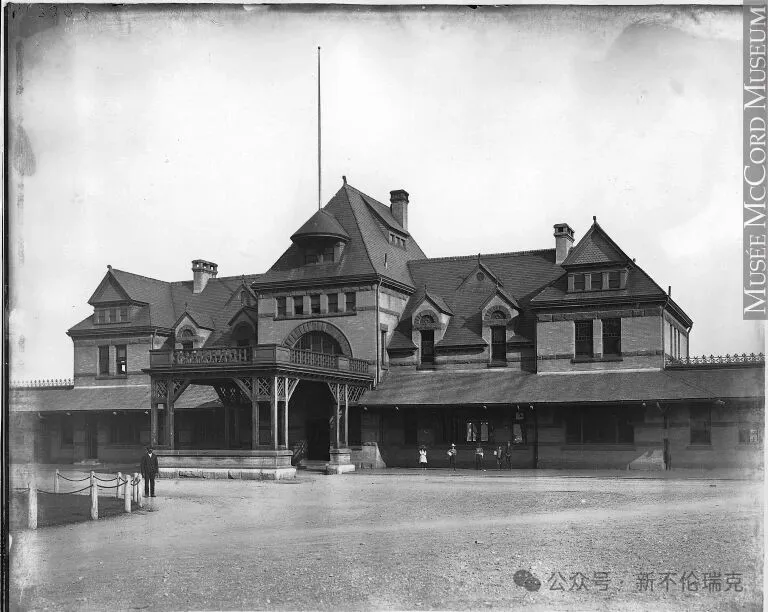
Figure 04 | The Moncton Intercolonial Railway station, 1901, photographed by William Notman & Son. It shows a public building of the railway era; the station in the photograph is a different facility from the repair shops that burned in 1906. Source: William Notman & Son / McCord Museum (now McCord Stewart Museum), VIEW-3396; public-domain marking. The museum name in the original image is retained. The original was not cropped, colour-adjusted or retouched.
Inside the shops, there was another city history written by ordinary people.
In 1902, seventeen-year-old Célime A. Melanson came to Moncton from rural Kent County to work as an ordinary labourer in the repair shops. He gradually became a skilled machinist, while studying business and correspondence courses, and later became active in the labour movement. In 1919, he was elected president of the New Brunswick Federation of Labour. [11]
By about 1920, the local railway system employed more than 2,500 workers, about a quarter of them Acadian. English- and French-speaking workers made their living in the same industrial world, and discussed working hours, wages and organizing rights in the same unions. [11]
In 1919, the ICR was absorbed into the Canadian National Railways system. The CN shops people later knew inherited the skills, the jobs and the family hopes of this place. [8]
6. Goods from a Catalogue, a Home across the Bridge
In 1920, Eaton's Moncton mail-order centre opened. At first, customers ordered mainly from the catalogue, and it was only after retail space was added in 1927 that people could walk into the building to buy goods. [12]
Customers chose from afar, orders arrived in Moncton, and staff processed, sorted and packed them before handing the goods to the transport network. Besides railway repair, warehousing and order processing also became a livelihood. The bend's way of connecting with distant places extended from ships and locomotives to the shopping catalogues of ordinary families.
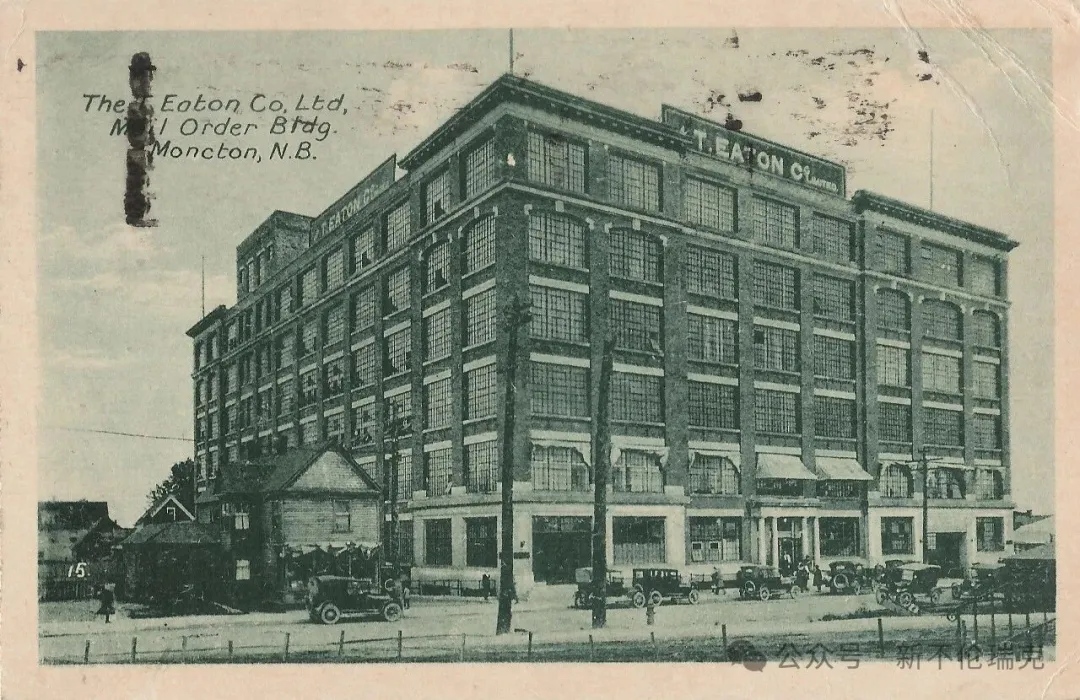
Figure 05 | Old postcard of the Eaton's mail-order building; the source page dates the postcard to 1927, though the exact date of the photograph is not known. The company name on the building and the vehicles in the street preserve the cityscape of the mail-order era at its height. Source: author unknown, private collection of a Wikimedia Commons uploader; public-domain marking. The original was not cropped, colour-adjusted or retouched.
After the war, highways and housing construction widened the range of residents' daily movement. A person's workplace and home could be in different municipalities.
Dieppe, to the east, has its own history as an Acadian settlement. Once called Léger's Corner, it adopted the name Dieppe in 1946, in memory of the Canadian soldiers in the 1942 raid on Dieppe, France; it became a town in 1952 and a city in 2003. [13]
Riverview, on the south shore, was formed in 1973 by the merger of the three communities of Bridgedale, Gunningsville and Riverview Heights. Housing construction quickened, more families lived across the river, then crossed it to work and shop. [14]
What people today call "Greater Moncton" usually refers to this shared living area. Moncton, Dieppe and Riverview share connected roads, jobs and commercial space, yet remain separate municipalities, each with its own government and history.
7. French-Speaking Youth Walk into City Hall
Railway work drew Acadian families in, and the city's French-language public life gradually expanded. Education, associations and cultural institutions let residents build longer-lasting civic ties in their own language.
In 1963, the Université de Moncton was founded. French-speaking young people received higher education locally, and on campus they debated tuition fees, job opportunities and the future of Acadian society. Going to university meant opening a career path, and it also made young people reconsider their place in the city. [15]
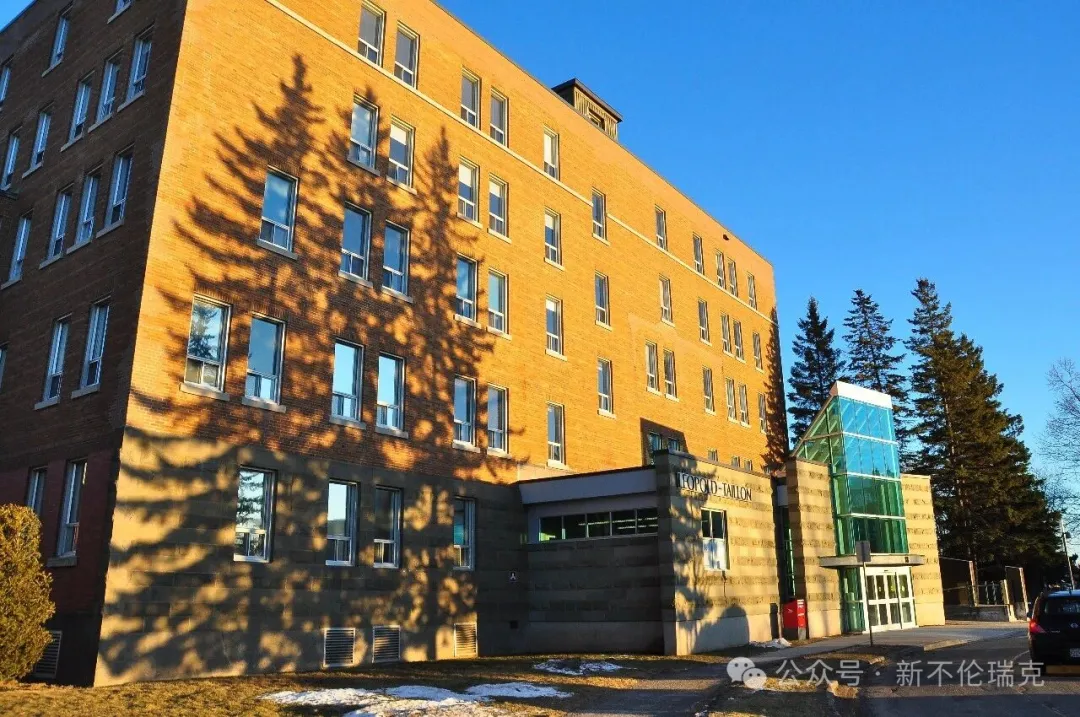
Figure 06 | Université de Moncton campus buildings, January 2018, photographed by abdallahh. This image illustrates the university's urban space; it is not a photograph of the 1968 student movement. Source: abdallahh; original image and licence record, CC BY 2.0. The original was not cropped, colour-adjusted or retouched.
In 1968, the university announced a tuition increase. Students' dissatisfaction intertwined with municipal language rights, school arrangements and the socio-economic situation of the French-speaking population.
In February, about two thousand participants, mostly university and high-school students, marched to city hall. Four student representatives entered council, asking the municipal administration to add bilingual measures. Mayor Leonard Jones refused to let them present in French and stressed the cost of bilingualism. The confrontation on site was recorded on television. [15]
The students then travelled to Fredericton to join protests over education costs. Being able to afford university, and being able to make demands of public institutions in French, became connected causes in their actions.
The change went through a long institutional process. Moncton did not adopt its first bilingual services policy until 1991, and on August 6, 2002, city council formally adopted an official bilingualism declaration. Municipal policy, together with language law at the provincial and federal levels, formed the institutional environment that followed. [16]
More than thirty years passed between students walking into council and the city's declaration. The two languages on public signs today rest on years of residents demanding to be heard and served equally.
8. After the Shops Closed
In the years when language rights were gradually gaining institutional protection, the pillars of the old economy began to loosen.
In 1976, the Eaton's mail-order centre closed, and about 1,300 jobs disappeared. The loss of railway jobs lasted longer: diesel locomotives replaced steam, improving efficiency and reducing the need for maintenance. In 1985, CN announced the closure of the Moncton repair shops, which still employed about 1,150 workers. [17]
Local people launched the "Save Our Shops" campaign to keep the shops. In 1988, the closure still went ahead. After the great fire of 1906, Moncton had succeeded in keeping railway work; this time, the campaign did not bring the same result. [17]
Next, the city had to find new income for its existing residents.
In the 1990s, Premier Frank McKenna took part in attracting call-centre investment; telecom companies, local economic development agencies and community colleges provided lines, promotion and training respectively. After Greater Moncton welcomed its first early call centres in 1991–1992, the industry gradually grew into a new source of employment. [17][28]
The two languages, long debated as a cost of public services, now became a workforce advantage valued by some employers. But the new jobs also depended on communications infrastructure, vocational training and market demand — they cannot be explained by the word "bilingual" alone.
Transportation, warehousing, retail, professional services and public institutions together supported a more diversified economy. The recovery later called the "Moncton Miracle" came after many businesses, institutions and workers made adjustments one after another. [17]
For people who lost their old jobs, the city's overall recovery and the restabilizing of individual lives did not always happen at the same time. The next job for a skilled railway worker did not necessarily use the same craft.
The old shops were later demolished, but the granite cornerstone of 1906 was preserved and placed on the south side of today's Millennium Boulevard. It once stood for the joy of the new shops being allowed to stay here, and later appeared in the ceremony marking the old shop site's conversion into a technology park. [10]
9. Two Languages, Many Voices
Beyond the shops, the university and the offices, Moncton gradually formed something else that could travel far: residents telling the story of their own lives.
Frye's boyhood reading is one thread. The literary festival later held in his name brings English- and French-language writers and readers together in the same city. Reading in the library entered public festivals and school activities, and gave the memory of the "railway city" a new company of book lovers. [21][24]
Acadian writer Antonine Maillet brought a different literary experience. Born in Bouctouche, she taught in Moncton and served as Chancellor of the Université de Moncton from 1989 to 2001. Her connection with the city ran through years of classroom teaching, university affairs and literary work. [22]
In La Sagouine, she let a working-class Acadian woman tell her life in her own voice; in Pélagie-la-Charrette, which won the Prix Goncourt in 1979, she carried the experience of returning home after the deportation into the novel. The vernacular speech, poverty and historical memory of ordinary people thus entered the wider world of French literature. [22]
French in the city is not only the language of classrooms and official documents.
In Moncton and southeastern New Brunswick, some Acadian residents speak a vernacular known as Chiac. Based on French, it absorbs a large amount of English vocabulary and some structures. Linguists have studied this usage in the everyday conversations of French-language high-school students in Moncton, discussing its relationship with local identity, school norms and the English-speaking environment. [23]
This vernacular has faced the judgement of "not speaking properly enough", and it has also become a way for some speakers to express local belonging. How people speak in different settings, and which voices they are willing to bring into public space, are also part of the city's history.
From students demanding French-language services, to writers letting ordinary people speak, to the mixing of languages in everyday conversation, Moncton's bilingual life has always contained differences. A municipal declaration can set out promises about services; the voices of residents will keep growing.
10. Letting the Tide Through Again
In 1968, the Petitcodiac Causeway was built, connecting Moncton with the south shore more directly. Vehicles could cross, and a headpond formed upstream. The growing cross-river living area thus gained a convenient route.
But the river changed over the long term. The causeway and its gates restricted tidal exchange, sediment accumulated, the river channel narrowed, fish passage up- and downstream was severely affected, and the tidal bore weakened. [18]
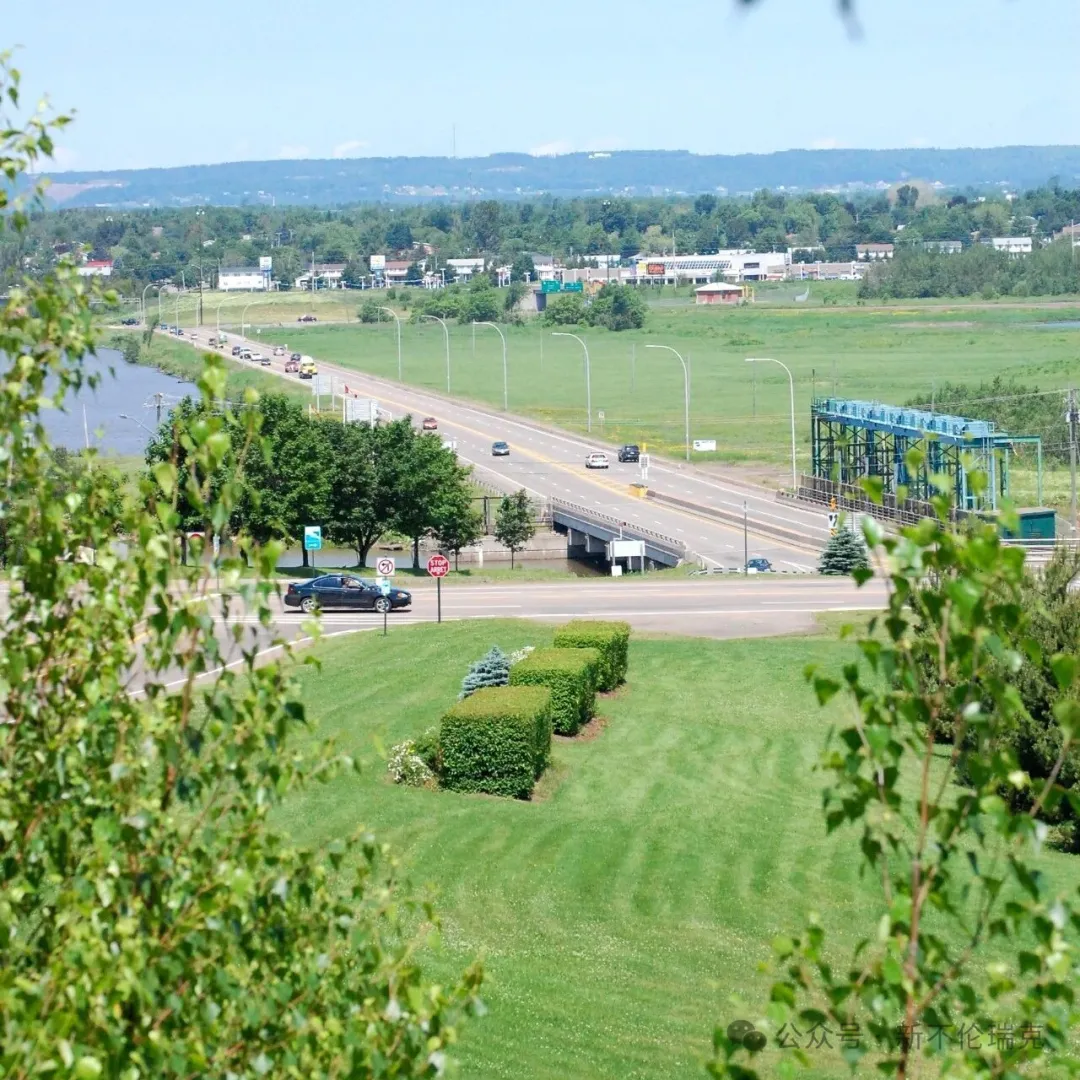
Figure 07 | The old Petitcodiac Causeway, July 2008, photographed by Verne Equinox. The road and the gate structures appear together; the photograph was taken before the gates were permanently opened in 2010. Source: Verne Equinox; original image and licence record, CC BY 3.0. The original was not cropped, colour-adjusted or retouched.
In the decades that followed, debate over the causeway continued. Environmental groups called for the restoration of tidal and fish passage, while other residents cared about the headpond landscape, recreation and riverside land use they had grown used to. Government had to decide between these demands, while also maintaining the transportation residents depended on every day.
On April 14, 2010, the gates were opened, and the river regained freer tidal exchange. In September 2021, a new bridge opened, with a wider river channel passing beneath it. The road continues to connect the two shores, and the river gained greater room to flow. [18][19]
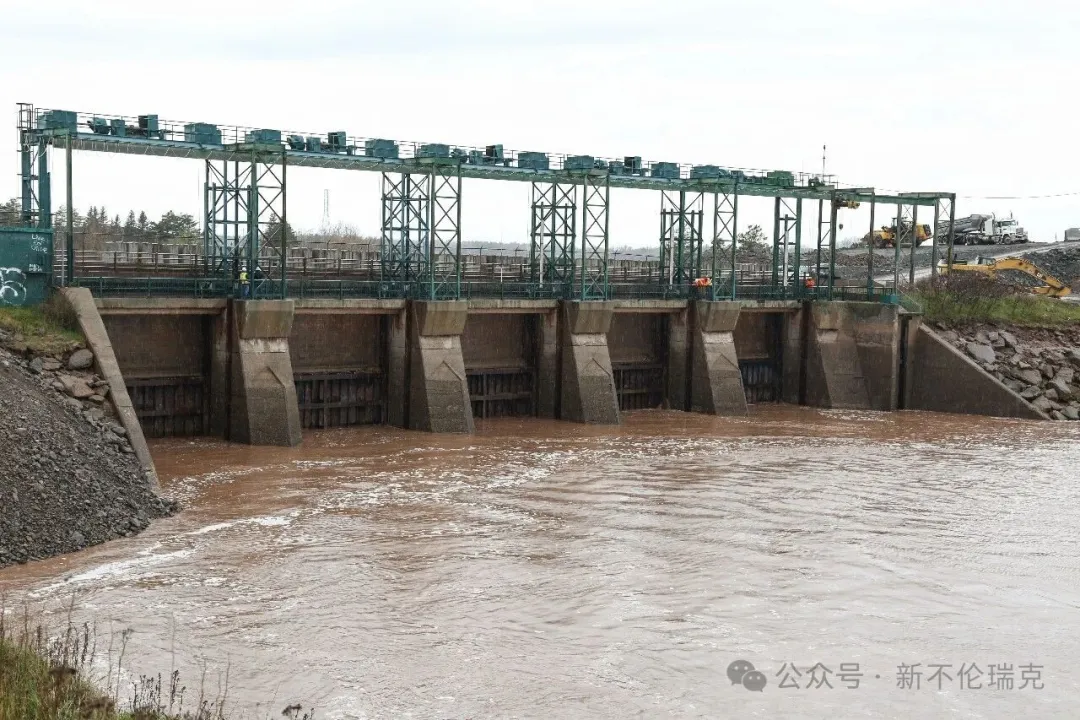
Figure 08 | The old gate structure during the diversion phase of the new bridge project, May 2021. The provincial government's original caption records the construction step in which the river was diverted into the channel beneath the new bridge; the main subject is the old gates, not a panoramic view of the completed new bridge. Source: New Brunswick / Nouveau-Brunswick (Government of New Brunswick); originally published on the provincial government's Flickr, with Commons sourcing and a Public Domain Mark verification record. The original was not cropped, colour-adjusted or retouched.
This restoration did not erase half a century of effects in a single day. The riverbed, banks and habitats still need monitoring, and people continue to learn how to live with a changing river.
Elsewhere in the city, change has not stopped either.
The Avenir Centre, opened in 2018, brought sports, performances and public events back to a former commercial site in the city centre. The new building continues the city's effort to find uses for its core and draw residents to stay downtown. [25]
New residents also bring richer languages and life experiences. The newcomer guide jointly updated by Moncton, Dieppe and Riverview brings together finding work, getting around, housing and community services. For families who have just arrived, whether the city is a place to stay must be judged little by little, from these concrete things. [26]
More than a century ago, Melanson came from the countryside to the railway shops, and Frye looked for a larger world in the library. People arriving today are also looking for work, schools, housing and relationships in which they can settle.
The tide still turns at the bend. The Treitz Haus, the cornerstone left by the railway shops, the university campus and the library preserve traces of people who lived here in different eras. Moncton's motto says "I rise again"; what truly keeps the city going is that after every round of change, there are still people here working, striving, telling stories, and carrying on with new days.
Key References
The numbers below are kept for verification and editing. The article draws on three research files in this series, Moncton 01, Moncton 02 and Moncton 03, with additional institutional and academic sources checked for key events and the cultural threads added in this round; compiled November 1, 2026.
Dictionary of Canadian Biography, BOTSFORD, BLISS: the bend in 1836, the decline of shipbuilding, the revocation of town incorporation in 1862, and the background to the railway shops' location.
Fort Folly Habitat Recovery, Pollett River Land Use History; Canadian Register of Historic Places, The Bend: camps, portages and use of the bend. The early routes draw on later historical-geographical work and are not presented as fixed routes each confirmed by archaeology.
Canadian Register of Historic Places, The Bend: the Acadian settlement at the bend, dykes and burial-ground remains. The disputed years 1698, 1733 and 1735 are not fixed as a single "founding year".
Parks Canada, The Great Upheaval and Battle of Petitcodiac National Historic Event: the background of the Great Upheaval, the location of the battle of September 3, 1755, and the commanders on both sides.
Heritage Moncton landing monument, Settlers Landing inscription: June 3, 1766 and the eight families. The inscription is a later commemorative source and is not treated as a precisely located landing coordinate.
Canadian Register of Historic Places, Treitz Haus: the eastern structure of about 1769, later additions, and residential and commercial use.
New Brunswick Act of 1855, 18 Victoria, Chapter 66, An Act to incorporate the Town of Moncton, as transcribed in the UNB legislative database: April 12, 1855, the official spelling and the municipal composition. The act itself cannot prove when, or by whom, the letter k disappeared.
Transcription of the Order-in-Council of October 12, 1872, and railway history sources; Parks Canada, Intercolonial Railway National Historic Event: the concentration of head-office staff, the completion of the main line in 1876, and the absorption into CN in 1919. The Order-in-Council used is a public transcription; no claim is made that the handwritten original was consulted in this round.
City of Moncton, Downtown Vision: the city's historical narrative linking Resurgo with the reincorporation of 1875; the elevation to city status in 1890 was checked separately against the Government of Canada's 125th-anniversary materials. The original 1875 city council resolution for the motto's first use was not obtained, so the article uses the qualified wording "the city's historical narrative".
Canadian Register of Historic Places, I.C.R. Monument: the fire of February 24, 1906, Emmerson's campaign to keep the shops, the opening in 1908, merchants joining the cornerstone celebrations, and the later preservation of the cornerstone.
New Brunswick labour history project / Provincial Archives, Célime A. Melanson: entering the shops in 1902, study and union activity, the size of the workforce around 1920 and the Acadian share.
Canadian Heritage Information Network, Artefacts Canada, Eaton's collection notes, AAVB1980.014.4; W. G. Godfrey, Private and Government Funding: The Case of the Moncton Hospital, 1898–1953: the mail-order business in 1920 and in-person retail in 1927.
City of Dieppe, History and Heritage: the old name, the naming in 1946, town status in 1952 and city status in 2003.
Town of Riverview, History: the 1973 merger of the three communities and post-war housing development.
Joël Belliveau, Moncton's Student Protest Wave of 1968: Local Issues, Global Currents and the Birth of Acadian Neo-Nationalism, 2013: the university background, tuition and language demands, the meeting at city hall and the protest in the provincial capital; the university's early history is also seen in the university archives, Clément Cormier, Historique de l'UdeM. No dialogue, representatives' thoughts or march-route details have been invented.
City of Moncton, Policy on Official Languages and Bilingualism in Moncton: Final Report, Appendix 3: the 1991 municipal policy and the declaration of August 6, 2002.
Prepared for the Atlantic Canada Opportunities Agency, Partnerships in Community Economic Development: The Example of Greater Moncton, 1998, around pages 5–9: the Eaton's closure in 1976, CN's announcement of closure in 1985, its execution in 1988, the scale of job losses and the shift to services. Some early railway dates in this report differ from other sources; the article's railway dates follow reference 8 instead.
Housing, Infrastructure and Communities Canada, The new Petitcodiac River crossing: the effects of the 1968 causeway, the new bridge in 2021 and river restoration; studies of the restoration project in local research reports are used for the background on residents' disputes and long-term monitoring.
Government of New Brunswick, Petitcodiac Causeway gates officially open, April 14, 2010: the date the gates were opened.
Emma Hassencahl-Perley and John Leroux, Art Canada Institute, The Legend of the Tidal Bore: Michael Francis's 1963 work, the holding institution and the Mi'kmaq story recorded with the work. The article retells that version and does not present the legend as a hydrological explanation, nor does it claim the story can be traced word-for-word to any particular ancient date.
Allen Bentley, University of New Brunswick, New Brunswick Literary Encyclopedia, Herman Northrop Frye: his youth, the volunteer work at the library in 1927 and his reading. The article does not follow the older treatment that presents a moment of insight on the way to school as directly "discovering the whole structure of literature"; the recollection cited in that entry is about escaping religious anxiety.
Université de Moncton CEAAC, Antonine-Maillet archival introduction, Fonds 388A; the university's past chancellors; the Académie Goncourt prize list; Centre des auteurs dramatiques (CEAD), La Sagouine: teaching, the chancellorship of 1989–2001, the works and the 1979 prize. Characters and plots in literary works are treated as fiction, not as verified oral history of ordinary residents.
Marie-Eve Perrot, Tu worries about ça, toi ? Métissage et restructurations dans le chiac de Moncton, Linx 33 (1995), pp. 79–85, DOI: 10.3406/linx.1995.1393: language contact in Chiac, the Moncton student corpus and questions of identity. Chiac is not presented as the single vernacular shared by all Acadians or used across the whole city.
University of Toronto Magazine, Celebrating Northrop; reference 21: the Frye Festival's bilingual events and educational connections. The promotional claim of "the only one in Canada" is not used, as it would need a time frame and a basis of comparison.
Canadian Precast/Prestressed Concrete Institute, Moncton's Avenir Centre; City of Moncton 2018 Annual Report: the opening in 2018, the former Highfield Square mall site and the downtown project. The article describes renewing the core as the project's purpose, without claiming the project solved every downtown problem.
City of Moncton, Launch of Updated Newcomer Guide: newcomer services and integration work across the three municipalities. The older topic's "2025/2026" population figures, nationality breakdowns and housing vacancy rates, which used inconsistent statistical bases, are not used.
Parks Canada, Broussard dit Beausoleil, Joseph National Historic Person: the resistance of 1755–1762, Indigenous allies, imprisonment and the later move through Saint-Domingue to Louisiana; kept separate from the Hillsborough battle commander in reference 4.
Ruth Buchanan, Feminized Work, New Technologies, and Hope, UNB Law Journal: the 1990s recruitment of call-centre investment in New Brunswick, the McKenna government's policies and the transformation of work; the Moncton start-up of 1991–1992 and the institutional cooperation and training details are also in section 3.3 of reference 17.
This article was originally published on the WeChat official account "新不伦瑞克" (New Brunswick Today). Original link: https://mp.weixin.qq.com/s?__biz=MzI4Mjc3NDcyMg==&mid=2247487881&idx=1&sn=031fa65d6c37f1b6115ee2f64546aea1&chksm=eb958c24dce20532be15d9946370343edb0938e3071ba94a3d8ee3f5de70672283846c6012cc&scene=178&cur_album_id=4378684396283723780&search_click_id=