
November 5, 2026
From the Gold Mountain Dream to the Atlantic Shore: A History of Chinese Immigration in New Brunswick (1880–2025)
Chinese immigrants first arrived in New Brunswick in the mid-1880s. Through the head tax and the Exclusion Act, from laundries to restaurants, from the first Chinese professor at UNB to today's entrepreneurs and scholars, this is the story of a community that endured at the margins and put down roots on the Atlantic shore.
Condensed Version
Short on time? Read this condensed version instead of the full article.
Chinese immigrants first came to New Brunswick in the mid-1880s, and the earliest recorded name dates to 1884. For a very long time, the "head tax" — at one point equal to the price of a house — weighed heavily on local Chinese, and the later Chinese Exclusion Act controlled them even more cruelly. But the Chinese endured on this land, moving from high-intensity, low-paying work such as laundry shops to opening restaurants and earning a reputation, pressing forward tenaciously through those difficult years.

As Canadian society became more civilized, and as the courage and fearlessness shown by Chinese soldiers in the Second World War came to light, mainstream Canadian society finally began to reflect — and after the war, it abolished the evil Exclusion Act for good. Freed from their shackles, the Chinese finally began to move toward the light. Barely a decade after the Act was repealed, the distinguished scholar Dr. Paul C.C. Ting became the first Chinese professor at UNB. From laundry labourer to UNB professor, the Chinese had walked nearly eighty years!
The 1960s and 1970s brought a new atmosphere, and the three major cities each established their own Chinese community organizations in turn.
In today's New Brunswick, the Chinese community contributes its efforts to the province's economic and social development. Whether it is scholars and professors working at universities and research institutes at the forefront of academia, or young talents who graduated from UNB and worked alongside Elon Musk, or successful, wealthy entrepreneurs, or that brilliant young person who has just won a Rhodes Scholarship and is now studying at Oxford University, or the many more Chinese families living simple, happy lives — all of them have put down roots on this land. There is you, there is me, and there is the entire Chinese community writing this history together.
Full text below.
Chapter 1: Introduction — The Microhistorical Significance of a Marginal Region
1.1 Research Background and Historical Context
In the grand narrative of Canadian immigration history, the Chinese history of New Brunswick has long occupied a state of "double marginality." First, compared with the large and prominent Chinese communities of British Columbia and Ontario, the Chinese population of the Atlantic provinces has historically been minuscule; second, in the local historical writing of New Brunswick itself, the founding history of the English Loyalists and the revival history of the French Acadians form the two main axes, leaving little room for early non-European immigrant groups [1]. Yet it is precisely this existence in the interstices that gives the history of New Brunswick's Chinese its distinctive sociological and historical value. It is not only a projection of the history of Canadian race relations onto the eastern periphery, but also a micro-sample showing how a minority group found cracks in which to survive and eventually put down roots in a highly homogeneous province long facing economic challenges as an agricultural and resource-based economy [2].
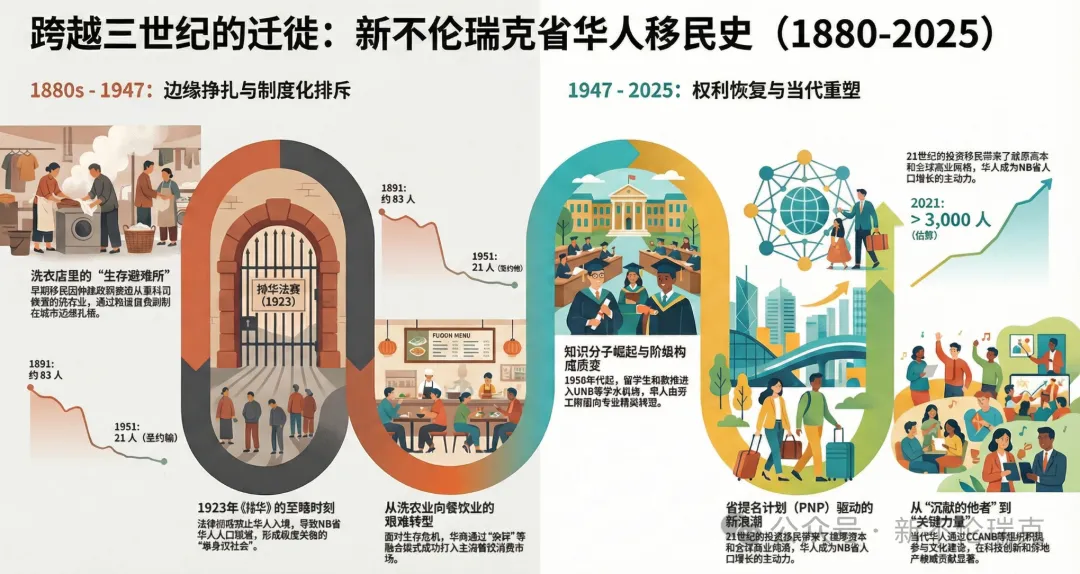
This report aims to fill this academic gap by reconstructing, through a comprehensive examination of archival records, oral histories and socioeconomic data, the migration trajectory of Chinese immigrants in New Brunswick across three centuries. From the "secondary migration" at the end of the nineteenth century, as a spillover effect of railway labour, through the marginalized survival of the "bachelor society" in the early twentieth century, the darkest hours of the Chinese Exclusion Act, and on to the restoration of rights after the Second World War and the new wave of immigration brought by the Provincial Nominee Program (PNP) in the twenty-first century, this process not only reflects the evolution of Canada's national immigration policy, but also deeply reflects New Brunswick's historical trajectory from a resource-extraction economy toward a modern service and knowledge economy [2].
1.2 The Constraints of Geography and Social Ecology
To understand the survival strategies of early Chinese immigrants in New Brunswick, one must first examine the geography and social ecology in which they lived. New Brunswick lies at the northern end of the Appalachian Mountains, with a complex river system (such as the Saint John River) and a long coastline [1]. When the Chinese first arrived at the end of the nineteenth century, the province was going through the painful transition following the collapse of the wooden sailing-ship industry, and the railway had become the new economic lifeline [2]. Saint John, as an ice-free port and industrial centre, Moncton as the railway hub "Hub City," and Fredericton as the political and educational centre — these three cities formed the "triangle" of Chinese settlement [2].
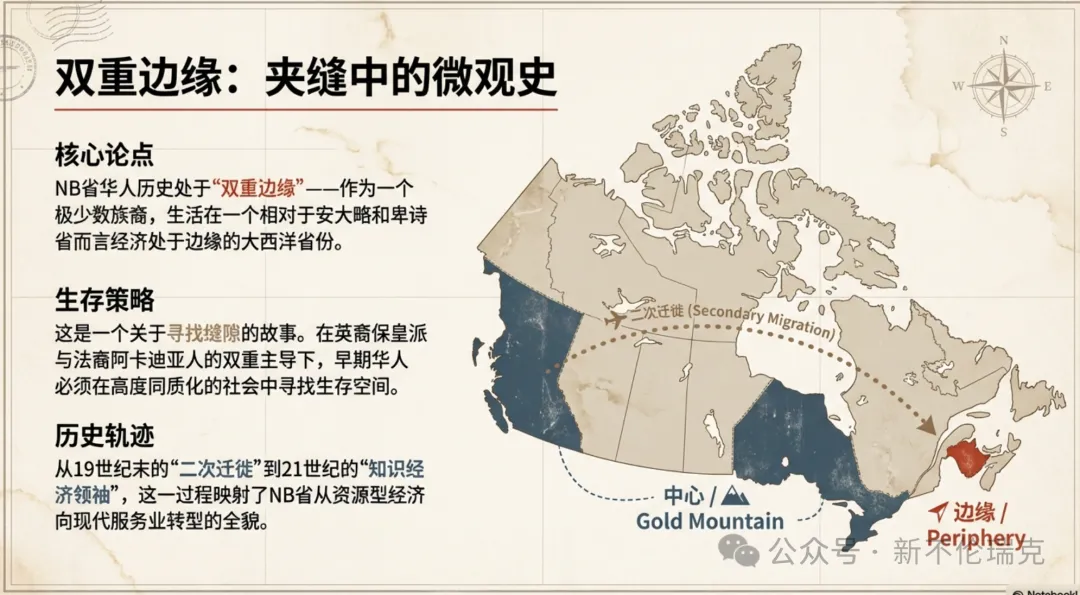
This geographical distribution was no accident. Limited by language, capital and racial discrimination, early Chinese immigrants could not enter New Brunswick's traditional forestry, fishery or agricultural sectors. They were forced to depend on the urban hinterland, working in service industries at the very end of the industrial chain — work that demanded intense physical labour for meagre profit — above all, laundry work. New Brunswick's distinctive English-French bilingual environment brought additional challenges of adaptation for the Chinese, especially in the Acadian-populated north and eastern coastal areas, where the language barrier was even more pronounced [1].
Chapter 2: Dispersal After the Railway — The Survival Landscape of the Early Settlers (1880s–1900s)
2.1 The Secondary Migration Eastward from "Gold Mountain"
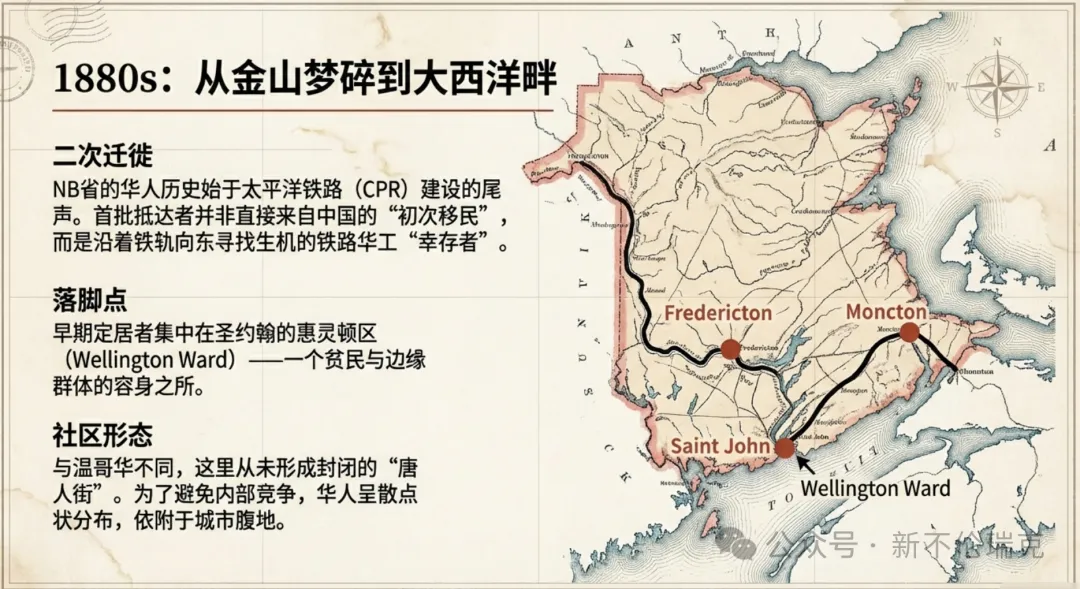
The starting point of Canadian Chinese history is usually placed at the Fraser River gold rush of 1858 and the subsequent construction of the Canadian Pacific Railway (CPR) [8]. The Chinese history of New Brunswick, however, begins at the tail end of that grand narrative. When the railway was completed in 1885, large numbers of unemployed Chinese workers were stranded in British Columbia, facing a harsh economic depression and increasingly violent anti-Chinese sentiment. To survive, some Chinese workers began migrating eastward along the very rails they had laid with their own hands, looking for a new world with less competition [3].
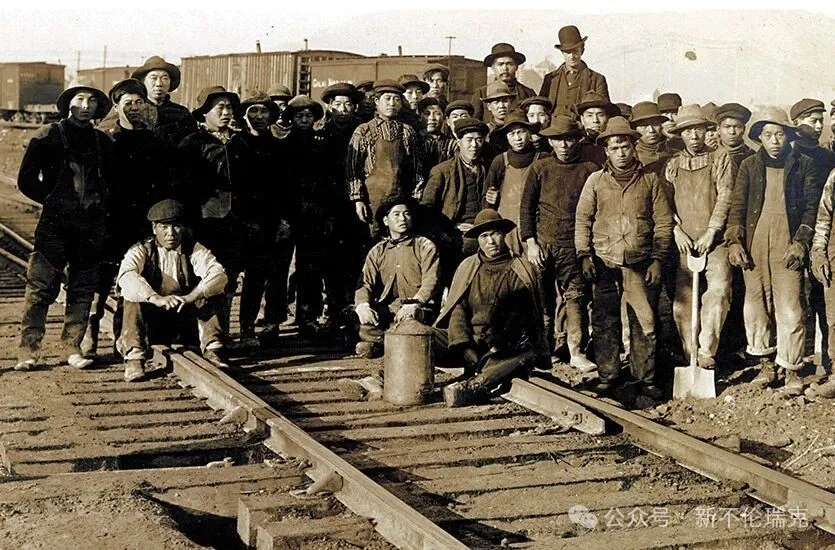
Workers building the Canadian Pacific Railway
According to the research of William Seto and Larry Shyu, the first recorded Chinese immigrants arrived in New Brunswick in the mid-1880s [3]. This timing is crucial to understanding the nature of New Brunswick's Chinese community: they were not "first-time immigrants" arriving directly from China, but "survivors" who had already endured labour hardship in North America, and even suffered racial trauma. They carried with them the survival skills learned in the railway camps and a preliminary understanding of Western society, and entered this wholly unfamiliar Atlantic province.
2.2 The Social Ecology of Saint John's Wellington Ward
As the most important commercial gateway among the Atlantic provinces at the time, Saint John naturally became the first landing place of choice for Chinese immigrants. Archives show that early Chinese clustered mainly in Saint John's Wellington Ward. This was a typical working-class neighbourhood, also a refuge for the city's socially marginal groups, where Lebanese and Irish poor lived alongside other non-British immigrants [3].
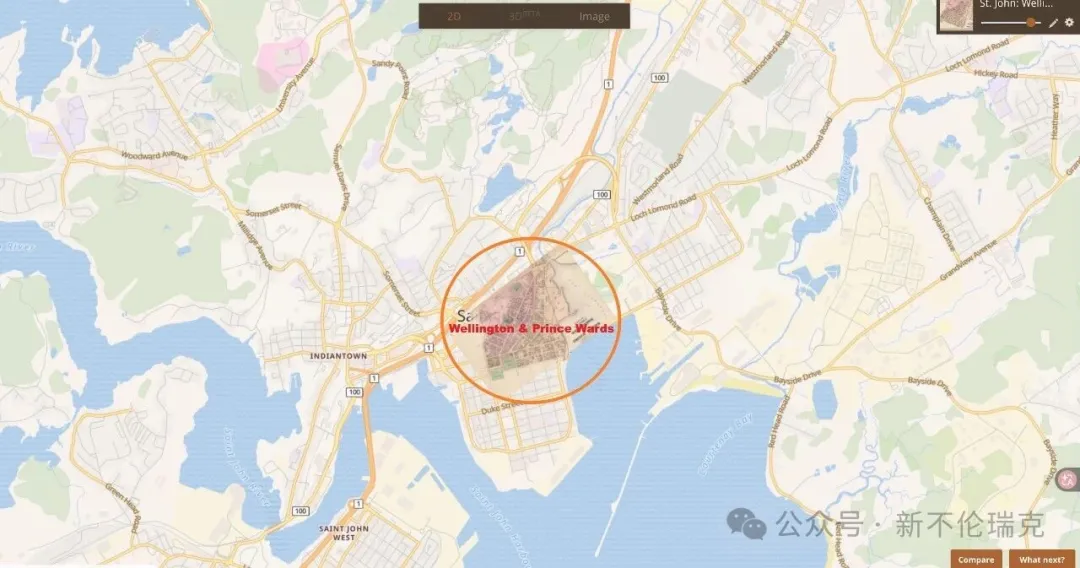
The 1875 plan of the Wellington Ward area, in relation to its location today.
Although their numbers were tiny (only about 83 people in the early 1890s), the Chinese still established a degree of community network in Saint John. Unlike Victoria or San Francisco, however, Saint John never developed a physically enclosed and self-sufficient "Chinatown" [3]. Instead, the Chinese presence took the form of a scattered distribution, determined mainly by the location logic of laundry shops — to cover as many customers as possible while avoiding vicious competition among themselves, Chinese laundries were typically spread across the various districts of the city.
2.3 The Formation of the "Bachelor Society" and Gender Imbalance
The Chinese community of New Brunswick in this period showed an extreme gender imbalance, a classic "bachelor society." Because the federal government introduced the "head tax" in 1885, using economic means to restrict Chinese entry, the vast majority of male labourers could not afford the high cost of bringing their wives and children to Canada [10].
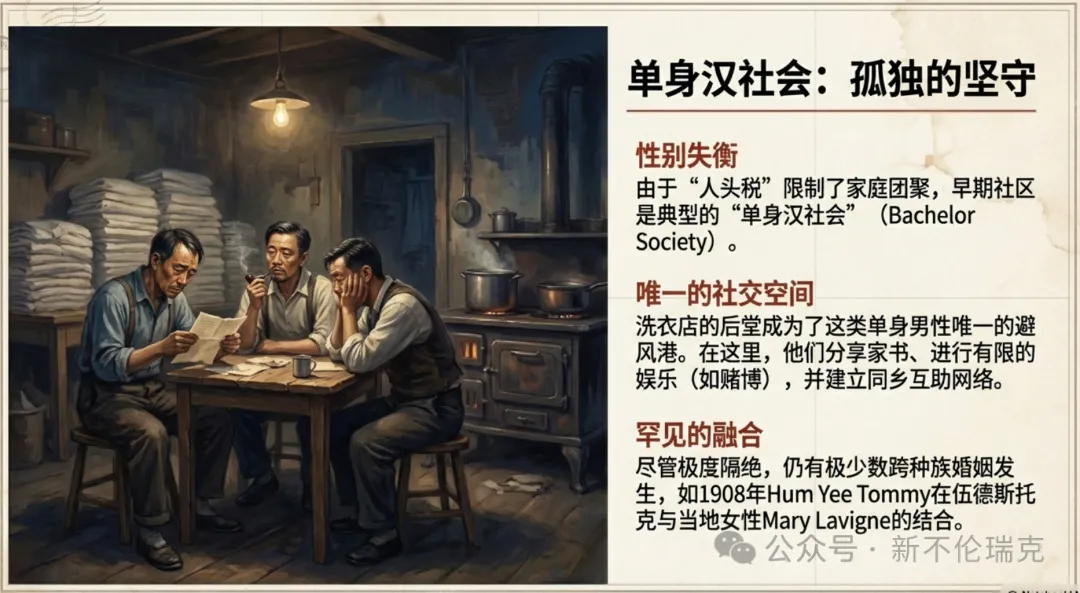
This forced transnational family structure had a profound effect on the social psychology of the community. In the back rooms of the laundries in Saint John and Moncton, these single men found their only social space. According to oral history, these spaces were not only workplaces, but also places where fellow townsmen gathered, shared letters from home, and enjoyed limited entertainment (such as gambling) [3]. This close internal bond provided emotional comfort on the one hand, and on the other deepened the isolation of the Chinese community from mainstream society.
It is worth noting that, despite the absence of women, New Brunswick still saw a very small number of cases of ethnic fusion. For example, in 1908 in Woodstock, Hum Yee Tommy (Chinese name: 谭裕, Tan Yu) married a local woman, Mary Lavigne [3].
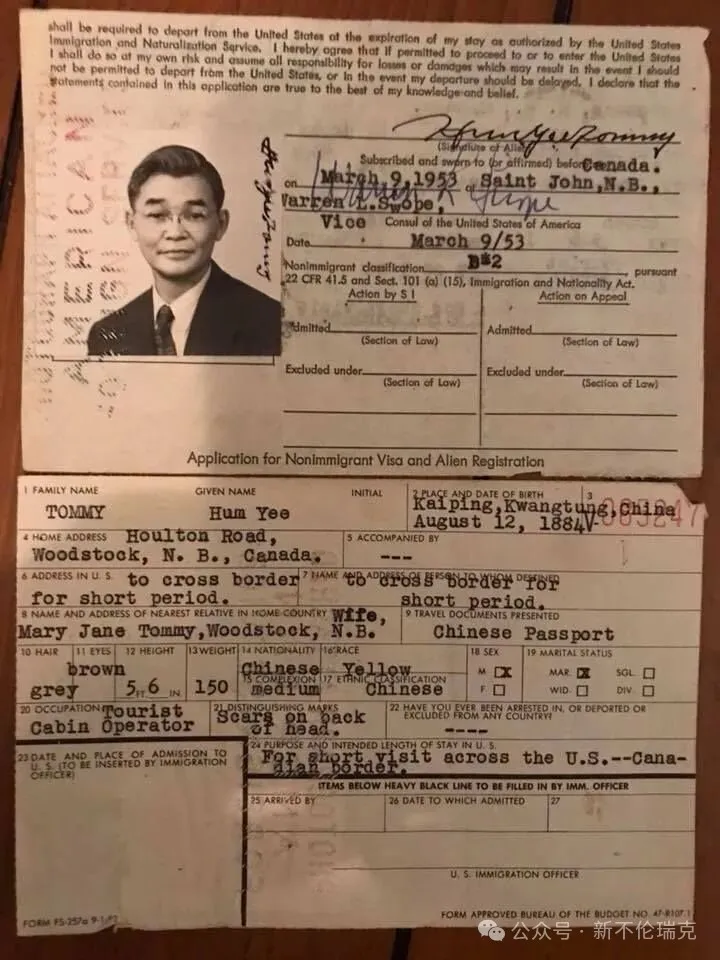
Mr. Tommy's U.S. nonimmigrant visa, issued March 9, 1953, showing his address and his wife's information.
Such an interracial marriage was highly unusual at the time, but in the sparsely populated rural areas of New Brunswick, racial boundaries could sometimes blur under the practical demands of survival. Many of Tommy's descendants have achieved significant success in Canadian sport. All five of his children are known to have passed away, but later generations still live in New Brunswick, and the Tommy surname has been preserved.
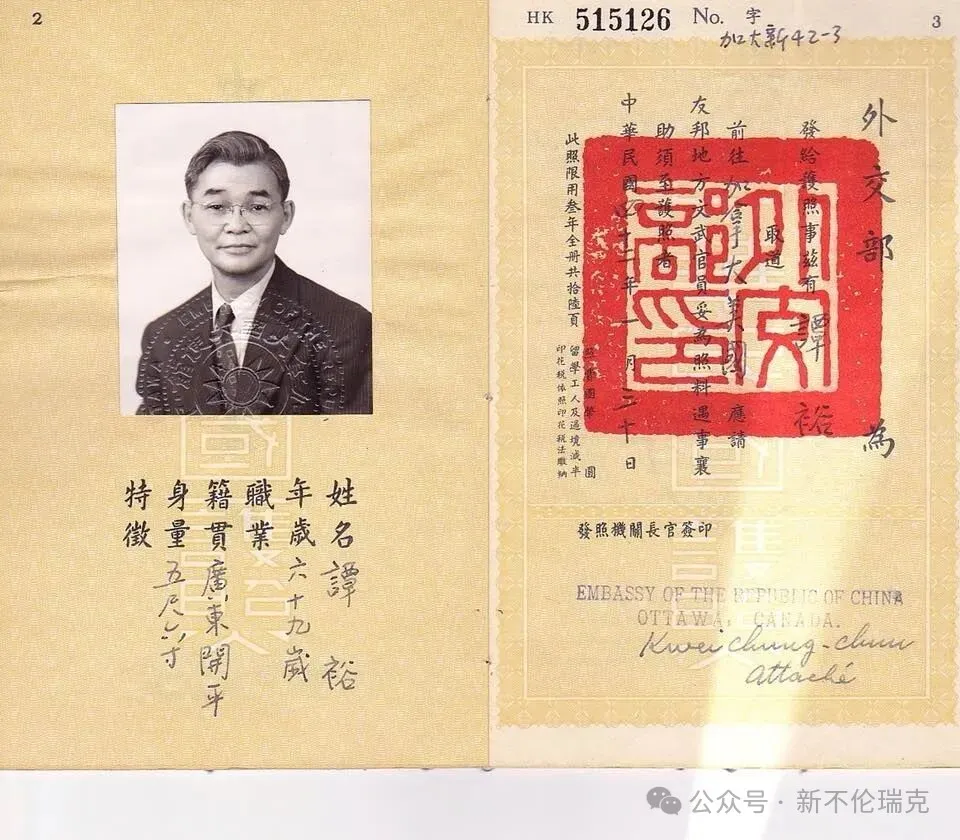
Mr. Tommy's passport, January 30, 1953
Chapter 3: A Micro-Analysis of the Marginal Economy — Laundries and the Racial Division of Labour (1900–1923)
3.1 The Laundry as an Ethnic Economic Refuge
Entering the early twentieth century, the laundry became the most distinctive economic label of New Brunswick's Chinese. This did not stem from cultural tradition, but was a rational choice under the pressure of structural racism.
Capital threshold: Opening a hand laundry required only minimal start-up capital (a stove, sinks, irons), one of the few businesses that impoverished Chinese workers could afford [12].
Nature of the labour: Under Victorian ideas about gender, laundry was regarded as "women's work," which white male labourers generally disdained. This stigmatization of the occupation instead provided the Chinese with a refuge free from direct violent competition by white labourers [12].
Technical threshold: The trade demanded very little English, suiting newcomers with little education.
A poster found online carrying an advertisement for The Wah Chang Kee Laundry
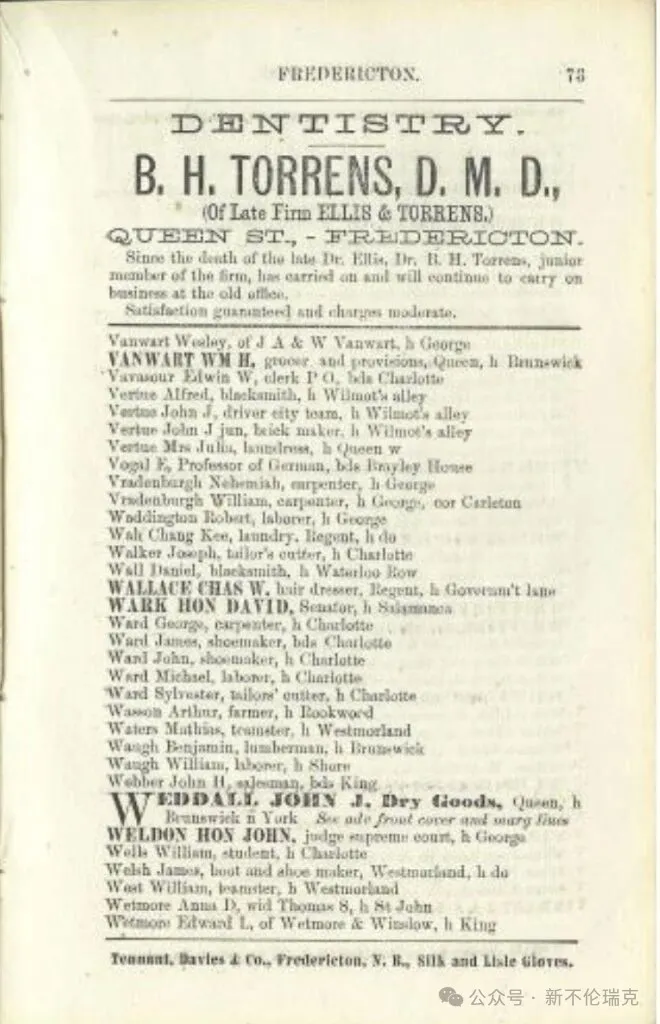
In Moncton, the earliest records show that Wah Chang Kee opened a laundry in 1884 [3]. As Moncton's status as a railway hub was consolidated (it became the Intercolional Railway headquarters in 1871), the flowing railway workers and travellers provided the laundry trade with a steady clientele [2]. A similar pattern was replicated in Fredericton and Saint John.
Yet this livelihood was built on the extreme exploitation of their own labour. Chinese laundry workers typically worked seven days a week, 10 to 16 hours a day, exposed for long periods to high temperatures, steam and chemical detergents, and lived in poorly ventilated quarters behind their shops, in extremely harsh living conditions [13].
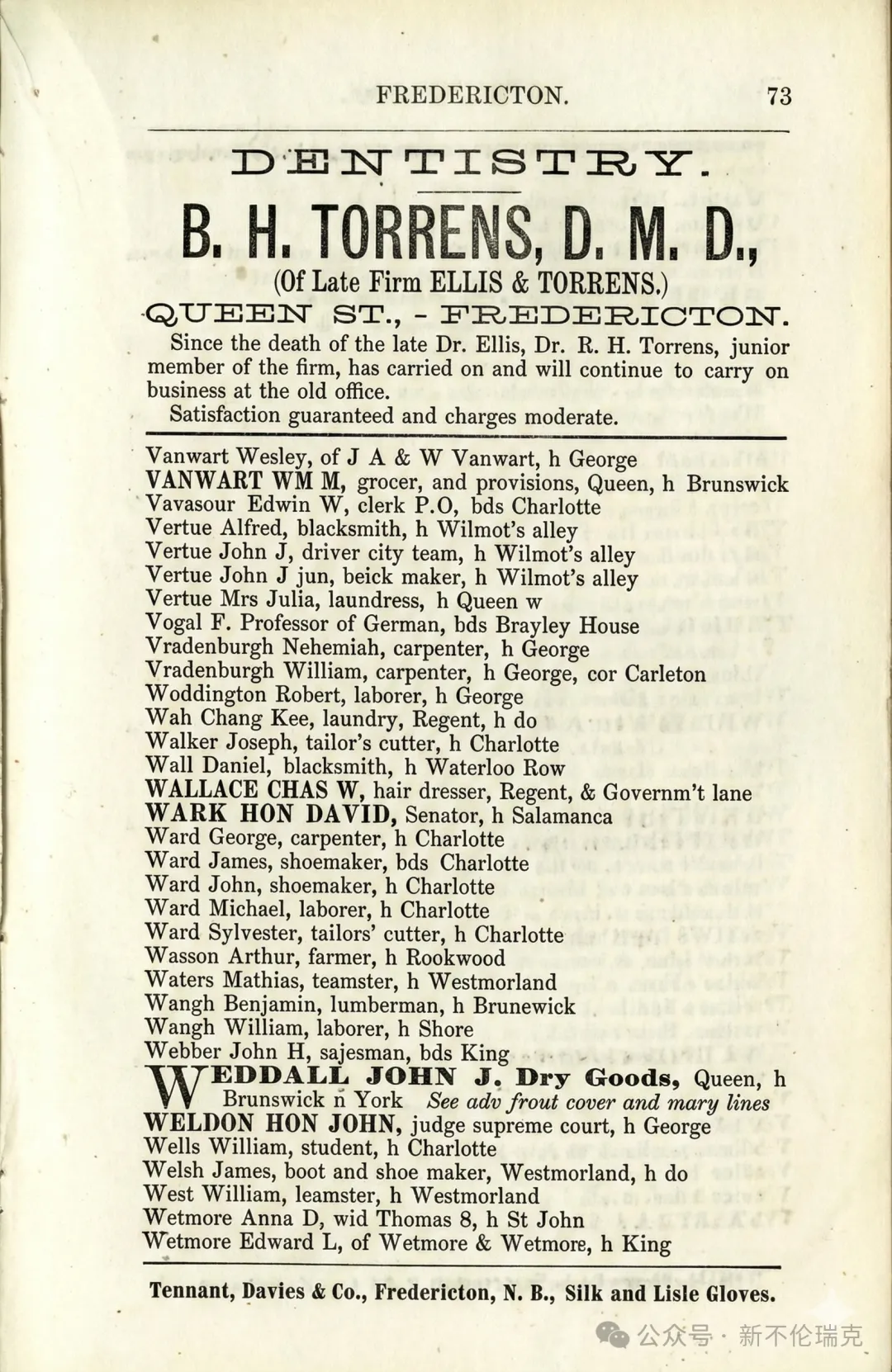
Fortunately, with the help of AI technology, we have brought that blurred page of the historical directory back into clear view. Brushing away the dust of the years, we seem to hear the distant historical echo of April 4, 1884.
Yet what makes one sigh all the more is that only two weeks later — on April 19, 1884 — Moncton's Daily Times published that cold pronouncement: "CHINESE MUST GO … The Wah Chang Kee Laundry will close on Saturday … The proprietors of this establishment have found our soil and climate unsuitable. They will return to warmer skies." — What a "dignified" reason for expulsion.
It is a great pity that we were unable to find the original image of this report; only these cold words remain. Since that time, a hundred and forty years have passed in the blink of an eye. That silent lament that vanished in the cold wind, the sweat and tears of that generation of pioneers — one wonders whether, today, they can still stir resonance in the souls of those of us who came after.
3.2 The Dual Discipline of Law and Society
Although the Chinese worked in marginal trades, they still faced close surveillance and discipline from mainstream society. A court case in Saint John in 1909 is highly representative: police raided Sam Wah's laundry and arrested 27 Chinese men suspected of gambling. This action reflected the stereotype of the time that the Chinese community was a den of vice. In the end, however, the case was dismissed by the judge, who pointed out in his ruling that white society women likewise gambled at bridge in private clubs without being disturbed [3]. Although this ruling upheld justice in the individual case, it inadvertently revealed the deep-rooted racial double standard in the justice and law enforcement of the time.
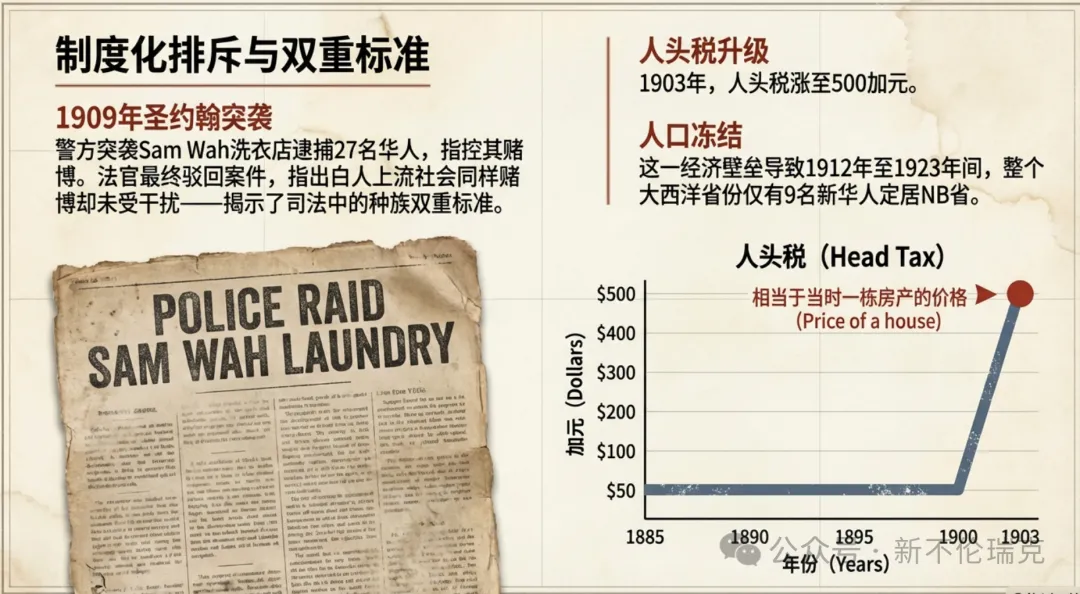
In addition, the media played a negative role in shaping the image of the Chinese. Newspaper advertisements and cartoons of the time often depicted the Chinese as cunning, dirty or ridiculous, reinforcing the rhetoric of the "Yellow Peril," even though the Chinese population of New Brunswick was far too small to constitute any so-called "threat" [3].
3.3 The Escalation of the Head Tax and Population Stagnation
In 1903, the federal government raised the head tax to $500, which at the time was enough to buy a decent house in New Brunswick [13]. This punitive tax almost completely cut off the natural growth of New Brunswick's Chinese community. According to statistics, from 1912 to 1923, only 20 new Chinese immigrants were registered across the entire Atlantic region, of whom 9 settled in New Brunswick [14]. This meant that for a full decade, New Brunswick's Chinese community was almost frozen in population — a devastating blow to an immigrant group that depended on older generations bringing in the new and on family continuity.
Chapter 4: Institutionalized Exclusion and the Community's Darkest Hours (1923–1947)
4.1 The Legal Violence of the 1923 Chinese Immigration Act
On July 1, 1923, Dominion Day, the federal Parliament passed the Chinese Immigration Act (commonly known as the Chinese Exclusion Act). If the head tax was an economic barrier, then the Exclusion Act was a total legal blockade. With only a very few exceptions (diplomats, students), the Act banned Chinese immigration entirely [15].
For the Chinese of New Brunswick, this day was known as "Humiliation Day." The Act not only blocked immigration, but also imposed harsh internal controls: all Chinese in Canada, whether or not born in Canada, had to register with the government and carry photo identification (C.I.45 and other certificates) at all times, or face fines, detention and even deportation [15]. This institutional arrangement, which treated a particular ethnic group as "potential illegals," left the Chinese of New Brunswick living in fear and humiliation for 24 years.
4.2 Population Decline and the Survival Crisis
During the Exclusion Act, New Brunswick's Chinese community faced the crisis of extinction. Unable to form families, the older generation of immigrants died in loneliness, with no new immigrants to replace them. The figures are shocking: by 1941, the Chinese population of Saint John had shrunk from nearly a hundred at the start of the century to 30; by 1945, only 3 Chinese were recorded in Fredericton [3].
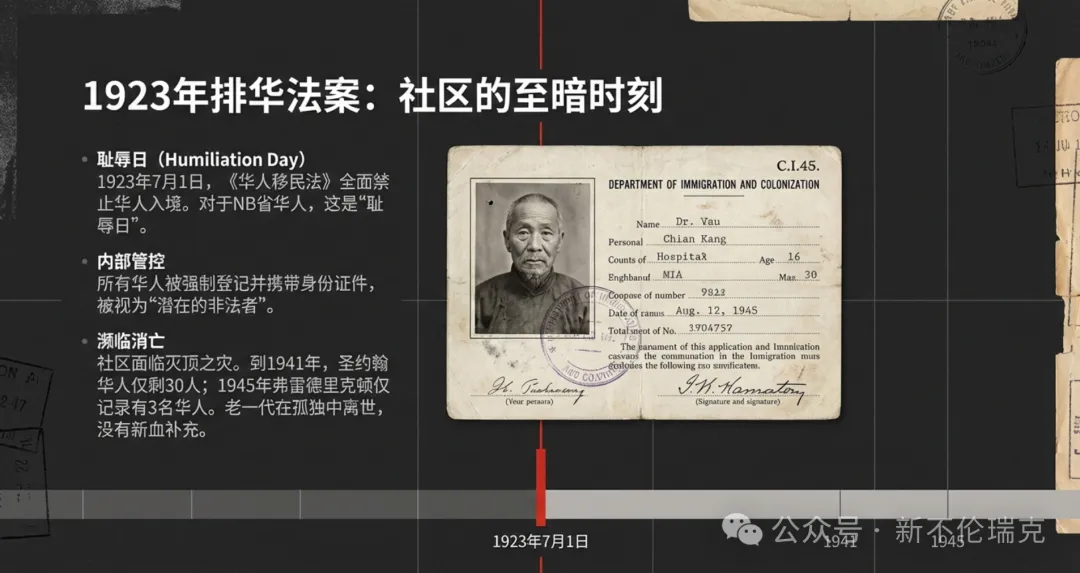
This collapse of population structure was not only a numerical decline, but also a loss of social function. Traditional clan associations and mutual-aid networks could hardly be maintained for lack of people and funds. Many laundries that had been run for a lifetime were forced to close for want of an heir.
4.3 A Way Out of Despair: The Transition to the Restaurant Trade
Despite the harsh environment, New Brunswick's Chinese did not sit and wait for death. This period witnessed a historic shift in the economic centre of gravity of the Chinese — from laundries to restaurants. This transition was driven jointly by technological progress (the spread of household washing machines) and changes in market demand.
The "chop suey" economy: To survive, Chinese restaurant operators showed great cultural adaptability. They did not try to promote authentic Chinese cuisine, but instead created a fusion dish — "chop suey" — and offered Western dishes such as steak and fish and chips [3]. This strategy allowed Chinese restaurants to enter the white community's consumer market.
Landmark businesses:
Fredericton: Percy Hem (born in New Brunswick in 1914, a first-generation native-born Chinese Canadian) opened the Sun Grill restaurant after the Second World War. The restaurant was not only a business, but became part of local social life, especially popular with UNB students [3].
Moncton: In 1926, Tom Wong opened the Frisco Café. In an age when racial segregation still existed, these places became rare spaces for interaction between ethnic groups [3].
Campbellton: The Canada Café, opened by the Fong family in 1923, showed that the Chinese commercial reach had extended to the forestry town in the north of New Brunswick [19].
4.4 Proving Identity in the Second World War
The Second World War offered Canadian Chinese an unexpected opportunity to prove their loyalty. Despite being deprived of citizenship, large numbers of Chinese volunteered for military service.
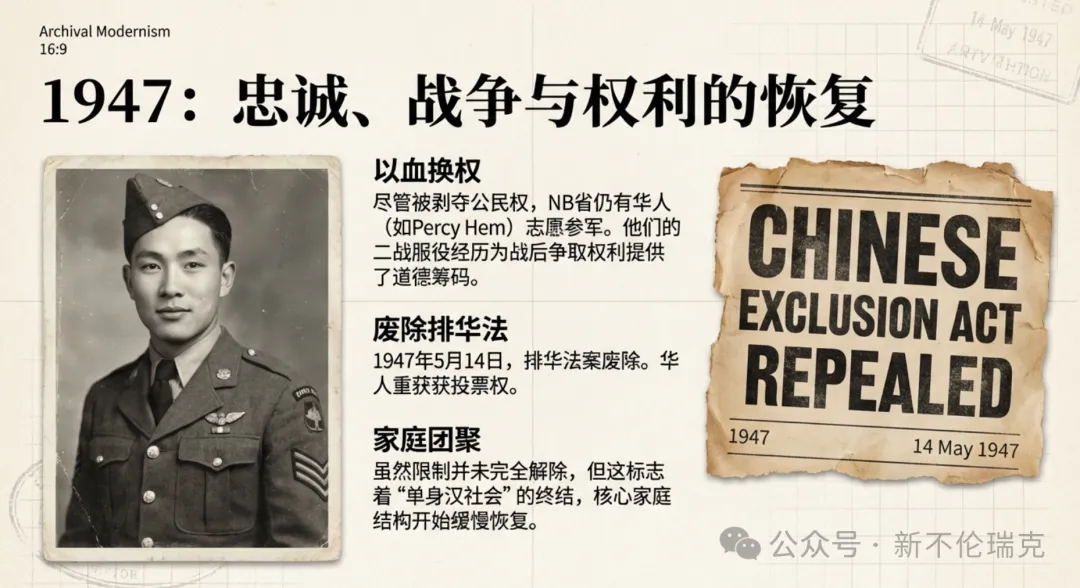
AI-generated photo; not a real person
Percy Hem of New Brunswick was one representative: as a Second World War veteran, his service record provided a powerful moral argument in the post-war fight for civil rights [3]. During the war, China became an ally, and this geopolitical change also prompted mainstream Canadian society to begin reflecting on its exclusionary policies.
Chapter 5: The Restoration of Rights and Structural Transformation (1947–1980s)
5.1 The Repeal of the Act in 1947 and the Attainment of Citizenship
On May 14, 1947, the Chinese Exclusion Act was repealed. This milestone not only marked the end of legal exclusion, but also meant that Canadian Chinese finally gained the right to vote [15]. Although immigration restrictions were not immediately lifted in full (limited to spouses and minor children), this opened the door to family reunification. New Brunswick's Chinese community began to return from the deformed "bachelor society" to a normal community based on the nuclear family.
5.2 The Rise of Intellectuals: UNB and a New Generation of Immigrants
The 1950s were a watershed in the Chinese history of New Brunswick. As the University of New Brunswick (UNB) opened its doors to students from Asia, a group of highly qualified international students from Hong Kong and Southeast Asia entered the province, completely changing the class composition of the Chinese community [3].
Pioneers: In 1955, Harold Tam became the first Hong Kong student to enrol at UNB. In 1957, the arrival of female international students (such as Lena Cheuk-Kwan Chung) broke the Chinese community's long-standing male monopoly.
Academic achievements: In 1959, Dr. Paul C.C. Ting became the first Chinese professor at UNB. In 1964, Chiu-Ming Wong and Tse-Lok Ho received the first doctoral degrees awarded by UNB to Chinese students [3].
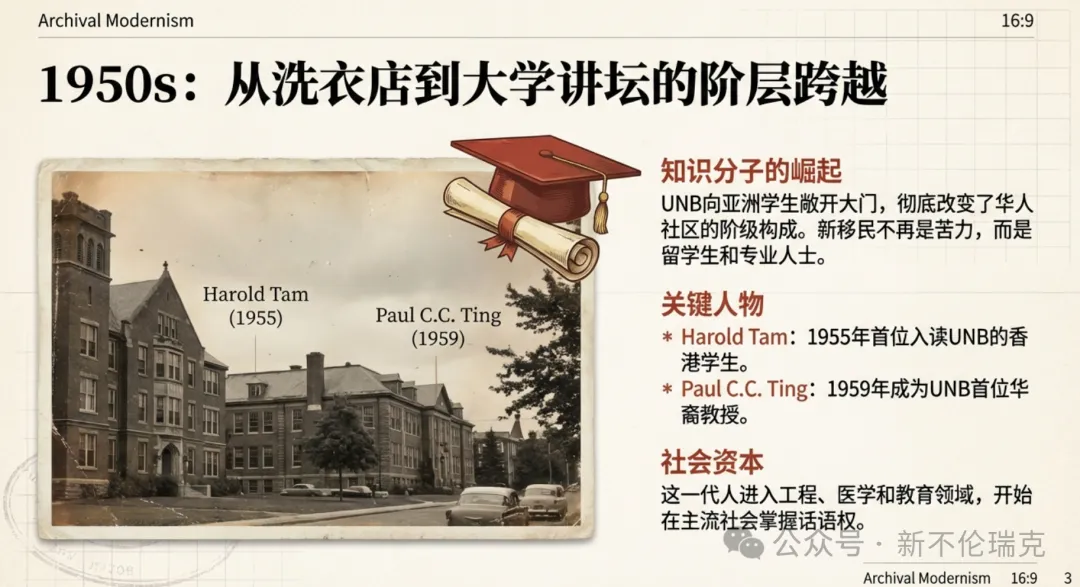
These new immigrants no longer worked in laundries or restaurants, but entered professional fields such as engineering, medicine and education. Their presence greatly raised the social capital of the Chinese community, and they began to gain a voice in mainstream society.
5.3 The 1967 Points System and the Wave of Diversification
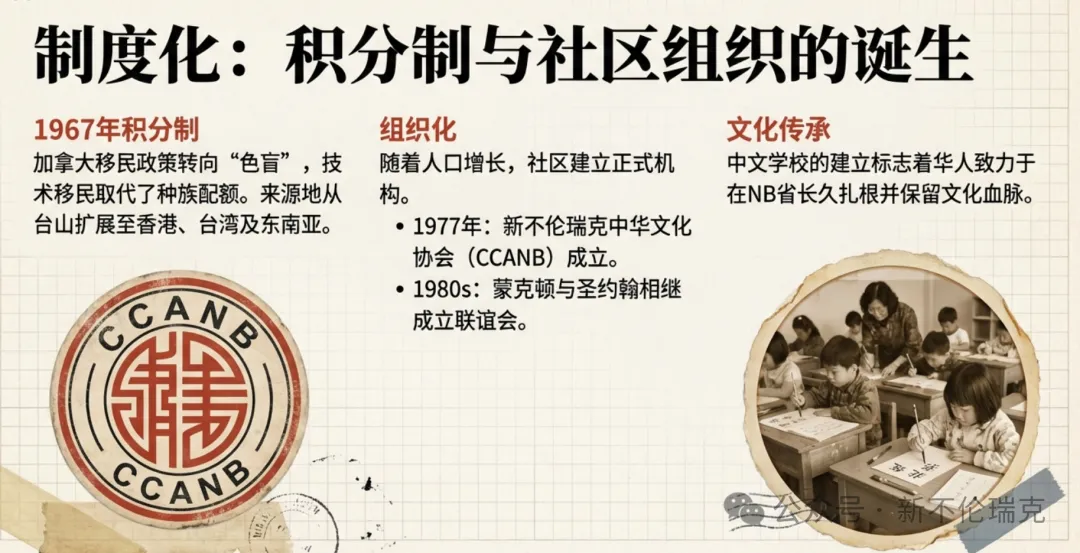
In 1967, Canada implemented the epoch-making points-based immigration policy, eliminating race-based selection criteria [3]. This policy not only enabled more skilled immigrants to come to New Brunswick, but also diversified the Chinese community internally — its places of origin expanded from the traditional Taishan in Guangdong to Hong Kong, Taiwan and various parts of Southeast Asia.
5.4 The Institutionalization of Community Organizations
As the population grew and its structure became more complex, establishing formal social organizations became inevitable.
1977: The Chinese Cultural Association of New Brunswick (CCANB) was founded in Fredericton, the province's first non-profit Chinese cultural institution [21]. Its Chinese school served not only the children of Chinese families, but also became a window for spreading Chinese culture to the local community.
1980s: The Moncton Chinese Friendship Association (1981) and the Saint John Chinese Cultural Association (1984) were founded in succession, marking the establishment of mature self-organized networks for the Chinese in all of New Brunswick's major cities [3].
Chapter 6: Integration and Reshaping — The Dynamics of the Contemporary Chinese Community (1990s–2025)
6.1 The Provincial Nominee Program (PNP) and the Reshaping of Population Structure
Entering the twenty-first century, New Brunswick faced a severe crisis of population aging and labour shortage. To meet the challenge, the provincial government vigorously promoted the Provincial Nominee Program (NBPNP), in particular the entrepreneur stream for investment immigration [22]. This policy triggered the largest wave of Chinese immigration in the province's history.
The impact of investment immigration: Large numbers of successful entrepreneurs from mainland China came to New Brunswick through the PNP. Unlike the coolie labourers of earlier times, they brought capital, management experience and global business networks. For example, the case of Frank, who acquired and operated Stacy Screenprint, shows how a new generation of immigrants achieved a rapid soft landing by purchasing a local business, while creating jobs locally [23].
The demographic dividend: According to data from 2021 and 2024, international immigration has become the main driver of population growth in New Brunswick, with the Chinese an important part of it [24]. The growth of the Chinese community has to some extent eased the province's trend of negative population growth.
6.2 The Diversification of Economic Contributions
The economic activity of contemporary Chinese in New Brunswick has expanded from a single service industry to the whole industrial chain.
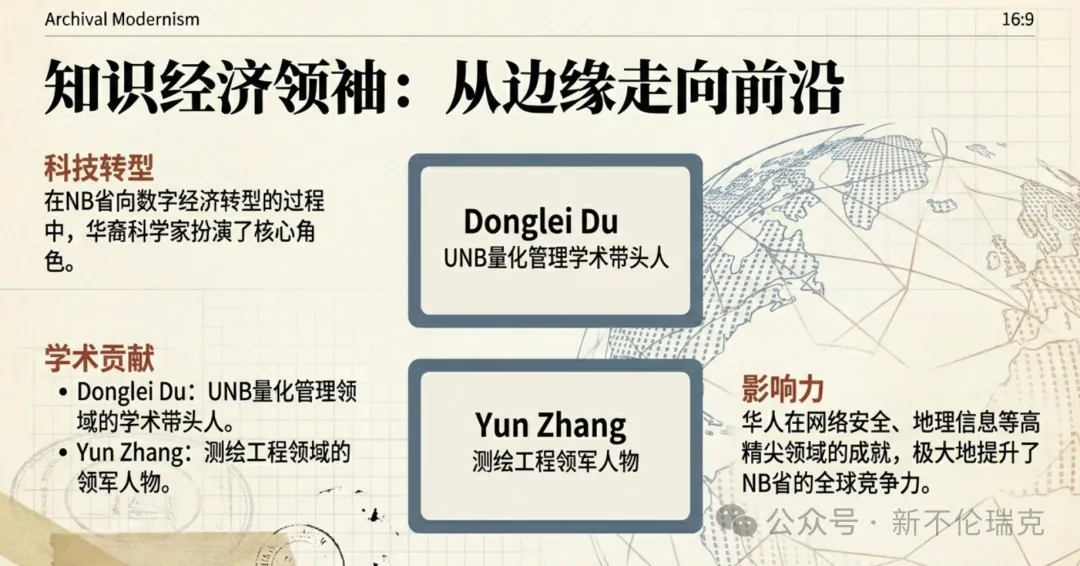
Technology and innovation: In the digital-economy transformation driven by institutions such as the McKenna Institute and CyberNB, Chinese scientists and engineers have played a key role.
Academia and education: At UNB and the Université de Moncton, many Chinese professors are at the academic frontier in fields such as quantitative management (Professor Donglei Du) and geomatics engineering (Professor Yun Zhang) [28].
Commercial real estate and services: Investment by new immigrants has enlivened the real estate markets of Fredericton and Moncton, and has brought more diverse food and retail services, enriching the commercial landscape of the cities [30].
6.3 The Changing Cultural Landscape
As the Chinese population has grown, Chinese culture has changed from "exotic flavour" into an indispensable part of New Brunswick's multiculturalism.
Spring Festival celebrations: The Spring Festival gala held by CCANB at the Fredericton Playhouse every year has become a major event for the whole city, attracting large numbers of non-Chinese audiences [31].
Asian Heritage Month: Since 2002, the Asian Heritage Society of New Brunswick (AHSNB) has systematically introduced the history and contributions of Asian Canadians to the public through annual exhibitions and events [33].
Historical preservation: The book The Chinese Experience in New Brunswick, co-authored by Professors William Seto and Larry Shyu, made a foundational contribution to preserving the historical memory of this marginal group [9].
6.4 Challenges: Retention and Anti-Discrimination
Despite remarkable achievements, the contemporary Chinese community of New Brunswick still faces structural challenges:
Secondary migration: Many immigrants who arrived through the PNP tend to move to large cities such as Toronto or Vancouver after obtaining permanent residence. How to raise the "retention rate" so that immigrants truly put down roots in New Brunswick is a problem facing policymakers [36].
Invisible discrimination: Although institutional racism has been eliminated, hate speech targeting Asians rose during the COVID-19 pandemic, showing that cultural prejudice still lurks at the bottom of society [32].
Cultural rupture: As the second and third generations of immigrants become deeply localized, how to preserve language and cultural identity while integrating into the mainstream is an ongoing source of anxiety within the community.
Chapter 7: Conclusion
The history of Chinese immigration in New Brunswick is a micro-epic of seeking the centre from the margins, and seeking integration amid exclusion. From the laundry workers labouring in steam and soapy water at the Saint John harbour at the end of the nineteenth century, to the top scientists in the cybersecurity laboratories of Fredericton in the twenty-first century, the role of the Chinese has undergone earth-shaking change.
The historical trajectory of this group powerfully refutes the racist assumption of early Canadian society that the Chinese were "unassimilable." On the contrary, history proves that, whether on the battlefields of the Second World War, or in the university campuses after the war, or in modern business competition, the Chinese have always, with great resilience and wisdom, actively participated in and reshaped the social face of New Brunswick.
For New Brunswick, the Chinese are no longer the "silent other," but a key force driving its population growth, economic transformation and cultural diversity. In the future, as the Provincial Nominee Program continues and global competition for talent intensifies, the fate of the Chinese community and of New Brunswick will be ever more closely intertwined. This history belongs not only to the Chinese, but is an indispensable chapter in the founding history of New Brunswick and of Canada itself.
Editor's Postscript
Outside the window, the stars shine.
Nearly a hundred and fifty years, and generations have passed. Having read this history, which is not so very distant, people today who walk the same streets and lanes that existed a hundred years ago may wonder, for a moment, whether they remember that our pioneers once knew hardship and adversity here, and also love and entanglement, tears and laughter.
Fingers soaked in chemical solutions, sensitive and fragile; on long cold nights, so many thoughts with nowhere to be told. I thank the judge who dismissed the charges, and I thank every individual who, in an age of prejudice, still upheld justice and the rule of law; I also remember the humiliation and withering under the Exclusion Act, and remember how institutions pushed a whole group into silence.
History does not advance in a straight line, and so we cherish today's civilization and openness all the more, and understand all the better that the measure of civilization is never acquired naturally, but is guarded, fought for and expanded, generation after generation.
I wish the Chinese of New Brunswick well now, and even better in the future!
Appendix 1: Key Timeline of Chinese History in New Brunswick
| Year | Key Event | Historical Significance |
|---|---|---|
| 1880s | The first Chinese labourers arrived in New Brunswick | Labour spillover after the construction of the Pacific Railway; mainly settled in Saint John [3]. |
| 1884 | Wah Chang Kee opened in Moncton | A record of early Chinese commercial activity [3]. |
| 1885 | The federal government introduced the Chinese Immigration Act (Head Tax) | The beginning of institutionalized discrimination, restricting family reunification. |
| 1909 | The Saint John laundry gambling case | The judge dismissed the charges, revealing the racial double standard in the justice system of the time [3]. |
| 1914 | Percy Hem was born in Fairville | The first recorded Chinese Canadian born in New Brunswick, symbolizing the beginning of localization [9]. |
| 1923 | The Chinese Exclusion Act was enacted | Chinese immigration was banned entirely, and New Brunswick's Chinese community entered the "darkest hours" of population decline [15]. |
| 1926 | Tom Wong ran the Frisco Café | Marked the economic transition from laundries to restaurants [3]. |
| 1947 | The Chinese Exclusion Act was repealed | The Chinese regained the vote, and the door to family reunification reopened [20]. |
| 1955 | The first Chinese international students enrolled at UNB | A qualitative change in the community's population, transforming from the labouring class to intellectuals [3]. |
| 1959 | Dr. Paul C.C. Ting taught at UNB | The Chinese entered mainstream academia, and their social status rose [3]. |
| 1967 | The points-based immigration policy was implemented | Eliminated racial barriers and opened the modern wave of skilled immigration [20]. |
| 1977 | CCANB was founded in Fredericton | Community organization and formalization, dedicated to cultural heritage and political voice [21]. |
| 1999 | New Brunswick hosted the Francophonie Summit | The Chinese community took part in the reception as part of multiculturalism, showing the results of integration. |
| 2006 | The federal government formally apologized for the head tax | An important milestone in historical reconciliation, confirming the historical contribution of the Chinese [15]. |
| 2010s | The NBPNP brought in large numbers of Chinese investment immigrants | Changed the class structure of the community and promoted investment in small and medium-sized enterprises [23]. |
| 2023 | The centenary of the Exclusion Act | Reflective events were held across the province, emphasizing the importance of history education [37]. |
Appendix 2: Population Data (1881–2021)
| Year | Chinese Population (New Brunswick) | Data Background and Analysis |
|---|---|---|
| 1881 | < 10 (estimated) | A very small number of pioneers; statistics not available in detail [8]. |
| 1891 | ~83 (Saint John) | An early peak, mainly concentrated in the Saint John laundry trade [3]. |
| 1921 | 113 | On the eve of the Exclusion Act, community growth was slow [3]. |
| 1941 | 30 (Saint John) | The impact of the Exclusion Act was significant; the population shrank sharply [3]. |
| 1951 | 21 (Saint John) | The historical low point, with only 1 woman — a typical dying community [3]. |
| 2001 | ~1,200 | Steady growth after the skilled-immigration policy was liberalized [1]. |
| 2016 | 2,235 | A large share of the province's visible minorities [38]. |
| 2021 | > 3,000 (estimated) | Driven by the PNP, with some out-migration but an overall growth trend [1]. |
Note: Early data comes from estimates in historical research; modern data comes from Statistics Canada censuses.
Cited Works
New Brunswick — Wikipedia, accessed February 8, 2026, https://en.wikipedia.org/wiki/New_Brunswick
Moncton — Wikipedia, accessed February 8, 2026, https://en.wikipedia.org/wiki/Moncton
Early Chinese History in New Brunswick, accessed February 8, 2026, https://www.ahsnb.org/wp-content/uploads/2019/07/AHSNB-Early-Chinese-History-in-NB_Final.pdf
Overview — gnb.ca, accessed February 8, 2026, https://www.gnb.ca/en/admin/about-nb/overview.html
History — Chamber of Commerce for Greater Moncton, accessed February 8, 2026, https://ccgm.ca/history/
Discover Canada — Canada's Regions, accessed February 8, 2026, https://www.canada.ca/en/immigration-refugees-citizenship/corporate/publications-manuals/discover-canada/read-online/canadas-regions.html
Continuity and Change in a 20th-Century Acadian Fishing Village, accessed February 8, 2026, https://www.erudit.org/fr/revues/acadiensis/1999-v29-n1-acadiensis_29_1/acad29_1art04.pdf
History of Chinese immigration to Canada — Wikipedia, accessed February 8, 2026, https://en.wikipedia.org/wiki/History_of_Chinese_immigration_to_Canada
The Chinese Experience in New Brunswick: A Historical Perspective, accessed February 8, 2026, http://www.rubycusack.com/issue353.html
A Brief Chronology of Chinese Canadian History, accessed February 8, 2026, http://www.sfu.ca/chinese-canadian-history/chart_en.html
The Chinese head tax and the Chinese Exclusion Act | CMHR, accessed February 8, 2026, https://humanrights.ca/story/chinese-head-tax-and-chinese-exclusion-act
Chinese Laundries in the West End, accessed February 8, 2026, https://thewestendmuseum.org/history/era/immigrant-neighborhood/chinese-laundries-in-the-west-end/
Asian Heritage Month – The Story Behind the Chinese Laundries, accessed February 8, 2026, https://ucte-ucet.ca/the-story-behind-the-chinese-laundries/
Chinese Canadians on the East Coast — Saltscapes Magazine, accessed February 8, 2026, https://www.saltscapes.com/kitchen-party/2118-chinese-canadians-on-the-east-coast.html
Exclusion of Chinese Immigrants (1923–1947) National Historic Event, accessed February 8, 2026, https://parks.canada.ca/culture/designation/evenement-event/exclusion-chinois-chinese
What was the Chinese Exclusion Act in Canada? 3 things you might not know, accessed February 8, 2026, https://beyond.ubc.ca/what-was-the-chinese-exclusion-act-in-canada-3-things-you-might-not-know/
Reflecting on the 1923 Chinese Exclusion Act | Canadian Geographic, accessed February 8, 2026, https://canadiangeographic.ca/articles/reflecting-on-the-1923-chinese-exclusion-act/
Chop Suey Nation: new Canadians follow their dreams to rural communities, accessed February 8, 2026, https://nbmediacoop.org/2019/07/08/chop-suey-nation-newcomers-follow-their-dream-to-rural-communities/
Born in Asia, Raised in Halifax: Stories of Asian Immigrants to Canada, accessed February 8, 2026, https://www.halifaxpubliclibraries.ca/blogs/post/born-in-asia-raised-in-halifax-stories-of-asian-immigrants-to-canada/
Answer Key — Discriminatory Law Case Study: Chinese Exclusion Act, accessed February 8, 2026, https://www.lawlessons.ca/sites/default/files/2021-01/DiscriminatoryLaws_Handout_CaseStudy_ChineseExclusionAct_AnswerKey.pdf
CCANB: index, accessed February 8, 2026, https://www.ccanb.ca/
New Brunswick receives increased immigration allocation from the federal government for 2025, accessed February 8, 2026, https://www.cicnews.com/2025/06/new-brunswick-receives-increased-immigration-allocation-from-federal-government-for-2025-0656591.html
STORIES OF IMMIGRATED CHINESE ENTREPRENEURS IN NEW BRUNSWICK, accessed February 8, 2026, https://www.asiapacific.ca/sites/default/files/filefield/chineseentbooklet_final_reduced_2.pdf
Economic Outlook, accessed February 8, 2026, https://legnb.ca/content/house_business/61/1/tabled_documents/2025-03-18%20Economic%20Outlook%202025-2026.pdf
New Brunswick Economic Scan 2024 — Canada.ca, accessed February 8, 2026, https://jobbank-guichetemplois.service.canada.ca/Escans/NB/2024/Scan-AnalyseEnv-NB-2024-EN-FINAL.pdf
UNB professor named an RBC Top 25 Canadian Immigrant, accessed February 8, 2026, https://blogs.unb.ca/newsroom/2019/07/unb-professor-named-an-rbc-top-25-canadian-immigrant.php
Accelerating the Digital Economy in New Brunswick: What's Next?, accessed February 8, 2026, https://onbcanada.ca/digital-economy-new-brunswick/
UNB researcher and alumnus recognized nationally, accessed February 8, 2026, https://blogs.unb.ca/newsroom/2017/07/unb-researcher-and-alumnus-recognized-nationally.php
Profile page for: Donglei Du | UNB — University of New Brunswick, accessed February 8, 2026, https://www.unb.ca/faculty-staff/directory/management/du-donglei.html
Canadian Immigrant Investor Myth #2: The Chinese Are Driving Up Property Prices, accessed February 8, 2026, https://www.imidaily.com/editors-picks/canadian-immigrant-investor-myth-2-the-chinese-are-driving-up-property-prices/
NEWS — CCANB, accessed February 8, 2026, http://www.ccanb.ca/article/category/ccanb-news
N.B. Chinese community adapts to pandemic challenges | CBC News, accessed February 8, 2026, https://www.cbc.ca/news/canada/new-brunswick/new-brunswick-chinese-community-1.5794614
About AHSNB — Asian Heritage Society – New Brunswick, accessed February 8, 2026, https://www.ahsnb.org/about-ahsnb/
Asian Heritage Society – New Brunswick, accessed February 8, 2026, https://www.ahsnb.org/
5378 Inglis Street Halifax, Nova Scotia Canada, B3H 1J5, accessed February 8, 2026, https://www.schoonerbooks.com/media/files/Cat119_complete.pdf
Immigrants make up the largest share of the population in over 150 years, accessed February 8, 2026, https://www150.statcan.gc.ca/n1/daily-quotidien/221026/dq221026a-eng.htm
An Exhibition on the Chinese Immigration Act, 1923 | Senator Yuen Pau Woo, accessed February 8, 2026, https://senatoryuenpauwoo.ca/en/parliamentary-activities/commemorating-the-100th-anniversary-of-the-chinese-exclusion-act/reflections-on-exclusion-an-exhibition-on-the-chinese-immigration-act-1923/
Moncton — The Canadian Encyclopedia, accessed February 8, 2026, https://thecanadianencyclopedia.ca/en/article/moncton
This article was originally published on the WeChat public account 「新不伦瑞克」 (New Brunswick Today); original link: mp.weixin.qq.com/s?__biz=MzI4Mjc3NDcyMg==&mid=2247484293&idx=1&sn=96b09299e0d83084bd6138acfe4968db