
June 11, 2026
The Complete Guide to Ticks and Lyme Disease in Canada (2026 Edition)
Ticks are now a fact of life in New Brunswick. This guide covers how ticks find us, how to tell the risky blacklegged tick apart, what Lyme disease really looks like, how to remove a tick safely, and when to go to a pharmacy, a walk-in clinic — or the emergency room.
Contents
- Introduction: From School Letters to Mowing the Backyard — Canadian Life with Ticks
- A Changing Ecology: Twenty Years of Tick Expansion in Canada
- The Invisible Ambushers: How Ticks Actually Reach People
- Common Tick Species in Canada and Quick Visual Identification
- The Truth About Lyme Disease: Dropping the “Bull’s-Eye Rash” as an Absolute Label
- First Aid at the Scene of a Bite: Scientific Removal and Emergency Steps
- Decoding Canada’s Health Care System: The Right Care Pathway After a Bite
- Children and Pets: The Most Easily Overlooked Line of Defence
- Scenario-Based Risk Management: Building Protection into Daily Habits
- Out of the Myths: Common Misconceptions About Ticks
- The Digital Line of Defence: Canadian Official Resources Worth Keeping, and a Closing Word
1. Introduction: From School Letters to Mowing the Backyard — Canadian Life with Ticks
Every May and June, discussion about “ticks” appears right on schedule in local Chinese community Facebook groups and WeChat Moments. At this time of year, a blurry photo of a bug pops up in the group chat every few days, followed by a string of anxious questions: “Help! Can anyone tell me if this is a spider or a tick? My child just came back from the trail!”
For newcomer families who have just landed in Canada, starting their first sun-filled summer is exciting. But before long, life brings a few puzzling “friendly reminders.”
Notices children bring home from public school and confirmation emails from summer camps often carry a prominent “Tick Reminder.” If you take a pet to the vet for vaccinations, the vet will strongly recommend monthly chewable parasite prevention. When the family plans a weekend walk on a provincial park trail or a stroll along a seaside boardwalk, the bright yellow warning signs at the entrance remind everyone: watch out for this tiny creature hiding in the grass.
Many families used to city life in China tend to go to one of two extremes the first time they face a tick bite.
Some, lacking experience, think a bite from a small bug is no big deal, dab on some medicated oil and call it done — and miss the window for proper action. Others read a few extreme cases of chronic Lyme disease complications online and fall into excessive panic, even keeping their children indoors all summer and giving up their right to enjoy Canada’s natural scenery.
In fact, the creature called a “tick” neither means the outdoors is off-limits nor is it a harmless bug to be taken lightly. Like switching to winter tires in a Canadian winter, it has become a fixed part of the local living environment. Once you have solid risk-management habits, you can embrace nature on this land while keeping your family safe.
2. A Changing Ecology: Twenty Years of Tick Expansion in Canada
Ask an immigrant who has lived in Canada for twenty years, and they will most likely tell you that ticks were never something to worry about here. In many people’s memory, the blacklegged tick was once an extremely rare “unwelcome visitor” in Canada. Back then, Canada’s long frozen winters and extreme overnight cold were enough to block most foreign vector species south of the Canada–U.S. border.
Over the past decade or so, however, winters in eastern Canada have become noticeably warmer. In the Atlantic provinces especially, the frozen-ground season is getting shorter and spring arrives earlier. Ticks that once struggled to survive the winter are now surviving more and more easily. Riding on the migration of hosts such as migratory birds and white-tailed deer, these tiny insects have pushed far north, rapidly establishing stable local populations across south-central and southeastern Canada.
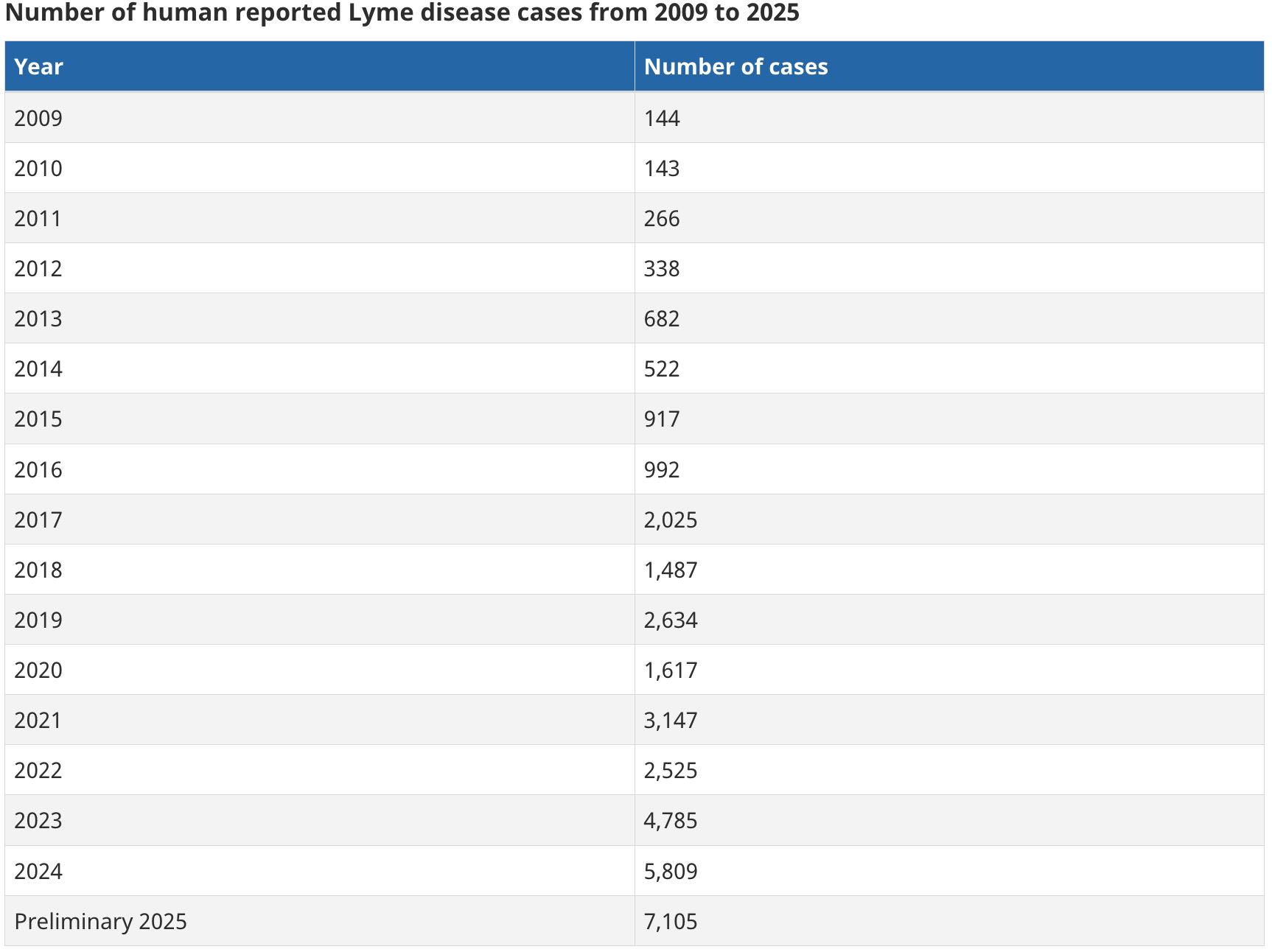
According to ongoing surveillance data from the Public Health Agency of Canada (PHAC), reported cases of Lyme disease in Canada show a clear upward curve. National case counts rose from 917 in 2015 to 5,809 in 2024.
Timeline: How Tick Risk in Canada Has Evolved Over the Past Decade
| Year | National Epidemiology and Risk Changes | New Brunswick (NB) Local Observations and Reported Cases |
|---|---|---|
| 2015 | Risk was relatively low. Blacklegged ticks had not formed large established populations in Canada and were concentrated in a few southern border areas. | Wildlife vector surveillance rarely detected infected blacklegged ticks, and residents almost never needed specific chemical protection for everyday outdoor activities. 11 cases reported province-wide. |
| 2019 | As the climate warmed, blacklegged ticks began expanding noticeably northward. Southern Ontario and southern Quebec came onto the public-health radar first, and active surveillance found positive ticks in several provinces. | Sporadic established local populations were detected, and the provincial health department began issuing epidemiological alerts for southern coastal counties. 36 cases reported province-wide. |
| 2021 | Confirmed Lyme disease cases nationally surpassed 3,000, several provinces revised their case definitions in response to the widespread increase, and tick habitat continued to expand. | Annual reported cases crossed the fifty-case threshold, and Atlantic provinces began granting pharmacists the authority to assess tick bites and prescribe independently. 52 cases reported province-wide. |
| 2024–2026 | Risk continued to climb in eastern Canada. PHAC designated many areas as high-risk habitat, annual national cases exceeded 5,000, and co-infections such as anaplasmosis were added to the list of nationally notifiable diseases. | PHAC designated 12 counties in the province — including Westmorland County, home to Moncton and its large Chinese community — as high-risk red zones. Mowing the backyard and hiking in parks were listed as equal sources of exposure. 111 cases reported province-wide. |
The facts behind the numbers tell us that the rising tick risk in New Brunswick is a long-term ecological change.
High-risk blacklegged tick populations have now spread beyond the traditional southern coastal and river areas (such as Charlotte County, Saint John, Kings County and St. Stephen) and moved into Albert County and Westmorland County. That means Moncton — a major population centre in New Brunswick — and its surrounding satellite towns are now fully within a high-risk area for Lyme disease. Recognizing this as the new normal is the key to adjusting our outdoor habits.
3. The Invisible Ambushers: How Ticks Actually Reach People
Before getting into protection, we need to clear up a common misconception in Chinese-language internet sources: a tick is not a mosquito, not a flea, and certainly not a flying insect.
Biologically, ticks are arachnids. They have eight legs and no wings. They cannot fly or jump, and they move rather slowly.
So how do they end up on fast-moving humans and pets?
It comes down to their distinctive “questing” behaviour.
Ticks spend most of their lives in dark, damp micro-environments — tall grass, shrubs, the unmowed edges of a backyard lawn, and thick piles of fallen leaves. When they need a blood meal to develop or lay eggs, they climb to the tip of a grass stem or shrub branch (usually no more than a metre off the ground), grip the plant tightly with their rear legs, and stretch their front pair of legs — which carry special sensory organs — fully into the air.
The posture looks like an “invisible ambusher” with its arms open, waiting for prey. Their sensory organs are extremely sensitive, able to detect faint changes in carbon dioxide in the air, body heat, body odour, skin moisture, and even the shadow and ground vibrations of a person walking by.
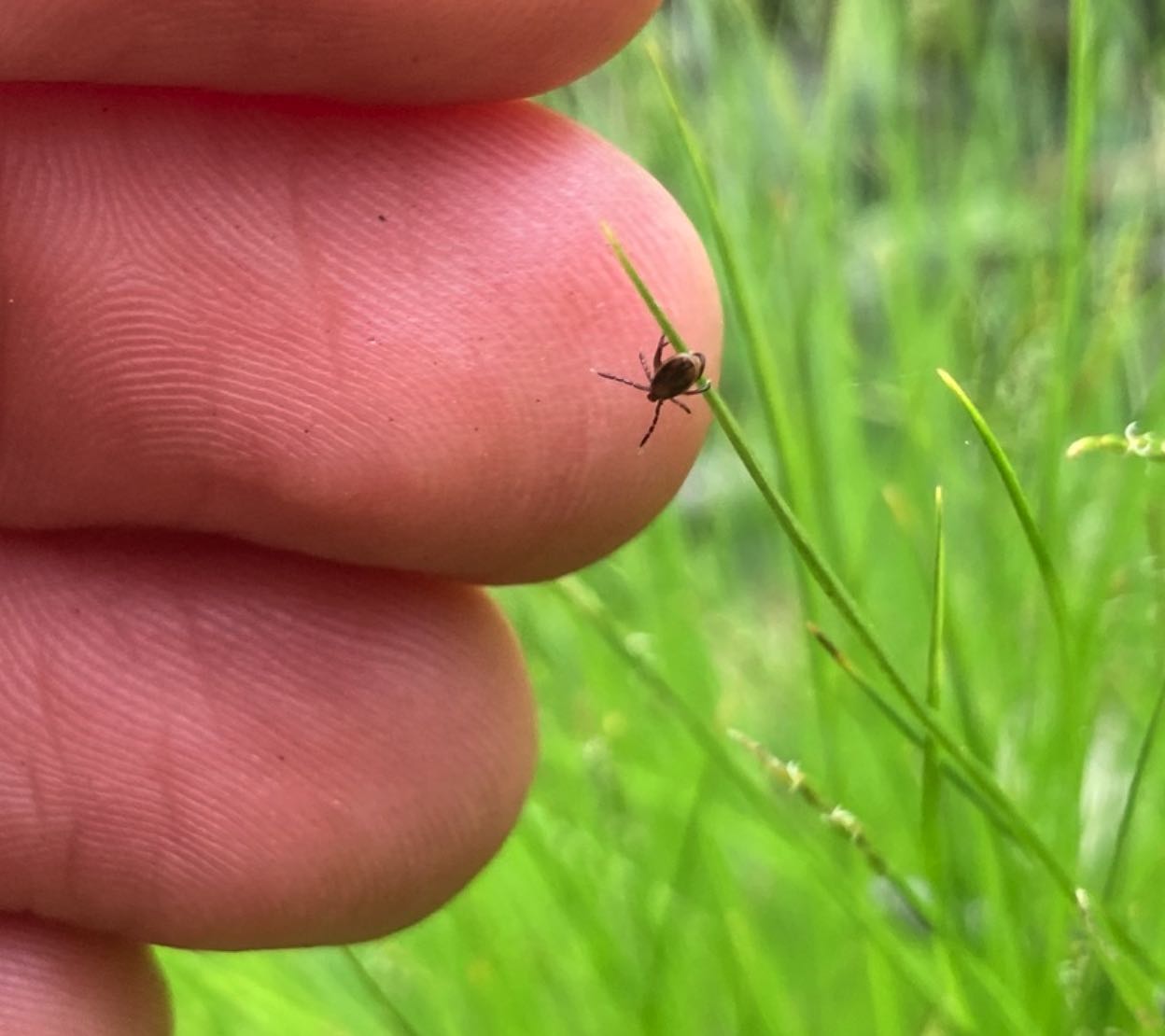
The moment a person or pet walks through the grass and clothing or fur brushes against the vegetation, the tick grabs on, attaching as quickly and firmly as Velcro.
Once on board, it usually does not bite right away. It will wander over clothing or skin for tens of minutes or even hours, searching for hidden spots where the skin is thinnest, the blood vessels richest, and the area warm and moist — such as the scalp, behind the ears, the armpits, the groin, under the breasts and the inner thighs.
In everyday Canadian life, these are the highest-risk settings for exposure:
- Trail hiking: leaving the built gravel main trail and pushing through knee-high grass or shrubs on either side.
- Backyard: grass left too long because spring mowing was late, or clearing debris beside leaf piles and woodpiles near the edge of the woods.
- Cottage & camping: fishing or camping beside river valleys and stagnant ponds where wildlife is common.
- Dog walking: an excited dog plunging into dense vegetation at the forest edge, then carrying ticks home to its owner.
4. Common Tick Species in Canada and Quick Visual Identification
In Canada, not every tick transmits Lyme disease. Learning to tell tick species apart can help you make a calm, informed medical decision if you are bitten.
By public-health definitions, tick populations are divided into “established populations,” which can reproduce steadily in an area, and “adventitious populations,” which arrive with migratory birds. Because migratory birds travel so widely, residents can encounter adventitious ticks even in areas shown as low-risk on risk maps.
Major Active Tick Species in Canada: A Professional Comparison
| Common Name (Chinese, English and Scientific Name) | Transmits Lyme Disease? | Core Range and Distribution in Canada | Appearance and Identification Points | Other Pathogens and Health Risks |
|---|---|---|---|---|
| Blacklegged tick / deer tick Blacklegged Tick Ixodes scapularis | Yes (the most important vector) | High-risk areas of central and eastern Canada, including southern Manitoba, south-central Ontario, southern Quebec, all of Nova Scotia, and the established red zones along the Atlantic coast. | Very small (nymphs are only the size of a poppy seed or sesame seed, about 1–2 mm), dark or black. An unfed adult female is about 3–5 mm, with a dark, hard scutum on its back and an orange-red abdomen with no markings. | Anaplasma phagocytophilum, Babesia microti, Powassan virus. Its nymphs, active in early summer, are the stage most easily missed. |
| American dog tick American Dog Tick Dermacentor variabilis | Usually not a major transmitter | Widespread across much of south-central and southeastern Canada and the Atlantic provinces. | Noticeably larger than the blacklegged tick (about 5–6 mm unfed), uniformly dark brown, with very striking, ornate silvery-white or pale marbled markings on the scutum. | Rickettsia rickettsii (Rocky Mountain spotted fever) and Francisella tularensis (tularemia). Does not transmit Lyme disease — a common cause of false alarms. |
| Lone star tick Lone Star Tick Amblyomma americanum | No | An adventitious species, appearing in small numbers in warmer seasons in southern Alberta, Ontario, Quebec and Nova Scotia, carried in by migratory birds. | Rounder in shape than the blacklegged tick. An adult female has a very conspicuous, bright, milky-white round spot right in the centre of its back. | Ehrlichia, Francisella tularensis, and a link to the rare alpha-gal syndrome (red meat allergy). |
| Groundhog tick Groundhog Tick Ixodes cookei | No | Widespread across south-central and eastern Atlantic Canada, mostly parasitizing wild burrowing animals. | Medium-sized, pale beige or light brown, and rarely bites humans. | Powassan virus (can cause severe neurological encephalitis). |
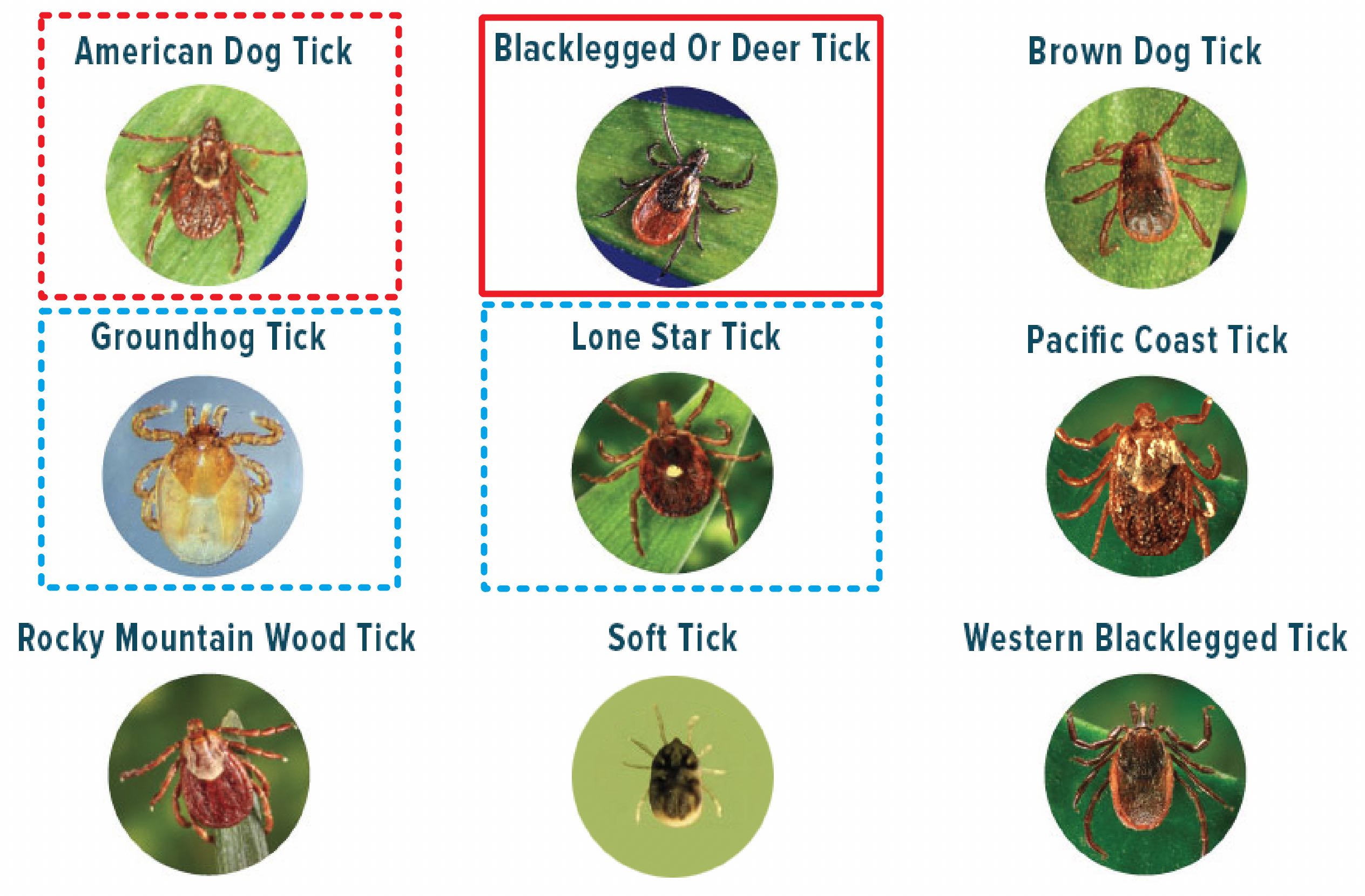
For the general public, the one to watch most closely is the blacklegged tick. Do not let your guard down because unfed ones look “small, dark, and like sesame seeds” — in spring and summer, large numbers of active blacklegged tick nymphs are the high-risk stage for silent transmission of pathogens.
5. The Truth About Lyme Disease: Dropping the “Bull’s-Eye Rash” as an Absolute Label
When people talk about ticks, what they are really guarding against is the pathogen the tick may carry — Lyme disease in Canada.
Lyme disease is an infectious disease caused by the bacterium Borrelia burgdorferi, carried by blacklegged ticks. When an infected blacklegged tick bites a person and stays attached and feeding for a long time, the bacteria travel through the tick’s salivary glands into the person’s bloodstream, triggering an inflammatory response affecting multiple systems.
Its symptoms are highly deceptive and develop in stages. In the early stage, it looks very much like an ordinary “summer flu,” leading many inexperienced patients — and doctors — to mistake it for fatigue or a chill and delay treatment.
How Lyme Disease Symptoms Evolve
- Early localized stage (3–30 days after the bite): Some patients develop erythema migrans (EM) at the bite site — a rash that gradually expands outward to more than 5 cm in diameter. Most people also develop non-specific flu-like symptoms, including low-to-moderate fever, severe fatigue, persistent headache, swollen lymph nodes, and migratory muscle and joint aches.
- Early disseminated stage (weeks to 3 months after the bite): The spirochetes spread through the blood to multiple organs. Patients may develop multiple rashes far from the original bite; nervous system involvement can cause facial nerve palsy (Bell’s palsy), aseptic meningitis (severe headache, neck stiffness, nausea and vomiting) or peripheral neuritis; cardiovascular involvement can cause Lyme carditis, leading to atrioventricular block, with sudden palpitations, chest tightness or even fainting.
- Late disseminated stage (months to years after the bite): The pathogen establishes persistent chronic lesions in the body. The most common is Lyme arthritis, with repeated episodes of severe redness, swelling and joint effusion in large joints such as the knees and elbows (the knee is affected in more than 90% of cases). A small number of cases develop chronic meningoencephalitis, presenting as subacute mild encephalopathy (marked short-term memory loss, inability to concentrate, mood swings).
⚠️ [Key update: no typical red ring ≠ no infection]
In much popular health information, the most iconic feature of Lyme disease is erythema migrans — a rash with a red centre and a clear red outer ring, like the bull’s-eye of an archery target.
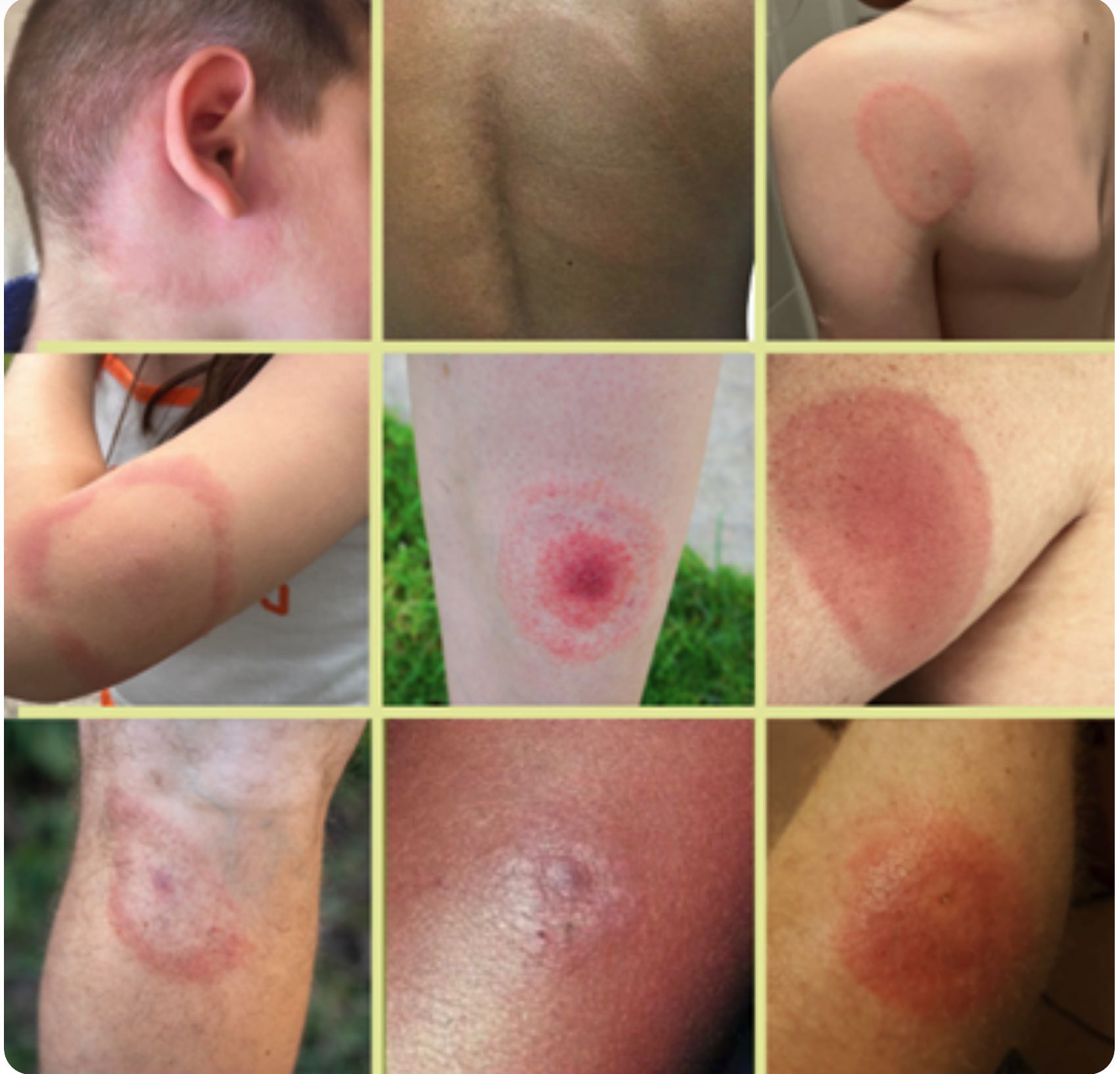
However, the Public Health Agency of Canada and epidemiological cohort studies are clear: among people with confirmed Lyme disease, nearly one in three (30%) never develop a typical bull’s-eye rash — they show only ordinary diffuse redness, a simple maculopapular rash, or nothing at all because the bite is hidden (for example, the back of the thigh, the armpit, or deep inside a thick hairline on the scalp).
In people with darker skin, the rash often lacks a bright red appearance and may look dark purple, brown, or like an ordinary bruise under the skin, making it very easy to miss. Another important feature is that this rash is usually neither painful nor itchy — patients often notice it by chance in the shower.
So the absence of a red ring absolutely does not mean there is no Lyme disease infection. If you develop unexplained flu-like fever, severe muscle and joint aches or fatigue within 30 days of a blacklegged tick bite, seek medical assessment right away and report your tick-bite history in full, whether or not your skin looks clear.
Beyond Lyme disease, ecological and clinical research shows that a single blacklegged tick can harbour several different types of pathogens at once (bacteria, parasites and viruses) and inject them all while feeding, creating difficult-to-treat “co-infections.” As the Public Health Agency of Canada formally adds more emerging tick-borne diseases to the national notifiable-disease list, the incidence of the following illnesses is rising fast:
- Human granulocytic anaplasmosis (anaplasmosis / HGA): caused by Anaplasma bacteria, with an incubation period of typically 5–21 days. A nationally notifiable infectious disease in the Atlantic provinces since 2023, it is growing explosively. Onset is abrupt, with sudden high fever, chills, severe headache and intense muscle aches. In older adults or people with weakened immunity, it can lead to multi-organ failure or severe pneumonia.
- Babesiosis: caused by parasites that live inside red blood cells. After invading the body, Babesia parasites lodge in red blood cells and destroy them, causing hemolytic anemia. Many healthy adults have no symptoms, but for people without a spleen, older adults and immunocompromised patients, it can trigger life-threatening hemolytic crisis, hemoglobinuria (cola-coloured urine) and septic shock. Diagnosis requires finding the parasite on a stained blood smear, and treatment combines antiparasitic drugs such as azithromycin and atovaquone.
- Powassan virus infection: a rare but extremely deadly flavivirus. Unlike Lyme disease, which requires 24 to 36 hours of continuous attachment, Powassan virus can be transmitted within just 15 minutes of a tick bite. It can rapidly cause acute encephalitis or meningitis; the case fatality rate for severe neurological cases is as high as 10%, and many survivors are left with long-term memory impairment or muscle weakness. There is currently no specific antiviral drug; only supportive care is available.
6. First Aid at the Scene of a Bite: Scientific Removal and Emergency Steps
If, after a family hike in the woods, you find a sesame-sized black speck firmly attached to the inside of a thigh or behind a child’s ear while showering, stay calm. Following the standard procedure below will handle it effectively.
Step 1: Confirm Whether It Is Truly Attached
If a tick is only crawling on a pocket, a pant leg or the skin surface, it has not yet found a place it likes to bite. That means it has not broken through the skin barrier to feed, and the chance of Lyme disease infection is effectively zero. Simply pick it up calmly with a tissue, discard it and wash your hands thoroughly.
True “attachment” means the tick’s mouthparts are fully buried under the skin, its body tilts upward, and it stays firmly fixed when you gently nudge it. As feeding progresses, the abdomen — originally flat like a sesame seed — gradually becomes greyish-white and round.
Watch on YouTube: how to remove a tick (original embed: https://www.youtube.com/embed/itT7WuoqRn4)
Step 2: The Standard, Correct Physical Removal Method
Remember, the only scientifically correct tick-removal tool is a pair of clean, fine-tipped tweezers. Do not use flat-tipped cosmetic eyebrow tweezers, and never dig at it with your fingers.
Standard Tick Bite Emergency Procedure
- Found a tick: first determine whether it is crawling or its mouthparts are already embedded in the skin.
- Only crawling: remove it mechanically with a tissue, discard it and wash your hands with soap and water.
- Already attached: grip the head with clean fine-tipped tweezers close to the skin and pull straight up with steady, even force.
- Clean and save: clean the wound with soap and water or alcohol, and save the tick in a sealed bag or small container.
- Assessment within 72 hours: bring the tick or a high-resolution photo to a community pharmacy to request a Tick Bite Assessment.
- Watch for 30 days: record any fever, extreme fatigue, headache, muscle or joint pain, or spreading rash.
Key Points
- Close to the skin: grip the front of the tick — the head or mouthparts — with fine-tipped tweezers as close to the skin surface as possible, not the abdomen.
- Straight up, steady and even: keep your hand steady. Do not twist or yank back and forth. Pull straight up, perpendicular to the skin, with steady, even force. If the mouthparts break off in the skin, do not panic. The broken-off mouthparts are dead tissue; they will not keep releasing toxins and will not increase the risk of Lyme disease. If they are too deep to grip, never dig at them forcefully with a sewing needle — that can easily cause a skin infection. Clean the area and let the skin heal normally; the body will expel them on its own within a few weeks.
- Disinfect the wound: after successful removal, wash the wound with soap and warm water, then thoroughly clean the bite site and your hands with 70% rubbing alcohol or iodine.
- Save the tick: put the removed tick in a sealed small bottle or zip bag with a drop of water to keep it moist. Take a clear, high-resolution photo with your phone and upload it to the etick.ca platform for species identification — this is an important medical record to bring to the pharmacy.
Watch on YouTube: tick removal demonstration (original embed: https://www.youtube.com/embed/JYw6LRmbVh8)
⚠️ [Warning: high-risk folk remedies]
In Chinese community group chats, folk remedies often circulate — burning the tick with a cigarette, or smothering it with cooling oil, petroleum jelly or nail polish to “suffocate” it into letting go.
The Public Health Agency of Canada strongly prohibits these practices! When a tick is subjected to heat, suffocation or violent squeezing, it goes into a near-death stress response. This strong stimulus can make it regurgitate violently, pumping the large load of Lyme disease bacteria stored in its digestive tract into your bloodstream like a high-pressure syringe — multiplying the risk of infection.
7. Decoding Canada’s Health Care System: The Right Care Pathway After a Bite
Many newcomers to Canada, after being bitten by a tick, instinctively rush to a hospital emergency room (ER) or call around trying to book a family doctor. But under Canada’s tiered care system, heading blindly to the ER can mean eight wasted hours sitting on a hard chair — and missing the window for preventive treatment.
In everyday local life, the most efficient care pathway is as follows:
1. Community Pharmacy: A Fast-Track Prevention Channel for High-Risk Bites
In Canada, pharmacists in community pharmacies have independent authority to assess specific post-exposure prevention and prescribe.
If you go to a pharmacy within the 72-hour golden window after removing the tick and currently have no symptoms such as fever or rash, you do not need to queue at a clinic at all — simply walk into any nearby community pharmacy and request a Tick Bite Assessment.
When deciding whether to prescribe a single dose of doxycycline as prevention, the pharmacist will strictly check the following criteria:
- No symptoms: if you have already started to develop a fever, headache or a rash, you are already in the infection stage, a single preventive dose is completely useless, and the pharmacist will immediately refer you to a clinic or family doctor.
- Within the 72-hour window: counted from the moment the tick was removed, no more than 72 hours may have passed.
- Confirmed blacklegged tick, attached and feeding for more than 36 hours: the pharmacist will examine the tick and estimate feeding time from how engorged its abdomen is. Lyme disease bacteria normally hide in the tick’s gut and migrate to the salivary glands only after blood intake and warming stimulate them, which usually takes more than 36 hours of continuous feeding. If the tick fed for only a few hours, the chance of transmission is close to zero and no medication is needed.
- In an officially designated high-risk area: the bite must have occurred in a high-risk area designated by the authorities, such as southern New Brunswick.
2. Walk-in Clinics and the Virtual Primary Care Platform (eVisitNB)
If you can no longer say exactly when the bite happened, or the 72-hour pharmacy window has passed, but you currently have no signs of severe illness, a walk-in clinic is the better choice. In New Brunswick, you can also use the free virtual primary care platform eVisitNB for a video consultation and to upload a high-resolution photo of the rash. Once a doctor or nurse practitioner confirms that the rash looks characteristic and the bite history is clear, they can prescribe a standard course of oral antibiotics directly, saving you a trip to wait in line.
3. Why the Emergency Room (ER) Is Not Necessarily the Best First Choice
Under Canadian emergency triage, an asymptomatic tick bite alone is the lowest-priority, non-urgent category and will typically be seen last. Emergency resources should be reserved strictly for patients showing signs of severe illness. If you develop sudden fainting, chest tightness (suggesting impaired heart conduction), complete paralysis of one side of the face, or a sudden severe migraine with a stiff neck, skip the pharmacy and go straight to the hospital emergency department for intravenous treatment.
[Local know-how: why won’t the doctor order a blood test right away?]
One of the most common frustrations for newcomers is: “I even brought the tick in — why won’t the doctor order a blood test?”
Put simply, the obstacle is immunology. The standard blood test in Canada looks for the specific antibodies the body produces against the bacteria — not the bacteria themselves.
It usually takes the immune system 2 to 6 weeks to produce enough antibodies for the test to detect. If you have blood drawn on the first day or in the first week after a bite, antibody levels are extremely low, and the result will almost certainly be a false negative. Such a test is not only meaningless — it can also falsely reassure you. Early Lyme disease is therefore diagnosed entirely on exposure history and clinical symptoms: when a doctor sees a characteristic rash, they will start treatment immediately without waiting for blood test results.
8. Children and Pets: The Most Easily Overlooked Line of Defence
Public Health Agency of Canada active-surveillance data shows a clear peak in cases: school-aged children aged 5 to 14 account for a very high proportion of all confirmed cases.
In real life, many cases of delayed diagnosis happen after a child comes home from summer camp or from rolling around on grass in the woods. Because children are short, the deep scalp, behind the ears, inside the ear, and the hairline at the back of the neck are the highest-risk areas for blacklegged ticks to attach.
Many young girls have thick hair, which makes ticks even harder to spot, and young children often cannot describe a local itch. If parents do not carefully part the hair and check while bathing the child after they come home, a tick can feed silently deep in the scalp for days, be missed, and eventually progress to early disseminated disease with facial paralysis.
A careful head-to-toe touch check every time children come back from the outdoors or a park must become an ironclad family rule. For children going camping in high-risk areas, a 20% icaridin (picaridin) insect repellent spray is recommended as the first choice. It is gentler than traditional DEET, has no neurotoxicity risk, and provides 5 to 7 hours of long-lasting protection.
Pet dogs, meanwhile, play the role of a frequently overlooked “indirect vector” in the tick ecology chain.
When out for a walk, dogs naturally explore with their noses, excitedly plunging into tall grass at the forest edge. Many owners think that because their dog takes a chewable tick prevention tablet such as Bravecto or NexGard every month, the household is safe — but that is a misconception.
These veterinary medicines work by killing the tick within hours after it actually bites the dog’s skin and ingests blood containing the drug. During the hours when a tick has just hooked onto the dog’s fur and is wandering through the coat looking for a place to bite, it is fully active.
If you do not check the dog’s coat after a walk, the dog may rub against the carpet in the living room or jump onto the bed to sleep with you, and the unfed, still-active blacklegged tick can drop off and move onto an unsuspecting family member, causing a real bite and infection. So every time you return from a walk, spend a few minutes at the door carefully checking the dog’s toes, under the collar, and inside and outside the ears with a fine-toothed tick comb — that is the shared baseline for the whole family’s safety.
9. Scenario-Based Risk Management: Building Protection into Daily Habits
In Canada, getting close to nature and enjoying the sunshine is an essential part of local life. The ultimate purpose of risk management is to enjoy the outdoors more freely and safely — not to hide at home out of fear. A few simple adjustments can stop these medical risks before they start:
- Backyard management and physical landscape barriers
Many backyards border directly on woods or wild grass — exactly the micro-habitat that wild mice and squirrels, the ticks’ reservoir hosts, love most.
A common local solution is to mow regularly, keeping the grass under 5 cm so the lawn surface gets more sun and surface moisture evaporates quickly; and to lay a buffer strip of wood chips or gravel at least 1 metre (3 feet) wide and about 5 cm deep where the mown lawn meets the neighbouring woods or shrubs. A dry strip of stones, which gets extremely hot in the summer sun, is a physical barrier ticks cannot cross. Also move children’s swings and trampolines to the sunniest centre of the yard, and keep woodpiles raised and away from the yard’s edge to discourage mice from nesting.
- The “stay on the path” rule for trail hiking
When hiking in forest parks, stay in the centre of the built main trail, surfaced with gravel or boardwalk, and resist the urge — for yourself or your children — to follow the rough “animal trails” trampled by wildlife. Spots where vegetation overhangs on both sides are often the highest-density hotspots for questing ticks. Wear light-coloured long pants, tuck the cuffs into your socks and your shirt into your waistband. It may look a little silly, but it very effectively blocks ticks from crawling up from your ankles.
- The “golden half hour” after coming home
The first 30 minutes after coming indoors from outdoor activities are the golden window for interrupting a bite. Experienced local outdoor enthusiasts unfailingly do these three things:
- 10 minutes in a hot dryer: at the door, take off your jacket and backpack and check them, then put the entire set of outdoor clothing and socks straight into the dryer on high heat for at least 10 minutes. Ticks are extremely vulnerable to dryness — an ordinary cold- or warm-water wash cannot kill them; only dry hot air dehydrates nymphs hidden deep in the fibres and kills them instantly.
- Hot shower as soon as possible: take a hot shower within two hours of coming inside if you can. Hot water easily washes off ticks that are crawling on the skin but have not yet attached and bitten.
- Full-body check with a partner: in or after the shower, use a mirror or a family member’s help to thoroughly check the scalp and hairline, behind the ears, under the armpits, under the breasts, inside the navel, the groin and behind the knees.
10. Out of the Myths: Common Misconceptions About Ticks
When tending the yard or chatting with neighbours, many people share advice about insect prevention. But because of word-of-mouth distortion, quite a few misconceptions circulate in the newcomer community that need clearing up.
Many people assume that Canada’s freezing winters mean ticks disappear completely, and that protection is only needed in the hot summer.
But the reality is not that simple. The temperature threshold at which blacklegged ticks wake up and start seeking hosts is very low: as soon as outdoor temperatures rise above 4.0°C for several days in a row and the ground is not covered by extensive snow, they end their dormancy at once and climb onto dead grass to wait for animals to pass.
In eastern Canada and the Maritime provinces, there is still a clear bite risk in the backyard or woodland in early spring, late autumn, and even on occasional warm, sunny winter days around Christmas. That is also why school Tick Reminders sometimes go out in early spring, just as the snow is melting.
Another very common misconception concerns repellent products.
Some parents, worried about chemical ingredients, prefer to buy “all-natural” plant essential oil or citronella insect repellents for their children. Many assume that if it repels mosquitoes, it must also repel ticks.
In the real outdoors, however, these all-natural essential oil products evaporate very quickly and offer almost no protection against hardy blacklegged ticks.
When buying tick repellent in Canada, look for two proven active ingredients on the label: 20% icaridin (picaridin) or 20%–30% DEET. Only a repellent whose packaging clearly says it prevents ticks will provide an effective barrier.
Another worry after a bite is that if the tick’s head or mouthparts break off in the skin during removal, the remaining parts will keep releasing toxins and must be cut out in the emergency room at once.
In fact, that worry is unnecessary. Lyme disease pathogens live mainly in the tick’s gut; once you have removed the abdomen and main body of the tick, mouthparts left in the skin are simply dead, inert tissue and will absolutely not keep actively releasing toxins.
The right approach is to treat it like an ordinary splinter and keep it clean. If tweezers cannot easily grip it, do not dig at it forcefully with a sewing needle and risk a serious suppurating skin infection; leave it to the skin’s natural renewal, and within a few weeks the body will expel it mechanically on its own.
11. The Digital Line of Defence: Canadian Official Resources Worth Keeping, and a Closing Word
In an age of mixed-quality information online, when you face an emergency in the field or worry about identifying a tick, go directly to these four official digital resources set up by the federal government and the provinces:
- eTick — Electronic Tick Identification and Monitoring System (www.etick.ca): residents simply take a clear, high-resolution photo of the hard scutum on the back of the removed tick in good light, upload it, and mark the precise location of the bite in the system. Entomology experts typically send an authoritative identification report online within hours to 24 hours, confirming whether it is a high-risk blacklegged tick and whether it is engorged. Before deciding to queue at a hospital or clinic, this should be your first step.
- Public Health Agency of Canada (PHAC) Lyme Disease Portal: the federal government’s central surveillance page. It publishes, in real time, county-level high-risk heat maps (Estimated Risk Maps) showing the northward spread of vectors across the provinces. Checking the latest regional risk map before booking a summer campsite or travelling to another province helps you prepare targeted protection in advance.
- Provincial 811 Tele-Care Health Lines: a free, 24-hour telephone service funded by provincial health departments, staffed by registered nurses for triage assessment. If you remove a tick in the middle of the night and feel extremely anxious, a nurse can guide you on treating the wound and, based on your location, look up the nearest pharmacy or walk-in clinic schedule for the next morning.
- New Brunswick College of Pharmacists (NBCP) Practice Guidance: if a pharmacy in your community is unfamiliar with the process and turns a newcomer away, you can show the NBCP’s latest official Guidance for Pharmacists — Lyme Disease Prophylaxis on your phone to assert your right to an immediate, no-appointment assessment and prescribing.
Closing Word: The Canadian Wisdom of Living with Nature
Look again at Canada’s vast and varied natural environment — from the towering Rockies to the spectacular coastal trails of Atlantic Canada. Getting close to the wilderness and enjoying the sunshine is not just a leisure activity; it is one of the finest parts of the Canadian way of life.
The northward spread of ticks and the rising risk levels are, epidemiologically, a reality we must take seriously. But that absolutely does not mean shutting ourselves indoors, nor does it mean nature has become a dangerous forbidden zone to be feared at every step.
In many long-settled Canadian families, tick prevention has long since become a relaxed, natural household habit — just as we instinctively apply sunscreen when the sun is strong and switch to winter tires before winter.
Ten minutes in a hot dryer when you come home, a quick check of hidden spots in the shower, a fresh row of wood chips along the backyard edge every spring — once these simple actions become part of everyday life, the threat from ticks drops to a very low level.
Put on light-coloured long pants, tuck in the cuffs, apply gentle icaridin, and this vibrant summer, take your children and pets and continue to embrace Canada’s truly precious outdoor life — calmly and safely.