
November 5, 2026
An Introduction to the IB Diploma Programme and IB High Schools in New Brunswick
The IB Diploma Programme is a two-year, university-preparatory programme for students aged 16 to 19, built around six subject groups and three core requirements — Theory of Knowledge, the Extended Essay, and Creativity, Activity, Service. This guide explains how the programme is structured, how it is assessed, how the 45-point total works, and which high schools in New Brunswick offer it.
Condensed Version
If you don't have time to read the full text, this condensed version covers the essentials.
The IB Diploma Programme is a two-year, university-preparatory programme for students aged 16 to 19. It is not simply an ordinary high school curriculum made deeper and harder; it is a complete system with a clear structure, a coherent logic, and well-defined requirements. Students normally choose courses across six subject groups, covering language, a second language, humanities and social sciences, sciences, mathematics, and the arts or an alternative subject. The point, therefore, is not early specialisation in a single subject, but depth built on academic breadth. For many families, the most distinctive feature of the IB is precisely this: throughout high school, students keep studying across multiple fields, constantly switching between, integrating, and expressing different kinds of knowledge.
In terms of course arrangements, IB students normally take three or four Higher Level (HL) courses, with the rest at Standard Level (SL). Both are formal courses, and both are ultimately scored out of 7, but Higher Level means more class hours, a broader range of content, and deeper analytical demands. In addition to the six subject courses, the IB has three core requirements: Theory of Knowledge (TOK), the Extended Essay (EE), and Creativity, Activity, Service (CAS). TOK asks students to think about how knowledge is formed and why we believe certain knowledge to be valid; the EE asks students to complete an independent research paper on a clearly defined question; and CAS asks students to take part in creative, physical, and service activities on an ongoing basis, staying active, reflective, and socially engaged beyond their academic work. It is precisely because of these three core requirements that the IB is not only about exam results — it places research, reflection, practice, and learning within a single framework.
The IB's approach to assessment is also distinctive. It looks at both globally standardised examinations and in-course internal assessment tasks. Students not only sit subject examinations but also complete lab reports, oral presentations, investigative writing, essays, and other forms of assessment. The six subjects are worth a total of 42 points, and TOK and EE can add up to 3 bonus points, for a maximum total of 45. CAS carries no points, but a student who does not complete it still cannot receive the full diploma. The commonly cited 24 points is only one of the basic thresholds for the diploma; the IB also sets clear requirements for HL and SL totals, the number of low-scoring subjects, TOK and EE grades, and academic integrity. In other words, the IB is not about simply "scoring high" — it is a complete two-year learning process.
In terms of the actual learning experience, the pressure IB students face usually does not come from one particularly difficult course, but from many tasks running in parallel over a long period. The day-to-day study of six subjects, internal assessments in different courses, TOK tasks, EE writing, and CAS records often overlap in the same period. Students need not only the ability to understand knowledge, but also time management, task planning, sustained commitment, and self-adjustment. That is why the IB is often considered a curriculum that prepares students well for university. It trains students to read complex material, write research papers, and build arguments, while also requiring them to stay reflective, active, and engaged with the real world under heavy academic pressure. This learning process is exactly why many families only begin to understand the value of the IB once they truly learn about it.
Full Text Below
When many parents first encounter the IB, they usually hear the same few stock descriptions: the courses are hard, the recognition is high, universities like it, and the pressure is intense. Those impressions are not entirely wrong, but if you stop at these generalisations, it is still very hard to truly understand the programme.
The questions that are actually useful are more specific: What does the IB actually teach? How is the curriculum put together? What learning tasks must students complete over the two years? How are results calculated? And what are the criteria for awarding the diploma?
Only once the programme itself is explained clearly can subsequent conversations between parents and children have a solid foundation. The key point about the IB is not simply "how hard is it," but what kind of learning process it actually requires students to complete.
1. What Is the IB Diploma Programme?
When parents talk about "IB courses," they usually mean the International Baccalaureate Diploma Programme at the high school level — a complete two-year, university-preparatory programme, mainly for students aged 16 to 19.
The programme began with a strong international education background and gradually developed into a system adopted by many schools around the world and widely understood by universities. It emphasises not only subject results, but also inquiry skills, critical thinking, research writing, intercultural understanding, and engagement with the real world. For that reason, the IB is not "high school courses made a bit harder" — it is a complete programme with a clear philosophy, a fixed structure, and a consistent assessment logic.
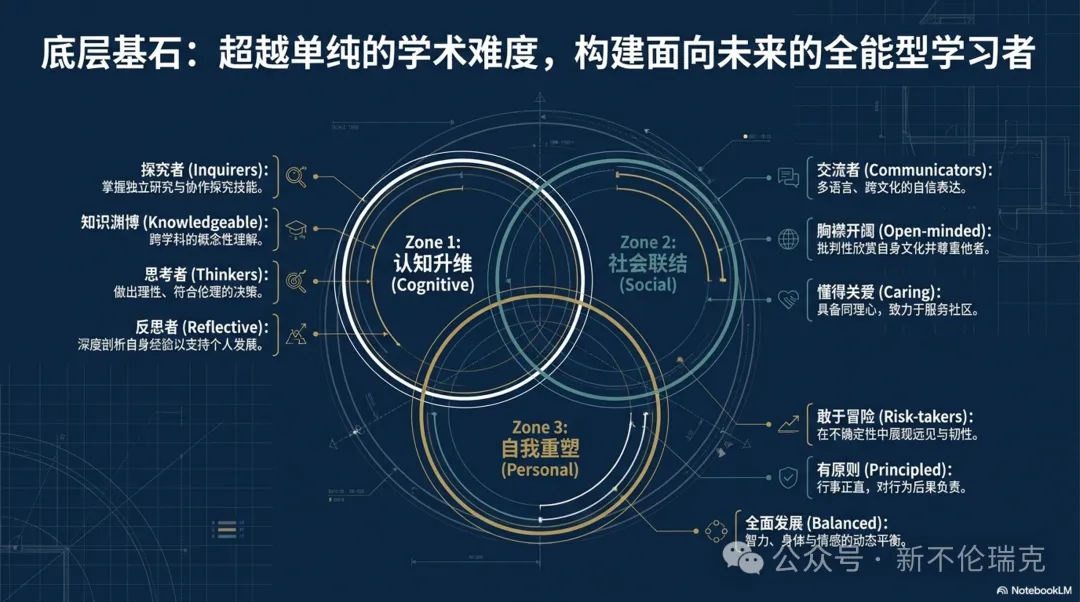
The IB Learner Profile: the spirit of IB education is made concrete through the ten attributes of the "Learner Profile." These attributes focus not only on improving cognitive ability, but also on the balanced development of the social, emotional, and physical dimensions.
Inquirers: developing students' curiosity and the skills to carry out independent and collaborative inquiry, so that learning becomes an intrinsic motivation that lasts a lifetime.
Knowledgeable: developing conceptual understanding across a broad range of disciplines, and engaging actively with issues of local and global significance.
Thinkers: emphasising critical and creative thinking, guiding students to take responsible action when analysing complex problems, and to make rational, ethical decisions.
Communicators: expressing information confidently in more than one language and in a variety of ways, and collaborating effectively in teams and across cultures.
Principled: developing a strong sense of fairness and justice, acting with honesty and integrity, and taking responsibility for the consequences of one's actions.
Open-minded: critically appreciating one's own culture, while understanding and respecting the views, values, and traditions of others.
Caring: showing empathy and respect, and working to make a positive difference in the lives of others and the world around them through service.
Risk-takers: showing foresight and determination in the face of uncertainty, daring to explore new ideas and new strategies, and demonstrating resilience in meeting challenges.
Balanced: understanding the importance of balancing intellectual, physical, and emotional well-being in order to achieve well-being for oneself and for others.
Reflective: thinking carefully about the world and about one's own ideas and experiences, and understanding one's strengths and weaknesses in order to support personal development and learning.
2. The Overall Framework of the IB: Six Subject Groups, Plus Three Core Requirements
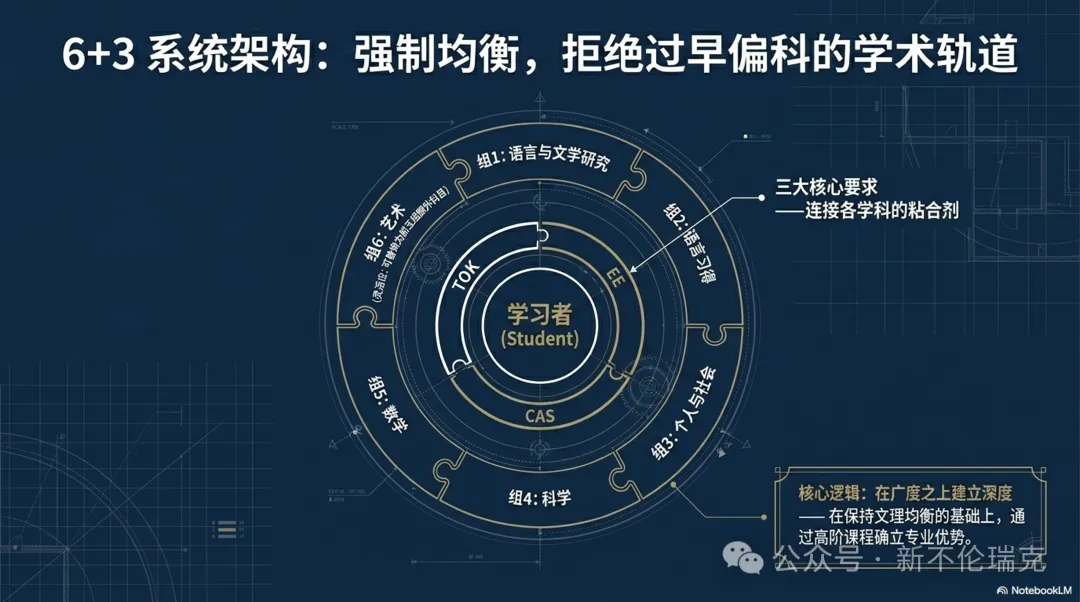
The core structure of the IB Diploma Programme consists of two parts: six subject groups, and three core requirements. The first forms the main body of students' academic courses; the second connects those courses and creates the distinctive IB framework.
Under the basic rules, students normally take one course from each of the first five subject groups, and the sixth course may be chosen from the arts group or replaced by another course from the first five groups. In addition, students must complete the three core requirements: Theory of Knowledge, the Extended Essay, and Creativity, Activity, Service.
3. What Does Each of the Six Subject Groups Cover?
Group 1: Studies in Language and Literature
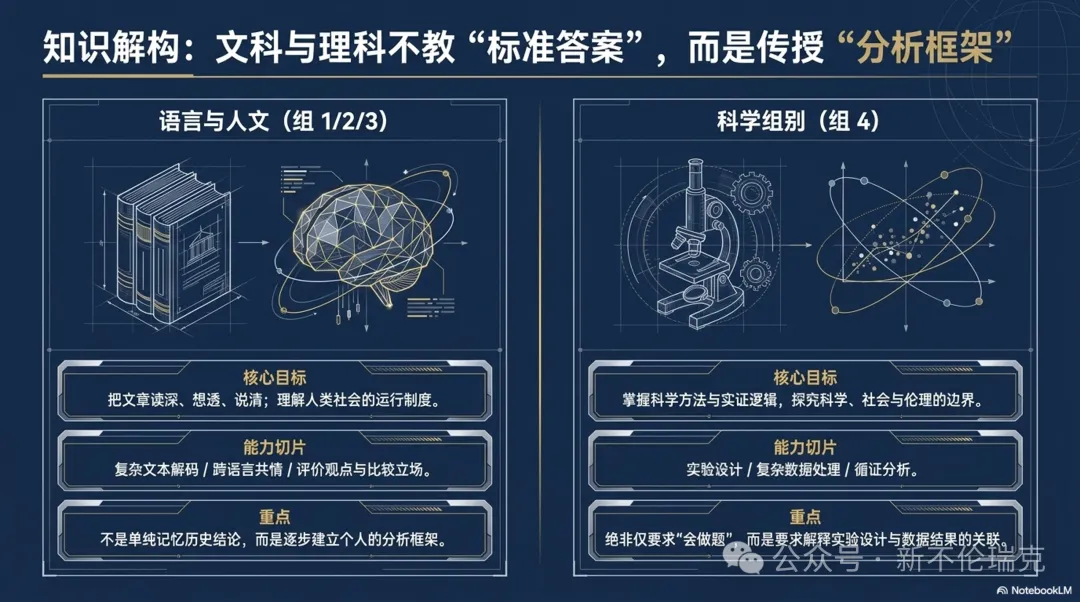
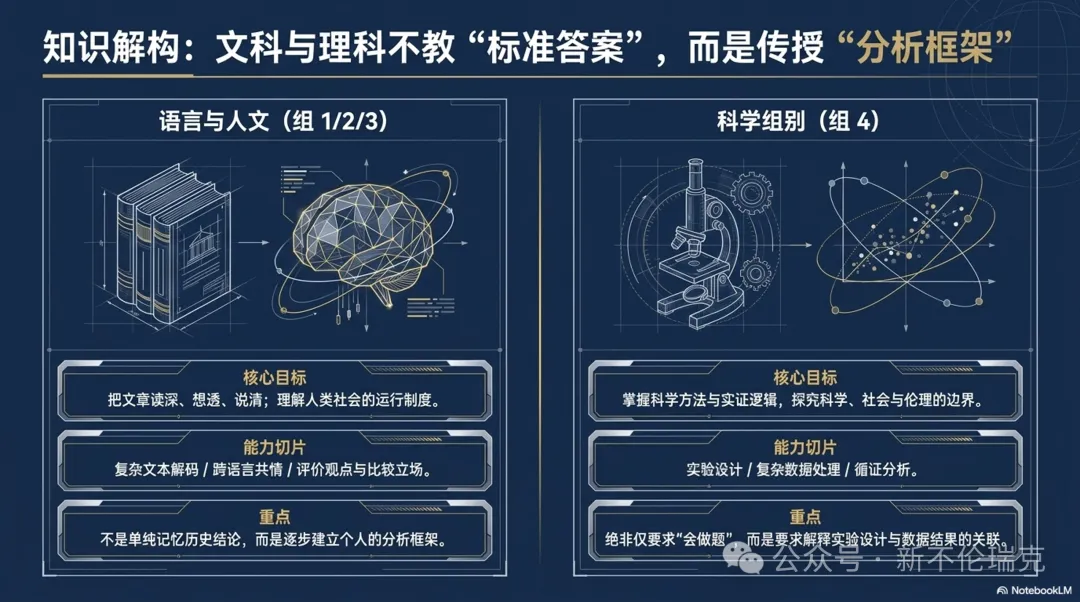
This is normally the student's first-language course — their mother tongue or main academic language. Common forms include Language and Literature, and Literature. The focus is not simply on improving language ability, but on training students, through reading, analysis, and expression, to understand complex texts, analyse how language is used, grasp cultural context, and write at a high level. In other words, this group does not train students in "whether they can understand a text," but in whether they can read a text deeply, think it through, explain it clearly, and write about it convincingly.
Group 2: Language Acquisition
This is normally the second-language course. Depending on the student's background, schools may offer courses suited to students who already have a foundation in the language, or introductory courses for beginners. The goal is not only for students to master another language, but more importantly to develop cross-linguistic communication skills and intercultural understanding. Language here is both an object of study and a gateway to another culture and way of thinking.
Group 3: Individuals and Societies
This group covers the humanities and social sciences. Common courses include History, Geography, Economics, Business Management, Psychology, Philosophy, and Global Politics. The focus of study is not simply memorising conclusions, but understanding how human societies work, how institutions are formed, how viewpoints are constructed, and how different analytical frameworks shape our understanding of a question. These courses usually involve a large amount of reading and demanding writing and argumentation: students must not only understand facts, but also explain facts, evaluate viewpoints, compare positions, and gradually build their own analytical framework.
Group 4: Sciences
This group includes Biology, Chemistry, Physics, Computer Science, Design Technology, and Sports, Exercise and Health Science. The requirements for the sciences go beyond theoretical knowledge to include experiments, data handling, analysis, and reporting. IB science courses do not only emphasise "being able to solve problems" — they place more weight on whether students truly understand the scientific method, whether they can draw conclusions from evidence, and whether they can explain experimental design and data. Some courses also guide students to think further about the relationship between science and society, the environment, and ethics.
Group 5: Mathematics
Mathematics is a compulsory part of the IB structure. There are two main pathways:
Mathematics: Analysis and Approaches (AA): focuses on algebra, calculus, and mathematical proof, and suits students planning to study engineering, physics, or traditional mathematics.
Mathematics: Applications and Interpretation (AI): focuses on statistics, modelling, and data analysis, using technology to solve real-world problems, and suits students heading toward business, social sciences, or the arts.
Each pathway is offered at different levels. When many families learn about IB mathematics, they tend to focus only on which course is harder, but the more important point is that the two pathways point in different directions. The first leans more toward theoretical foundations, the second more toward real-world application. So when understanding this group, difficulty is only part of the picture — the choice of pathway matters just as much.
Group 6: The Arts
This group includes Visual Arts, Music, Theatre, Dance, and Film. It emphasises creative practice alongside theoretical reflection: students not only create, but also express, analyse, and organise their work. At the same time, Group 6 is flexible. Students who do not choose an arts subject may take another course from the first five groups instead. That means students planning to apply for science, engineering, medicine, business, or similar directions can use this slot to further strengthen another key subject.
4. What Are Higher Level and Standard Level?
A very important concept in the IB is Higher Level and Standard Level — the familiar HL and SL. Students normally choose three or four of their six courses at Higher Level, with the rest at Standard Level.
Many people simply think of Higher Level as the "hard version" and Standard Level as the "easy version." That is not accurate. More precisely, both are formal courses, but Higher Level normally means more teaching hours, a broader range of content, deeper analytical requirements, and, in some subjects, more complex assessment tasks. The source material notes that the recommended teaching time for Higher Level is usually around 240 hours, compared with around 150 hours for Standard Level — a clear difference in the amount of time invested.
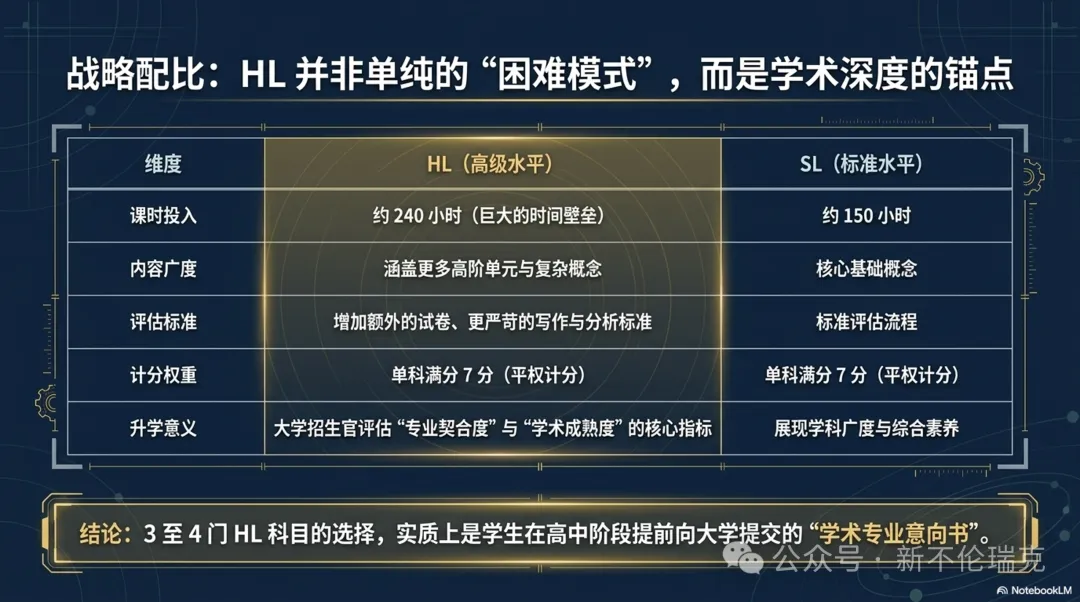
In specific subjects, Higher Level may mean more units, deeper conceptual requirements, higher standards of writing or analysis, or additional examination papers and assessment components. For universities, which Higher Level courses a student has chosen often says more about their academic direction and depth of study.
It is important to be clear, however, that when totals are calculated, every Higher Level course and every Standard Level course is scored from 1 to 7. In other words, the maximum score for a single subject is the same for both — the difference lies mainly in the depth, scope, and demands of the course itself.
5. The Three Core Requirements That Make the IB Distinctive
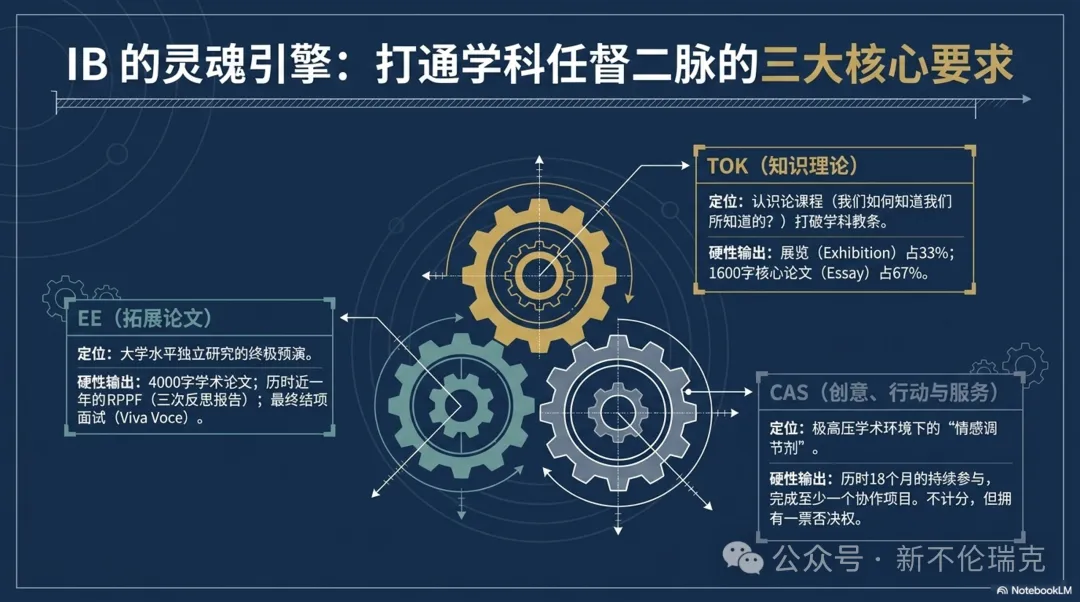
If the six subject groups form the main body of the IB, the three core requirements are the part that best expresses what makes the IB distinctive. They are Theory of Knowledge, the Extended Essay, and Creativity, Activity, Service. They are not add-on activities; they are an inseparable part of the Diploma Programme.
Core 1: Theory of Knowledge (TOK)
TOK is not a philosophy course in the traditional sense; it is a course in epistemology that explores "how we know what we claim to know." It challenges students to reflect on the origins, validity, and limitations of knowledge.
Core content: students explore how knowledge is produced in different areas of knowledge, such as mathematics, the natural sciences, the human sciences, the arts, and history.
Assessment:
The TOK Exhibition: students choose three objects and, drawing on core TOK concepts such as truth, evidence, and interpretation, show how these objects relate to the production of knowledge in the real world. This is usually completed in the first year and counts for 33% of the TOK grade.
The TOK Essay: students choose one of six prescribed titles released by the IB and write a 1,600-word essay arguing how knowledge is applied in different areas. This counts for 67% of the TOK grade.
The significance of TOK is that it breaks down disciplinary dogma. It teaches students that even seemingly "objective" scientific knowledge is produced through processes influenced by social paradigms and sense perception. This metacognitive ability — thinking about thinking — is the foundation of academic research at university.
Core 2: The Extended Essay (EE)
The EE is a 4,000-word independent research paper, completed over nearly a year under the supervision of a teacher, in a subject area chosen by the student.
Learning goals: to simulate university-level academic research, training students in searching the literature, setting a research question, building an argument, and following academic integrity standards.
The reflection process (RPPF — Reflections on Planning and Progress Form): the EE is judged not only on the finished paper; students must also write reflections at three key stages of the research (early, middle, and final). The final stage, the Viva Voce (a concluding interview), is an important means of assessing the student's engagement and academic honesty.
Academic value: university admissions officers widely regard the EE as the best indicator of whether a high school student is ready for university research.
Core 3: Creativity, Activity, Service (CAS)
CAS ensures that, while buried in their books, IB students still pay attention to their personal physical and mental health and to their contribution to society. It emphasises "learning by doing" and the importance of reflection.
The three strands:
Creativity: exploring artistic pursuits or creative thinking, such as learning an instrument, writing code, or running a school newspaper.
Activity: promoting physical and mental well-being through physical exercise, such as playing sports, hiking, or fitness training.
Service: making a positive impact on the community through unpaid voluntary service, such as tutoring, environmental projects, or supporting people with disabilities.
Graduation requirement: CAS carries no academic points, but students must participate continuously over 18 months, complete at least one collaborative CAS project, and demonstrate progress across the seven prescribed learning outcomes.
The psychological dimension: in the extremely high-pressure IB experience, CAS is often seen as a form of emotional regulation. By helping others and exercising, students can effectively relieve the anxiety that comes with standardised examinations.
6. How Does the IB Assess Students?
The IB's approach to assessment is another key way it differs from many traditional high school programmes. It normally combines internal assessment with external assessment, rather than relying only on a single final examination or only on in-school grades.
Internal Assessment (IA):
It normally accounts for 20%–30% of the total grade.
It is marked by the subject teacher according to the IB's common criteria.
Moderation: to prevent marks from being too high or too low, the IB samples student work from each class at random, and experienced examiners around the world re-mark it. If moderation shows that a teacher's marking was unfair, the whole class's original marks are adjusted proportionally.
Formats: science lab reports, oral presentations, mathematics exploration reports, history investigations, and similar tasks.
External Assessment (EA):
It accounts for 70%–80% of the total grade.
It includes the global examination papers held at the end of each school year. The papers are sent by the IB, and after the examinations they are sealed and returned to IB headquarters, where they are marked by examiners around the world.
Grade Boundaries: the grade boundaries are fine-tuned each year according to the overall performance of candidates worldwide, to keep the value of the qualification consistent. For example, the grade 7 boundary for Mathematics AA HL may be around 79%.
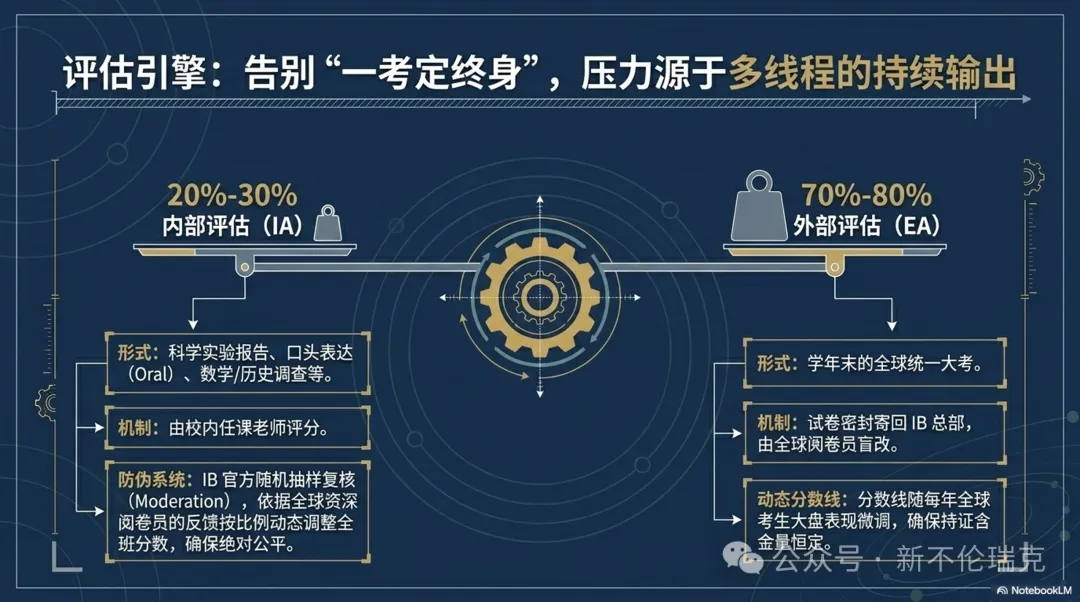
This means the IB is not a system in which examinations alone decide everything. Students must perform in standardised examinations and, at the same time, keep producing high-quality work throughout the programme. The pressure many families truly feel often comes precisely from this long-term, multi-threaded, sustained structure.
7. How the 45-Point Total Is Made Up
The IB diploma is marked out of 45. Each of the six subjects is scored from 1 to 7, so the six subjects together are worth a maximum of 42 points. In addition, Theory of Knowledge and the Extended Essay together can add up to 3 bonus points. Creativity, Activity, Service is not counted in the 45 points, but it must be completed — otherwise a student cannot receive the full diploma.
Score breakdown: six subjects, 42 points in total (1–7 points per subject, 6 × 7); up to 3 bonus points from the core (calculated by combining TOK and EE grades); a theoretical maximum of 45 points (a score of 45 is regarded as a top academic achievement).
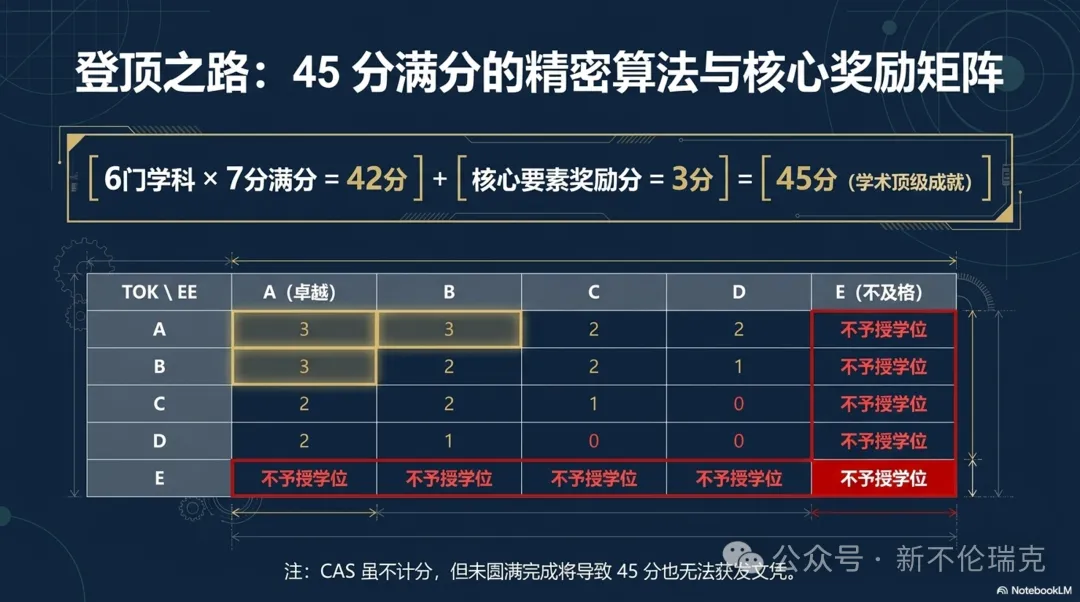
TOK and EE bonus-points matrix (rows: TOK grade; columns: EE grade; A = Excellent / B = Good / C = Satisfactory / D = Mediocre / E = Elementary):
| TOK \ EE | A | B | C | D | E |
|---|---|---|---|---|---|
| A | 3 | 3 | 2 | 2 | No diploma awarded |
| B | 3 | 2 | 2 | 1 | No diploma awarded |
| C | 2 | 2 | 1 | 0 | No diploma awarded |
| D | 2 | 1 | 0 | 0 | No diploma awarded |
| E | No diploma awarded | No diploma awarded | No diploma awarded | No diploma awarded | No diploma awarded |
Note: although CAS carries no points, a student who does not complete it satisfactorily cannot receive the diploma even with a perfect total score.
The IB total is therefore not a simple addition of "six subjects plus three core requirements scored separately." The six subject grades form the main body, Theory of Knowledge and the Extended Essay together generate the additional points, and Creativity, Activity, Service exists as a requirement that must be completed. This scoring structure itself shows that the IB is not a purely subject-examination system — it places subject learning, research, reflection, and practice within a single framework.
8. What Total Is Needed to Receive the IB Diploma?
Many families hear a single number: 24 points. It is indeed a common threshold for the IB diploma — but it is not the only condition.
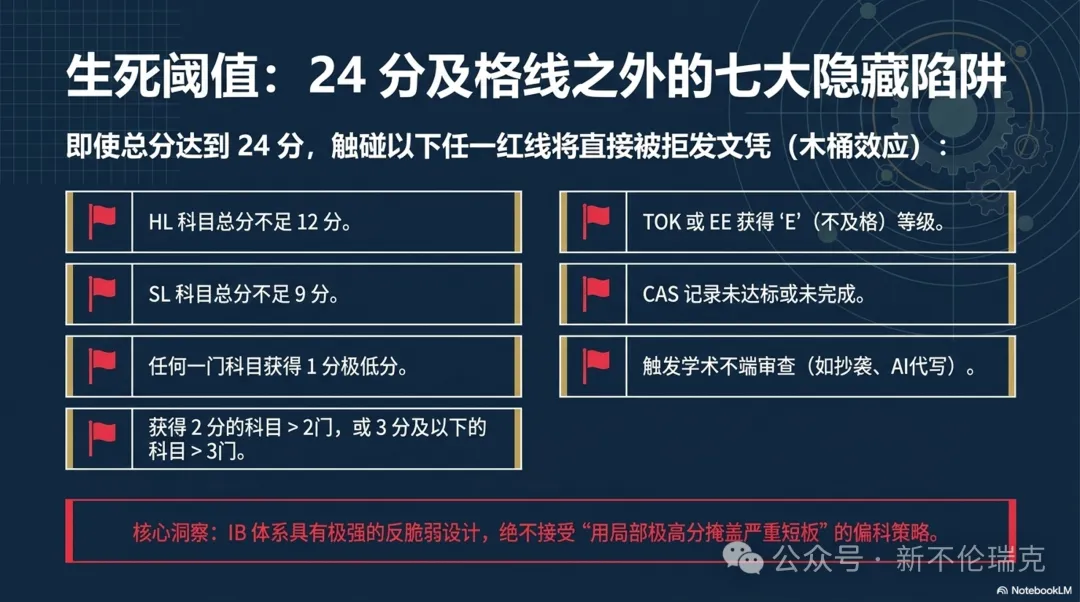
Even with a total of 24 points, the diploma will be refused if any of the following applies:
- The total for HL subjects is below 12 points.
- The total for SL subjects is below 9 points.
- Any subject is scored 1.
- More than two subjects are scored 2, or more than three subjects are scored 3 or below.
- TOK or the EE receives an E grade.
- CAS is not completed.
- The student is found to have committed academic misconduct (such as plagiarism).
This reflects the consistent logic of the IB: it does not encourage students to use a few high scores to cover up overall weaknesses, nor does it accept a way of learning that values only results and not process. Receiving the IB diploma means a student has completed not a simple score target, but an entire programme structure.
9. What Is the Most Typical Learning Experience for IB Students Over Two Years?
Looking at the whole programme structure together, the most typical IB learning experience is not that one particular course is "especially hard," but that many tasks run in parallel over a long period. Students normally have to advance the day-to-day study of six subjects, internal assessments in different subjects, Theory of Knowledge tasks, Extended Essay writing, and Creativity, Activity, Service records and reflections at the same time. Many tasks are not completed at the same point in time — they appear in turn and keep progressing.
This is also why, when people talk about the IB, they mention not only academic difficulty but also time management, long-term commitment, and sustained execution. In the IB, students face not only higher-level knowledge requirements, but also a question of rhythm: they must organise different kinds of learning tasks and keep advancing them over two years.
10. Choosing Subject Pathways: Connecting with Future University and Career Goals
Because the IB is so demanding, students must think ahead when choosing subjects. University admissions officers often assess a student's academic maturity and fit with a programme through their combination of subjects.
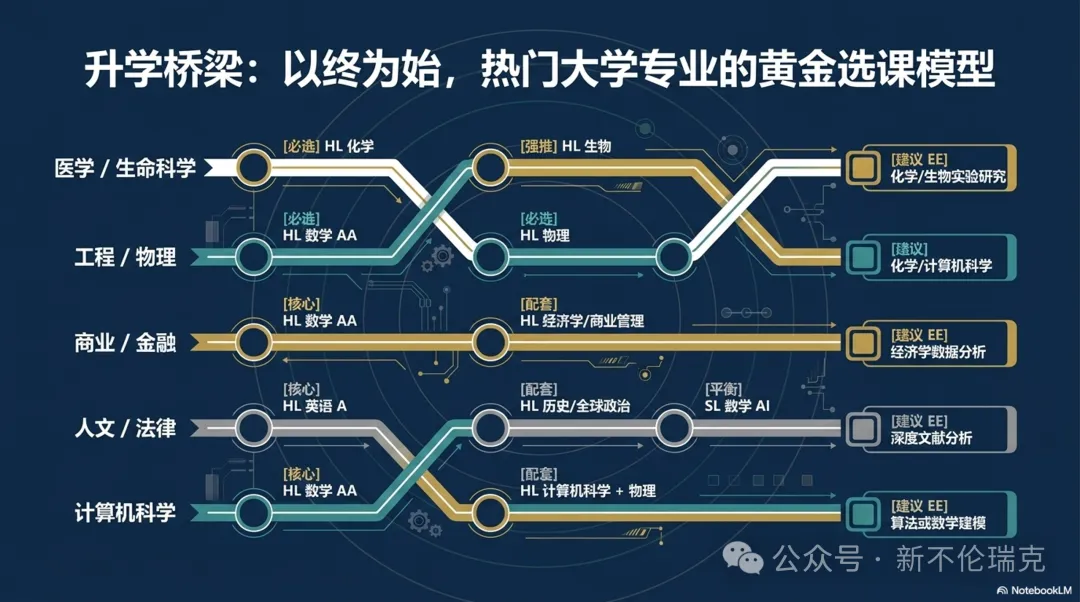
1. Suggested IB Subject Models for Popular Fields
Medicine / Life Sciences: recommended HL subjects are Chemistry (required), Biology (strongly recommended), and Mathematics AA or Physics; recommended SL subjects are English A, a second language, and a humanities subject; the recommended EE area is experimental research in Chemistry or Biology.
Engineering / Physical Sciences: recommended HL subjects are Mathematics AA (required), Physics (required), and Chemistry or Computer Science; recommended SL subjects are English A, a second language, and Economics; the recommended EE area is inquiry in Physics or Mathematics.
Business / Finance / Economics: recommended HL subjects are Mathematics AA, Economics, Business Management, or History; recommended SL subjects are English A, a second language, and a science subject; the recommended EE area is an economics paper based on data analysis.
Humanities / Law / Media: recommended HL subjects are English A, History, Psychology, or Global Politics; recommended SL subjects are Mathematics AI, a science subject, and a second language; the recommended EE area is in-depth literature analysis in History or English.
Computer Science: recommended HL subjects are Mathematics AA, Computer Science, and Physics; recommended SL subjects are English A, a second language, and an arts or humanities subject; the recommended EE area is inquiry in computer algorithms or mathematical modelling.
2. University Recognition and Transfer-Credit Advantages (North America as an Example)
The IB Diploma Programme enjoys very high recognition around the world. Top universities in Canada, the United States, and Europe typically offer IB graduates a range of advantages, including priority admission, transfer credits, and scholarship eligibility.
Overview of IB policies at typical Canadian universities:
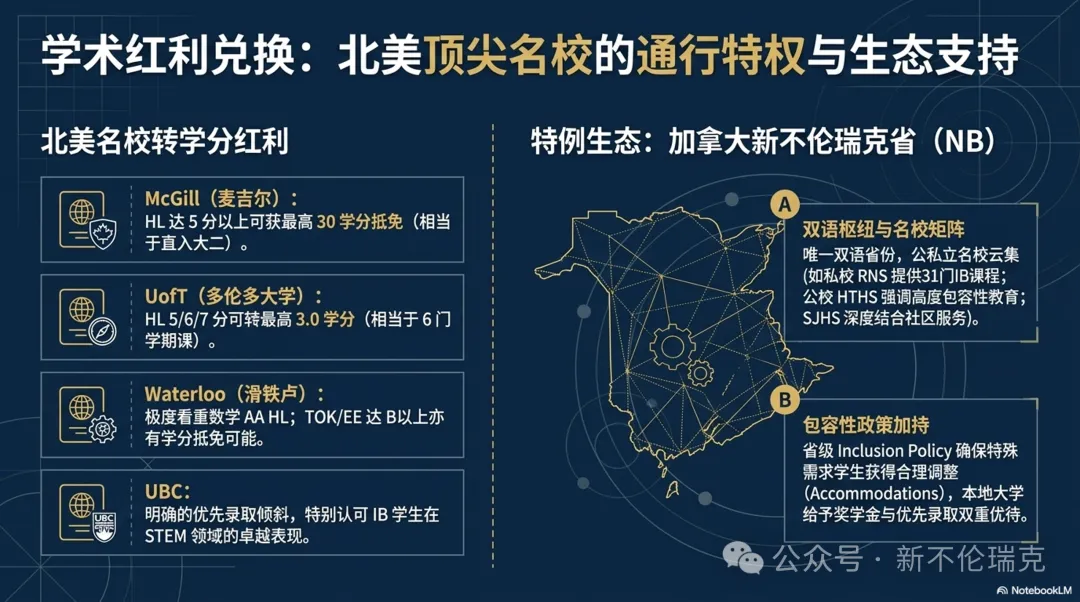
McGill University: HL scores of 5 or above can earn transfer credits, up to a maximum of 30 credits (equivalent to a full first year). McGill is very generous to IB graduates and regards their academic preparation as exceptionally strong.
University of Toronto (UofT): recognises the depth of HL courses; HL scores of 5, 6, or 7 will normally earn transfer credits. The maximum transfer credit is 3.0, equivalent to six semester courses.
University of Waterloo: HL scores above 5 can earn credit exemptions; TOK and EE grades of B or above may also earn credits. Waterloo is strong in science and engineering and has specific requirements for Mathematics AA HL.
University of British Columbia (UBC): offers priority consideration in admissions; research shows IB students perform better in STEM fields. UBC values the IB's interdisciplinary inquiry skills.
University of New Brunswick (UNB): HL scores above 5 can earn Advanced Standing, and IB courses can raise a student's scholarship average. UNB recognises the value of the IB in developing internationally minded graduates.
11. An Overview of IB Education in New Brunswick, Canada
In Canada, New Brunswick, as the country's only officially bilingual province, provides fertile cultural ground for the IB. A number of public and private high schools in the province offer high-quality IB Diploma Programme courses.
1. Representative Schools and Their Characteristics
1) Rothesay Netherwood School (RNS)
Type: a private co-educational day and boarding school in Rothesay, enrolling Grades 6–12. The IB lists it as a PRIVATE, MIXED (day and boarding) school; the RNS admissions page also states that the school accepts both day and boarding students, but boarding students take priority and day places are relatively limited. The school has offered the IB Diploma Programme since 2007.
What stands out: RNS does not confine the IB to Grades 11–12. Instead, Grades 9–10 are designed as a clear two-year foundational stage leading into the DP. The school's website calls this the foundational two-year program / Discovery Program, and its focus is not only on raising academic difficulty but also on interdisciplinary integration, reflective learning, and genuinely connecting different subjects through "disruptED" days. The overall feeling is more like "students start being educated the IB way from Grade 9."
Courses and resources: the RNS homepage currently lists 31 IB courses, an average class size of 16, and a student–teacher ratio of 7:1. The school also places leadership and service at the centre: all Grade 9 students take part in the Duke of Edinburgh's Award through the Discovery programme, and students in Grades 10–12 can continue to Silver / Gold; students in Grades 7–10 can also take part in North American or global exchanges through Round Square. For international students, the school also provides EAL (English as an Additional Language) support.
2) Harrison Trimble High School (HTHS)
Type: a public day high school in Moncton. The school profile states that in the 2025–2026 school year the school has more than 1,600 students and more than 100 teachers; the IB states that the school was authorised on July 3, 2025 to become an IB World School offering the Diploma Programme.
What stands out: the most distinctive feature of HTHS is its diversity and inclusiveness. The school's language policy is very specific: students come from more than 50 countries and speak more than 50 languages. The school operates in New Brunswick's bilingual environment; the IB lists its languages of instruction as English and French, while the school's own policy explains further that most DP subjects are taught in English, with French reflected mainly in students' French Immersion background and in Language B French. The school profile also places an inclusive / equitable learning environment and global-mindedness at the heart of the school.
Courses and support: the school's current IB page lists a fairly complete course pool, including English Literature, French Acquisition, Business Management, Economics, Psychology, Math Analysis and Approaches, Biology, Chemistry, Environmental Systems and Societies, Sports, Exercise and Health Science, Music, Visual Arts, and TOK. The school's course page also notes, however, that whether a course actually runs depends on enrolment numbers and interest. In terms of support, the HTHS inclusion policy sets out a PLP (Personalized Learning Plan) system, covering accommodated, adjusted, individualized, and behaviour support, together with extra time, assistive technology, ELL (English Language Learner) support, and an accessible environment.
3) Saint John High School (SJHS)
Type: a public day high school in Saint John. The IB states that the school has offered the DP since 1984; the school's history page also notes that it was the first school in New Brunswick to receive IB authorisation. From the principal's message, SJHS also presents itself as Canada's oldest publicly funded school.
What stands out: the strengths of SJHS are its long history, its clear pathway, and its well-established preparation. The school's IB page states that the IB is normally completed in Grades 11–12, but students usually first take a full year of preparatory courses in Grade 10. Its FAQ lists those preparatory courses in detail, including IB English 10, IB Social Studies / FI Social Studies 10, IB Math 10, IB Cultural Foundations / FI Cultural Foundations 10, IB Math 111, IB Biology 111, and IB Chemistry 111. For students who wish to keep their French Immersion certificate at the same time, the school also states clearly that it can be completed in parallel with the IB.
Courses and support: according to the IB's current page, SJHS currently offers Math AA, Biology, Chemistry, Physics, History, Music, Visual Arts, Economics, English A, French B, Spanish B, Digital Society, Environmental Systems and Societies, and TOK. Judging from the school's course descriptions, the science and arts pathways here are quite hands-on: IB Biology includes field study at the Huntsman Marine Science Centre, Grand Manan, and St. Andrews, as well as hospital and museum workshops; IB Chemistry emphasises topics and experiments closer to university level; IB Music involves recording a public recital for external assessment; and IB Visual Arts requires students to hold an exhibition in their graduation year.
4) École Mathieu-Martin
Type: a French-language public day high school in Dieppe, part of the District scolaire francophone Sud, covering Grades 9–12 (9e–12e année). The school homepage states it currently has more than 1,000 students. The school's IB page says the programme has been offered at the school since 1995, while the IB's official page gives a DP authorisation date of July 5, 1996, with French as the language of instruction.
What stands out: the most distinctive feature of Mathieu-Martin is that it is a long-running French-language IB pathway. On its IB introduction page, the school lists "academic excellence" and "the promotion of the French language and culture" as core goals. The IB's current page shows that the school's publicly listed subjects include French A: Language and Literature, English A: Language and Literature, Mathematics: Analysis and Approaches, Physics, Chemistry, History, and TOK. This means it is not simply "an IB programme inside a French school" — it genuinely puts French academic expression and the standard DP subject combination on the same track.
Courses and admissions: the school's admissions process is also very clear. Its 2026 admissions page shows that the programme selects its cohort starting in Grade 10; in this year's published process, the school plans to select 29 students from applicants to enter the Grade 10 IB class, and applications from other high schools in the greater Moncton area are assessed on the same basis as applications from the school itself. The school also states clearly, however, that applicants need a good command of French. In addition, the DSFS (District scolaire francophone Sud) website explains that students from nearby schools may also apply, and may transfer from outside the zone (transfer hors-zone) where conditions are met.
5) École Sainte-Anne
Type: a French-language public day school in Fredericton, part of the Francophone Sud school district, covering Grades 6–12. The school has offered the IB Diploma Programme (DP) since 2017; the school website currently states that it has about 923 students in total.
What stands out: the most distinctive feature of this school is that it offers an IB pathway built in a French-language minority setting. Apart from English and other language courses, teaching, daily communication on campus, and most assessment are conducted in French. At the same time, the school receives students from more than 60 countries, so the overall atmosphere combines building French culture with an intercultural background. At the IB level, the school offers both French A and English A: Language and Literature in Group 1, and students must also meet New Brunswick's French and English graduation requirements.
Courses and support: the school fully implements the DP core requirements, including CAS, the 4,000-word Extended Essay, and Theory of Knowledge. Its subjects include Mathematics: Analysis and Approaches, French A, English A, Physics, Chemistry, History, and TOK. For admissions, the school has no fixed minimum grade threshold, but it considers transcripts and interviews to judge a student's academic readiness, motivation, and support needs. The school also has a formal inclusion / accommodations policy, providing support in line with the inclusive education principles of the New Brunswick public system.
2. Local Policy Support and the Inclusive Framework
Support for the IB from the New Brunswick Department of Education and Early Childhood Development (EECD) is reflected in policy alignment. For example, the IB assessment policies of schools such as HTHS must comply with the province's inclusive education guidelines, ensuring that students with disabilities or language barriers can also take part in the IB Diploma Programme through "Reasonable Accommodations" such as extended examination time and assistive technology. In addition, universities in the province, such as Mount Allison University and UNB, have published preferential admission thresholds and credit-transfer arrangements for local IB graduates.
12. What the IB Means for Students: From Academic Ability to Psychological Resilience
The IB Diploma Programme is often described as "purgatory for high school life," but this extremely demanding experience has far-reaching positive significance for young people's long-term growth.
1. A Step-by-Step Leap in Academic Literacy
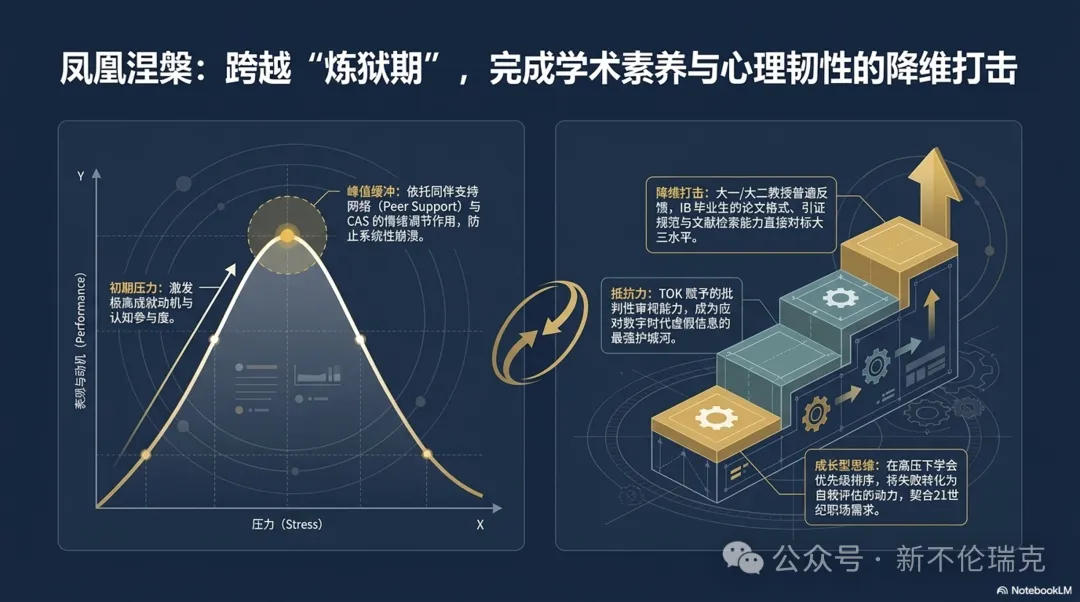
Research shows that IB students demonstrate a clear competitive advantage after entering university. Compared with students in ordinary high school programmes (such as the OSSD — Ontario Secondary School Diploma — or the French Baccalaureate), IB students are more likely to graduate on time within four years.
Critical thinking: through TOK and the EE, IB students become accustomed to questioning information from a single source. This ability to examine information critically makes them more resistant in a digital age flooded with misinformation.
Research and writing: professors in the first and second years of university generally report that the essay format, citation standards, and depth of argument in IB graduates' work already reach the level of third- or fourth-year students.
Subject breadth: even for students who go on to study purely arts subjects, the compulsory mathematics and science background in the IB ensures that they have basic scientific literacy and can understand the data and logic behind public policy.
2. Evidence-Based Analysis of Mental Health and Stress Management
Although the IB workload is enormous, its effect on students' mental health is not simply negative.
The inverted-U curve of stress and performance: students entering the IB foundation class in Grade 9 do indeed perceive more stress than students in regular classes, but this stress also stimulates higher achievement motivation and cognitive engagement.
Building coping mechanisms: through CAS and social-emotional learning (SEL), the IB system teaches students how to balance their lives. Learning to "prioritise" and to "respond effectively to challenges" is a hidden bonus for growth that the IB gives its students.
Peer support networks: because IB courses are often based on group collaboration and project-based work, students form very strong mutual support networks. This social connection is an important line of defence against breakdown under pressure.
3. Global Competitiveness and Career Readiness (Future-ready Skills)
In the workplace, IB Diploma Programme graduates demonstrate qualities such as initiative, resilience, and the ability to collaborate across borders, which closely match what the 21st-century economy needs. The IB's emphasis on the habit of "reflection" allows graduates, when facing failure, to draw motivation from self-assessment rather than falling into negativity. This "growth mindset" is the key to long-term career success.
13. Practical Advice for Students and Parents: How to Navigate the IB Diploma Programme
Successfully navigating the IB Diploma Programme requires not only the student's own efforts, but also strategic support from the family.
1. Time Management and Energy Budgeting
Experts recommend that students build a "long-term" rhythm and avoid exhausting themselves during examination months.
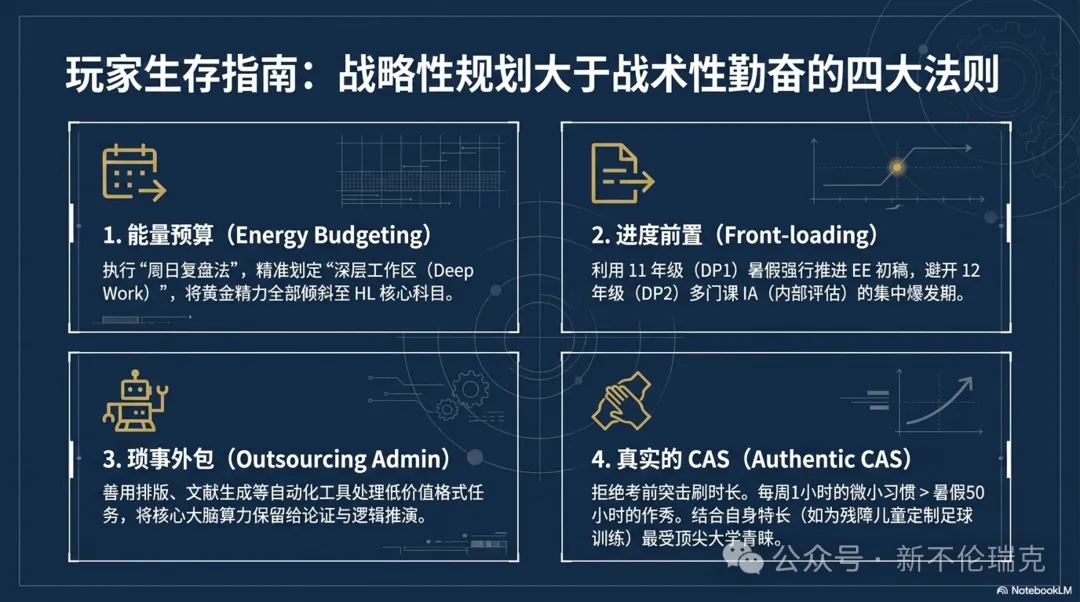
The Sunday review method: on Sunday evening, list three academic goals for the week, and reserve "Deep Work Blocks" for HL subjects.
Front-loading: it is recommended that students complete most of the first draft of the EE during the summer holiday before the end of Grade 11 (DP1), so that room is freed up for the intensive internal assessments (IA) in Grade 12 (DP2).
Outsourcing administrative chores: for "low-value" tasks such as reference formatting and making presentation slides look polished, students should learn to find efficient tools or templates, so that their energy stays focused on the core argument.
2. Keeping CAS Authentic and Sustained
Do not treat CAS as a task of "racking up hours." The true meaning of CAS lies in continuity and variety.
Small habits beat last-minute sprints: one hour of regular community service each week is worth far more in the eyes of IB officials than 50 hours of a "one-off show" during the summer holiday.
Combining across areas: for example, if a student loves soccer, they could run a CAS project coaching soccer for children with disabilities (combining Activity and Service) — such a project is highly persuasive in university applications.
This article was originally published on the WeChat official account "新不伦瑞克" (New Brunswick Today). Original link: https://mp.weixin.qq.com/s?__biz=MzI4Mjc3NDcyMg==&mid=2247486462&idx=1&sn=3f2c440b67a1184cae199715554f8cd0&chksm=eb959653dce21f454e1f35ed03c6070ad884144c8c9c28636390de666674b9d078159708ad6a&scene=178&cur_album_id=4378684396283723780&search_click_id=